

Homemade Fire Cider: A Fiery Horseradish and Garlic Vinegar for Winter
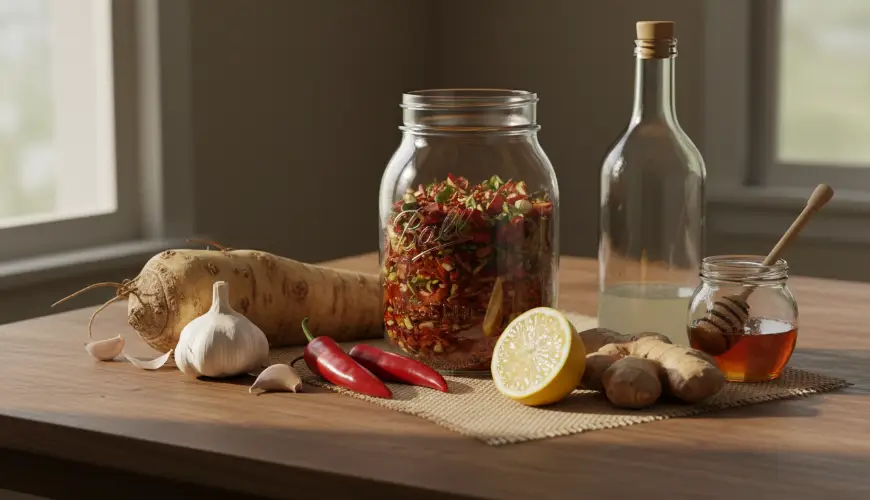
Autumn is knocking at the door, bringing with it the first colds, tired mornings and that unpleasant feeling as the body begins to lose its summer vitality. It is precisely at this time that many people remember old family remedies, which were not merely superstition but genuine wisdom passed down from generation to generation. One such treasure of traditional folk medicine is fire cider – a fiery vinegar infusion made with horseradish, garlic and other pungent ingredients, whose popularity has surged again in recent years.
Fire cider is a fermented apple cider vinegar-based infusion in which potent, pungent and aromatic ingredients are steeped. The result is an intense, spicy liquid with a bold flavor that – according to proponents of natural medicine and modern research alike – can significantly support the immune system, warm the body from within and help with the first signs of a cold. It is no new invention. The roots of this drink reach deep into European and North American herbal traditions, and the recipe became firmly established in the English-speaking world thanks to American herbalist Rosemary Gladstar, who popularized it in the 1980s.
Try our natural products



What fire cider actually is and why it works
The foundation of fire cider is apple cider vinegar, which has remarkable properties of its own. It contains acetic acid, natural enzymes and prebiotics that support the gut microbiome. To this are added ingredients chosen with a very specific purpose – each brings its own benefit to the body.
Horseradish is undoubtedly the star of the recipe. This root vegetable contains glucosinolates, which are converted during processing into isothiocyanates – compounds with proven anti-inflammatory and antimicrobial effects. Research published, for example, in the scientific journal Phytotherapy Research confirms that horseradish can effectively support the body’s defenses and relieve symptoms of respiratory illnesses. It is no coincidence that our great-grandmothers put horseradish on the table every winter.
Garlic adds another layer of protection. Its main active component – allicin – is formed when garlic is crushed or chopped and has powerful antibacterial, antiviral and antifungal properties. An extensive meta-analysis published in the Cochrane Library suggests that regular garlic consumption may reduce the frequency of colds and shorten their duration. Those are figures worth noting.
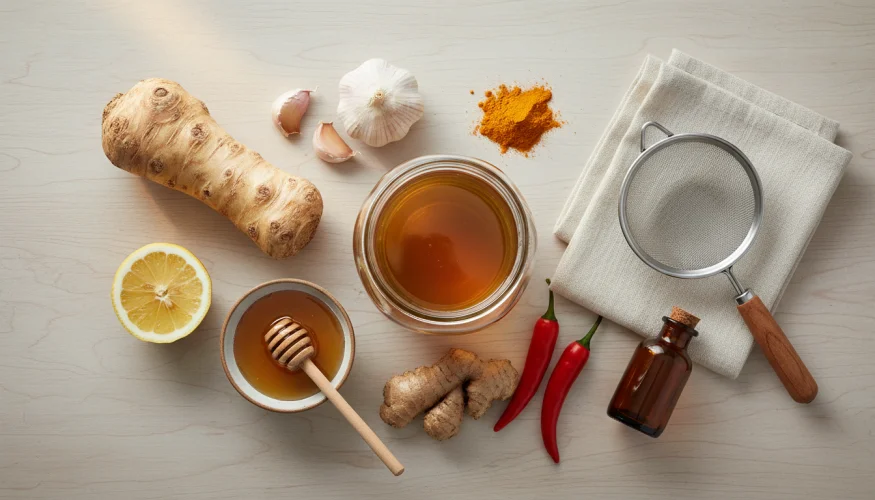
Other typical ingredients in fire cider include fresh ginger, which warms the body and reduces inflammation; horseradish radish; chili pepper or jalapeño for intense heat; lemon or orange zest for vitamin C and bioflavonoids; turmeric for its anti-inflammatory curcuminoids; and honey as a natural sweetener that softens the heat while adding its own antimicrobial effects. The combination of these ingredients creates synergy – an effect in which the whole is more powerful than the sum of its parts.
How does the whole process work? Apple cider vinegar acts as an extraction medium, drawing active compounds out of the plant ingredients while preserving them. Steeping for two to four weeks produces a thick, aromatic infusion, which is then strained and flavored with honey. The finished product has a very long shelf life – when stored properly, it can easily last a year or more.
How to make fire cider at home
Making fire cider requires no special equipment or culinary training. You need a jar, a grater, a knife and a little patience. It is just the kind of project anyone who enjoys mindful cooking and is interested in natural approaches to health can take on.
The basic recipe for approximately one liter of finished fire cider begins with preparing the ingredients. Grate or chop approximately 100 grams of fresh horseradish, add a whole head of garlic, crushed or roughly chopped, a thumb-sized piece of ginger, one or two chili peppers to taste and the zest of one lemon. Place everything in a clean jar, pour in high-quality unfiltered apple cider vinegar until the ingredients are completely submerged, and seal tightly with a lid. Take care – if you have a metal lid, place a piece of parchment paper between the jar and the lid, as the acetic acid would corrode the metal.
Then place the jar in a dark spot at room temperature and shake it gently every day. After two to four weeks, strain the contents through cheesecloth or a fine sieve, squeeze all the juice firmly from the remaining solids, and add two to four tablespoons of honey to the strained infusion, according to taste. Pour the finished fire cider into a dark bottle and store it in the refrigerator or a cool pantry.
One Czech herbalist and advocate of a natural lifestyle aptly described her experience with fire cider: “I was afraid to taste it the first time, but ever since then I’ve taken it every autumn as a ritual – like a letter I send to my body before winter.” This metaphor beautifully captures what fire cider is really about – it is not just a drink, but a conscious act of self-care.
How should you take fire cider? The most common recommendation is one to two tablespoons a day, ideally in the morning on an empty stomach or at the first signs of a cold. Some people drink it as a shot, while others add it to salad dressings, marinades or warm soups. It should definitely not be boiled – heat would destroy some of the valuable enzymes and active compounds. If you find it too intense, try diluting it with a little water or fruit juice.
Fire cider as part of a mindful lifestyle
It is interesting to see how interest in traditional natural remedies has returned in recent years. It is not just nostalgia or a passing trend – behind it lies a deeper desire for authenticity, for a mindful relationship with what we eat and drink, and for approaches to health care that are understandable and accessible to everyone. In this sense, fire cider is a perfect symbol: it is simple, inexpensive, effective and deeply rooted in tradition.
Take, for example, a family from a small Moravian town who decided three years ago to cut back on unnecessary medication and turn to natural alternatives. Every autumn they make a large jar of fire cider together, the children learn to recognize herbs and roots, and the whole process has become a family ritual. The result? Fewer school days missed because of colds and a feeling that they have greater control over their health. Of course, fire cider is not a cure-all, and no responsible herbalist would claim otherwise. But as a complement to a healthy lifestyle, a balanced diet and plenty of exercise, it can play a genuinely important role.
It is worth noting that fire cider is part of a broader approach to supporting immunity, which includes getting enough sleep, exercising regularly, reducing sugar and stress, and eating fermented foods. Fermented foods – kimchi, kefir, kombucha or fermented vegetables – are natural allies of fire cider in this context, because they all help support the gut microbiome, which forms the foundation of immunity. According to experts at Harvard Health Publishing, approximately 70% of the immune system resides in the gut, which makes focusing on fermented and probiotic foods perfectly sensible.
Fire cider has also found a place in modern gastronomy. Chefs add it to cocktails as an alternative to shrubs – tangy vinegar-based syrups – or use it as a base for spicy sauces and marinades. In the American culinary world, fire cider-making competitions are even held, and dozens of different varieties are sold at farmers’ markets. Today, ready-made fire cider can also be purchased in Czech health food stores or eco-conscious shops, although making it at home remains the most popular choice for those who want full control over the ingredients.
If you decide to try fire cider for the first time, start with a smaller amount and see how your body reacts. People with sensitive stomachs or reflux, and those taking blood-thinning medication, should consult a doctor first – both horseradish and garlic can affect the absorption of certain medications. Pregnant women should also be cautious about consuming large amounts of spicy ingredients. These are sensible precautions that apply to any natural preparation, and observing them is part of a responsible approach to your own health.
Winter comes every year, and with it the temptation to reach for the first available medication at every sneeze. Fire cider offers another path – a path of prevention, tradition and mindful care, with its own story, its own aroma and its own strength. A jar full of horseradish, garlic and ginger steeped in apple cider vinegar may not look like a medicine cabinet, but for centuries it served precisely that purpose. Perhaps it is time to rediscover this wisdom.