
Wall Pilates Made Easy, Even for Beginners
Pilates has experienced a genuine renaissance in recent years. After decades of being associated primarily with professional dancers or rehabilitation centers, this form of exercise is making its way into living rooms, parks and social media in a form accessible to absolutely everyone. One of the most popular variations today is wall pilates – pilates using a wall – which has won millions of enthusiasts around the world and is rapidly growing in popularity in the Czech Republic. Why a wall? And why is this form of exercise so ideal for complete beginners?
The answer is surprisingly simple. The wall provides stable support, allowing beginners to focus on performing movements correctly without having to struggle with balance or fear falling. There is no need for expensive equipment, a gym membership or a special space. All you need is a flat wall and the determination to get started.
Try our natural products
What exactly is wall pilates, and where does it come from?
Pilates itself originated in the first half of the 20th century. Its founder, German physiotherapist Joseph Pilates, originally developed his method to rehabilitate injured soldiers during World War I. He gradually refined it and adapted it for the general public, emphasizing the strengthening of deep core muscles, correct posture and mindful breathing. As he himself said: “Physical fitness is the first requisite of happiness.” This philosophy remains the foundation of pilates to this day.
Wall pilates, or pilates performed using a wall, is a modern adaptation of classic exercises that uses a solid wall both as a prop and for resistance. The wall serves several functions: it supports the legs, provides a reference point for proper spinal alignment and can be used to increase exercise intensity. This variation became a viral phenomenon, particularly on platforms such as TikTok and YouTube, where videos with the hashtag #wallpilates have garnered billions of views. But it is more than just a passing trend: the popularity of wall pilates is backed by genuine physiological benefits that movement specialists also recognize.
Traditional pilates requires a degree of body awareness and coordination that only comes with practice. The wall elegantly solves this problem. It provides immediate feedback – when the back is fully supported against the wall, the person exercising can naturally feel where their spine is and how to align it correctly. This is absolutely crucial for beginners, as one of the most common mistakes in pilates is poor body alignment, which can lead to overworking the wrong muscle groups.
Why wall pilates is an ideal choice for beginners
Imagine a thirty-year-old woman, let’s call her Petra, who sits in an office all day, suffers from back pain and has decided to finally start exercising. She tried running – her knees protested. She joined a gym – she felt lost among the machines. Then she came across a wall pilates video. After her first workout, which lasted just twenty minutes, she felt a pleasant tiredness in her abdominal muscles and – to her greatest surprise – no back pain. After three weeks of regular exercise, her posture improved and she stopped waking up with a stiff neck in the morning. Petra’s story is not unusual. Thousands of women who started wall pilates with no previous exercise experience share similar experiences.
Wall exercises work so well for beginners for several interconnected reasons. First and foremost, the barrier to entry is low – all you really need for your first workout is some free space by a wall, comfortable clothing and about twenty minutes. No equipment costs, no need to leave the house. At a time when time is the most precious commodity, that is a huge advantage.
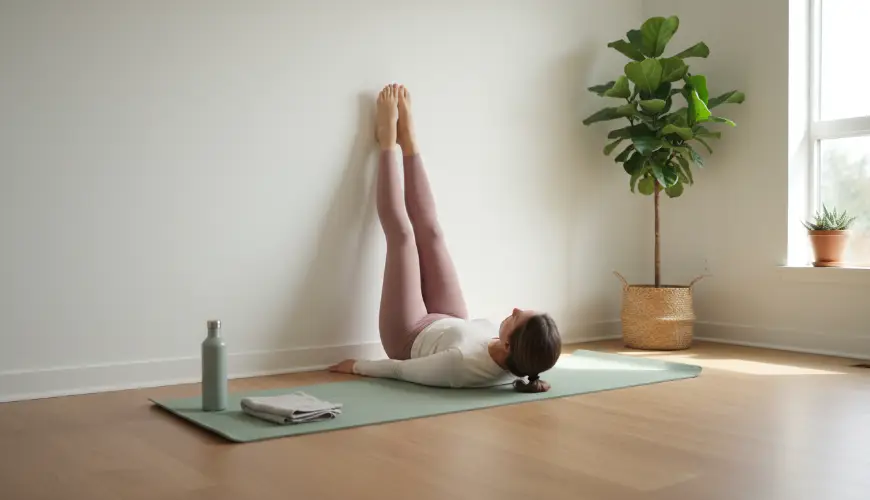
Another reason is gradual progression. Wall pilates can easily be adapted to your current fitness level. A beginner can start with simple exercises, such as resting the legs against the wall at a ninety-degree angle – the so-called “legs up the wall” position – and gradually add more challenging variations. The wall acts as a natural intensity regulator: generally, the closer you are to the wall, the easier the exercise; the farther away, the more challenging it becomes. This system allows every woman to find her own starting position without feelings of failure or frustration.
The safety of the exercise is also significant. Research and physiotherapists’ clinical practice repeatedly confirm that pilates as a whole is one of the safest forms of physical activity. A review study published in the Journal of Bodywork and Movement Therapies showed that regular pilates practice significantly reduces chronic lower back pain and improves functional spinal mobility. Wall pilates further enhances these benefits thanks to the support provided by the wall, which minimizes the risk of overloading the joints.
The psychological aspect also plays an important role. Beginners in group pilates or yoga classes often feel anxious about being “the worst in the room.” Wall pilates can be practiced in the privacy of your own home, at your own pace, without comparing yourself to others. This freedom helps make exercise an enjoyable routine rather than a stressful obligation.
Physiotherapists and movement trainers point to another key benefit: wall pilates activates the deep stabilizing muscles, which are chronically weakened in everyday life. These include, in particular, the pelvic floor muscles, the transverse abdominal muscle and the deep spinal extensors. These muscles form an invisible corset around the torso, and strengthening them has far-reaching effects – from better posture and injury prevention to improved athletic performance in any other activity.
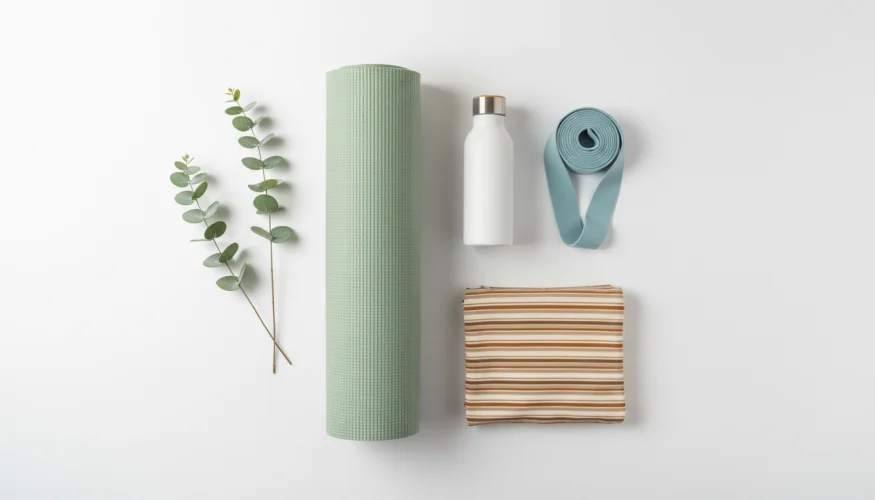
How to start wall pilates at home – a practical guide
Before a beginner rolls out a mat and approaches the wall, it helps to have a clear idea of what to expect and how to set up the workout correctly. The most important rule is to move slowly and mindfully. Wall pilates is not an aerobic activity where the number of repetitions or speed matters. Each movement should be performed slowly, with full concentration and in coordination with the breath. Inhale through the nose, exhale through the mouth – this basic pilates rule also applies to its wall-based version.
The appropriate distance from the wall depends on the exercise and the individual’s body proportions. As a general rule, when lying on your back with your legs supported against the wall, your knees should form approximately a right angle and your back should lie flat on the mat. If your hamstrings are tight – which is very common among women with sedentary jobs – it is perfectly fine to move farther away from the wall or bend your knees slightly. The wall is not a tyrant here, but a helper.
Basic wall pilates exercises for complete beginners include:
- Legs up the wall – lie on your back with your legs resting against the wall and your buttocks as close to the wall as possible. This exercise improves circulation, releases tension in the hips and is great as a warm-up or cool-down at the end of a workout.
- Wall squat (squat against the wall) – with your back against the wall and feet hip-width apart, slowly lower into a squat. It strengthens the thighs and glutes while teaching proper spinal alignment.
- Wall bridge – lie on your back with your feet against the wall at knee height and slowly lift your pelvis off the mat. It activates the glutes and pelvic floor.
- Pilates hundred at the wall – a classic pilates exercise modified so that the legs rest on the wall, reducing strain on the lower back and allowing beginners to focus entirely on engaging their abdominal muscles.
Beginners’ workouts should last between fifteen and thirty minutes. Three to four workouts a week is an ideal frequency for visible progress, while allowing the body time to recover between sessions. Results generally begin to appear after two to four weeks of regular exercise – first as improved posture and reduced back pain, followed by visibly toned muscles.
For those seeking structured guidance, the internet now offers countless free videos. Complete 28- or 30-day wall pilates programs for beginners are available on YouTube, systematically building fitness from the ground up. The Czech-speaking community of pilates instructors is also growing, and specialized classes, whether online or in person, are more accessible than ever.
It is worth noting that wall pilates is not exclusively for women or beginners. Men, older adults, women in their second trimester of pregnancy and people recovering from an injury – all of these groups can benefit from exercising at the wall, provided they take their specific needs into account and consult a doctor or physiotherapist where appropriate. The Czech Association of Physiotherapists provides useful information on safe movement and rehabilitation, which can be a good starting point for those with health limitations.
Wall pilates is not a revolution in fitness – it is more of a return to basics. To movement that is natural, mindful and gentle on the body. At a time when we are bombarded with extreme challenges and intensive training programs promising instant results, exercising at the wall offers a refreshing alternative: slow, deliberate and effective. And that is exactly what most beginners – and experienced practitioners – truly need.