

Home Alternatives to Sweets That You Will Love
The craving for something sweet is completely natural. Sugar triggers the release of dopamine – the reward hormone – in the brain, which is precisely why it's so hard to resist chocolate in the drawer or biscuits in the kitchen. The problem arises, however, when industrial sweets form the basis of everyday diet. Refined sugar, artificial colourings, preservatives and hydrogenated fats are present in the vast majority of commercially produced sweets, and their regular consumption is linked, according to World Health Organization research, to a whole range of lifestyle diseases, from obesity through type 2 diabetes to cardiovascular problems. Yet the answer doesn't have to be giving up sweets altogether. There is, in fact, an entire world of homemade alternatives that can satisfy the taste buds just as well – or even better – while genuinely benefiting the body.
The key to understanding the whole matter is to distinguish between what we taste and what we actually consume. A shop-bought bar may be sweet, yet at the same time packed with empty calories without a single nutrient. A date ball rolled in cocoa powder, on the other hand, provides natural sweetness, fibre, magnesium and potassium. It is therefore an entirely different nutritional equation, even if the resulting taste experience can be very similar – or even richer.
Try our natural products
Nature as the Best Confectionery
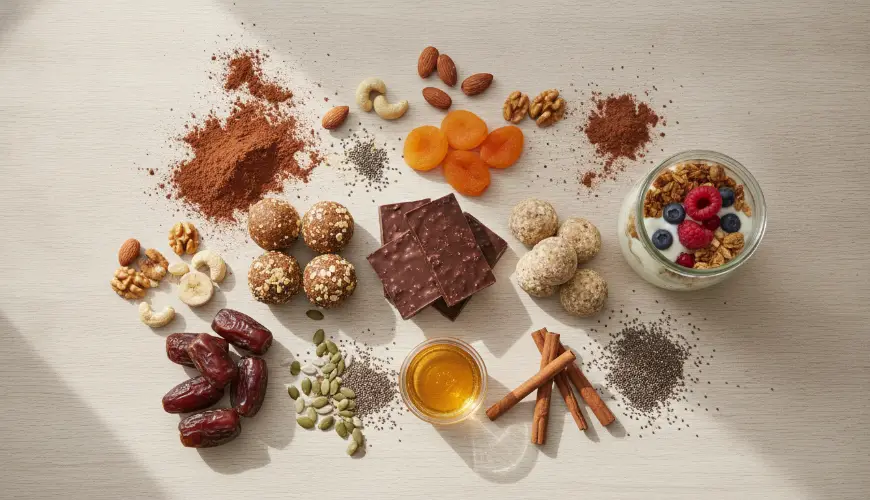
The foundation of most homemade healthy sweets consists of ingredients that nature has prepared in the finest possible form. Dates, figs, raisins, dried apricots or cherries bring natural sweetness together with fibre, minerals and antioxidants. Medjool dates in particular are popular among healthy-eating enthusiasts because their caramel flavour can replace sugar in recipes at almost a 1:1 ratio.
Take, for example, a typical Czech family – parents of two school-age children who used to pack commercial wafers or biscuits for school every day. After deciding to switch to homemade alternatives, they began preparing simple energy balls from oats, dates, a spoonful of peanut butter and a little cocoa powder. Preparation takes ten minutes, the balls keep in the fridge for a week, and the children accepted them without protest. This example is not exceptional – a growing number of families are choosing a similar path as they seek a balance between convenience and health.
Fruit in general makes an excellent base for homemade sweet treats. Frozen bananas blended in a blender produce a creamy consistency almost indistinguishable from ice cream – this phenomenon, nicknamed "nice cream", has become a worldwide healthy-eating sensation. By adding a teaspoon of almond butter, a pinch of cinnamon or a handful of forest fruits, countless variations can be achieved, each of which is more nutritious than any industrial ice cream from a shop.
Another natural source of sweetness is honey, especially local, unfiltered honey. Unlike refined sugar, honey contains enzymes and antioxidants and has a lower glycaemic index, meaning it does not cause such sharp fluctuations in blood sugar levels. Maple syrup, coconut sugar and agave nectar work in a similar way, each bringing a different flavour nuance and varying degree of processing. When choosing, it is advisable to opt for the least industrially processed variants available.
Cocoa butter and quality cocoa also play a significant role. Pure cocoa – not the sweetened cocoa mix from a shop – is rich in flavonoids and antioxidants, which according to studies published in the specialist journal Frontiers in Nutrition have a positive effect on cardiovascular health and mood. From cocoa powder, coconut oil and a little honey, simple homemade chocolate bonbons can be prepared in twenty minutes that taste better than many a shop-bought praline.
Cinnamon, vanilla, cardamom and ginger are spices that naturally enhance the perception of sweetness and make it possible to reduce the amount of added sugar in recipes without losing the desired flavour. Cinnamon also helps stabilise blood sugar levels, making it an ideal ally when transitioning to healthier eating.
Recipes and Ideas That Actually Work
Moving from theory to practice is often the hardest step. It is therefore useful to have a few specific ideas to hand that are both simple to prepare and genuinely tasty.
Energy balls, mentioned earlier, are probably the most versatile foundation for homemade healthy sweets. The base always consists of some sticky ingredient – dates, peanut butter or honey – and after that it is only a matter of imagination. Oats, coconut, chia seeds, flaxseed, dried fruit, almonds, cashews or even matcha powder can all be added. The resulting balls are filling, nutritious and easily portable as a snack.
Another popular idea is homemade fruit lollies or ice lollies. Blended mango with coconut milk, strawberries with yoghurt or raspberries with honey simply need to be poured into moulds and frozen. The result is refreshing, natural and free from any artificial ingredient. For children it is also a fun project they are happy to get involved in.
Banana bread is a classic of healthy baking – overripe bananas provide natural sweetness, so the amount of added sugar or honey can be significantly reduced. The recipe can be further enriched with walnuts, dark chocolate or blueberries. Oat biscuits sweetened solely with banana and raisins work in a similar way and are a great alternative to classic industrial biscuits.
As nutrition consultant and healthy-eating author Elise Museles once said: "Healthy food should never taste like punishment. If it does, you're looking at the wrong recipes." This thought captures the essence of the entire approach to homemade sweet alternatives – it is not about deprivation, but about creativity and discovering new flavours.
Yoghurt parfaits – layers of plain or Greek yoghurt with granola and fresh fruit – are a great option for those who enjoy a sweet snack or dessert but don't want to spend hours in the kitchen. Homemade granola made from oats, nuts, seeds, honey and a little coconut oil is far superior to the shop-bought version, which tends to be loaded with sugar.
For chocolate lovers, there is a wonderful alternative in the form of raw chocolate bars or cakes. The base consists of dates and nuts blended into a thick mass, onto which a layer of cocoa powder, coconut oil and maple syrup is poured. Once set in the fridge, the result is a dessert that looks elegant, tastes luxurious and yet contains nothing that could harm the body. Similar recipes are today available on countless culinary websites and in cookbooks dedicated to plant-based or whole-food cooking.
An interesting and lesser-known option is probiotic popsicles made from kefir or a plant-based drink with seasonal fruit and a drop of vanilla, or homemade muesli bars made from oats, seeds and dried fruit bound together with honey and almond butter. These bars can be baked until golden or left raw – in either case they are nutritious and substantial.
It is worth mentioning that switching to homemade sweets need not be financially demanding either. Basic ingredients such as oats, dates, cocoa, nuts and seeds are available in organic quality at a reasonable price, and since they are foods with a long shelf life, they can be bought in larger quantities with supplies always kept to hand. Investing in higher-quality ingredients pays off in the form of better health, fewer illnesses and greater energy – values that no commercial sweet can offer.
The entire world of homemade sweet alternatives rests on a simple principle: knowing what you eat and having control over it. Industrial sweets are designed to be addictive – the combination of sugar, fat and salt activates the brain's reward centres in a way that natural foods cannot replicate with the same intensity. This is precisely why the first week without commercial sweets can be challenging. Gradually, however, taste perception changes, the sensitivity threshold for sweetness drops, and the natural flavours of fruit, honey or dates begin to feel far more intense and satisfying.
It is important not to confuse healthy homemade alternatives with dieting or deprivation. It is a natural shift towards a more conscious way of eating that does not limit the joy of food but deepens it – because you know what you are eating, where it comes from and why it benefits your body. And that is a feeling no industrial sweet can offer.