
# Cook Yourself a Roasted Garlic and White Bean Soup ## Ingredients - 2 heads of garlic - 2 cans o
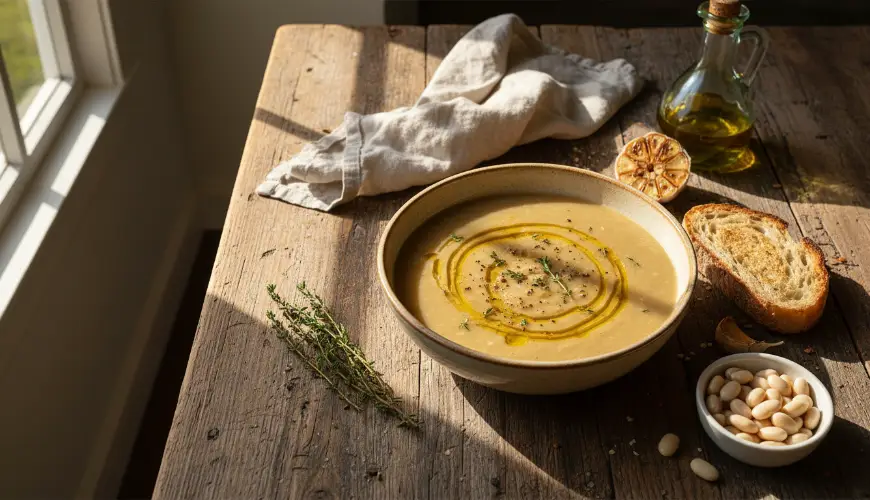
There are dishes that warm a person not only physically, but also in a figurative sense. Roasted garlic and white bean soup undoubtedly belongs among them. It is a dish that requires neither expensive ingredients nor a culinary diploma, yet it can evoke a feeling on the plate as though it were prepared by someone who truly understands cooking. All it takes is a little patience, good olive oil, and a desire to experiment with the best that both Czech and Mediterranean cuisine has to offer.
Roasted garlic is an ingredient that deserves far more attention than most home cooks give it. Raw garlic is sharp, pungent, and sometimes even aggressive. But once you wrap it in foil, drizzle it with oil, and leave it in the oven for an hour, something almost magical happens. The cloves soften, caramelise, and their flavour transforms into something deep, sweet, and earthy. It is precisely this transformation that forms the foundation upon which the entire soup rests.
Try our natural products



Why white beans?
White beans have long been undervalued in European cuisine. Yet they are exceptionally versatile - they readily absorb the flavour of spices and stock, have a delicate creamy texture, and are incredibly nutritious. White beans are a rich source of plant-based protein, fibre, iron, and magnesium, making them an ideal base for a hearty yet light soup. According to data from the Harvard T.H. Chan School of Public Health, legumes in general are among the most beneficial foods for long-term heart and digestive health.
The combination of roasted garlic and white beans works so well precisely because both ingredients complement each other. Garlic provides depth and aroma, while beans contribute body and creaminess. The result is a soup that needs neither cream nor flour for thickening - it is naturally thick and rich on its own. Add good vegetable or chicken stock, quality olive oil, and a little fresh thyme, and you have a dish that could easily appear on the menu of an Italian osteria.
It is no coincidence that similar recipes are a traditional part of Tuscan cuisine. Italians even have an affectionate nickname for bean lovers - "mangiafagioli", meaning bean eaters. The Tuscans understood the value of simple legumes long before plant-based eating became a fashionable topic. Their approach to cooking - minimum ingredients, maximum quality - is precisely what this soup embodies.
Consider a typical autumn evening. It is raining outside, the fridge holds a few heads of garlic, a tin of white beans, and some leftover stock from Sunday lunch. Many people in such a situation would reach for pasta or order takeaway. But those who have once tried transforming roasted garlic into the base of a soup know that this combination is faster and more satisfying than it might seem. The hour of roasting garlic does require time, but it is passive time - meanwhile, one can read, rest, or attend to anything else.
How to prepare the soup properly
The whole process begins with the garlic. Whole heads of garlic simply need to be cut in half, drizzled with olive oil, salted, and wrapped in foil. An oven at 180–200 °C will do the rest. After approximately 45 minutes to an hour, the cloves are as soft as butter and their aroma fills the entire kitchen. Roasted garlic can be prepared in advance and kept in the refrigerator for up to five days, so it is worth roasting a larger quantity at once - it is useful in spreads, sauces, and as an ingredient in bread.
While the garlic is roasting, the soup base can be prepared. Diced onion is softened in olive oil, then a little fresh or dried thyme, rosemary, or sage is added. Herbs are key here - garlic and beans tend to be earthy and somewhat heavy, and herbs lend them lightness and freshness. Then comes the stock. Vegetable stock makes the soup a vegan dish, while chicken stock adds a layer of umami and depth.
White beans are added to the stock - either pre-soaked and cooked dried beans, or tinned beans, thoroughly rinsed. Tinned beans are an entirely legitimate choice that saves time without any significant loss of quality. Once the garlic has cooled enough to be handled, the softened cloves are squeezed directly into the pot. The entire mixture is then blended - either with a stick blender directly in the pot, or in batches in a traditional blender. The resulting consistency should be silky smooth, but if someone prefers chunks, simply blend only part of the soup and leave the rest whole.
Finally comes the finishing touches. Salt, freshly ground black pepper, and - crucially - a generous final drizzle of quality extra virgin olive oil. It is precisely the olive oil that elevates the soup from good food to something exceptional. As Italian cook and writer Marcella Hazan says: "Olive oil is not just fat. It is flavour." And in the case of this soup, that holds doubly true.
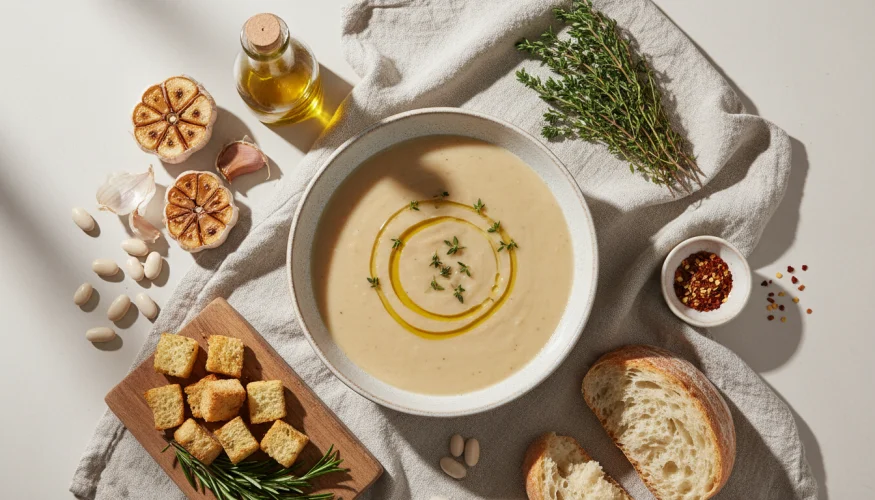
For texture and visual effect, the soup is traditionally served with crispy croutons toasted in olive oil, or with a slice of toasted sourdough bread. Some like to add a little grated Parmesan or a squeeze of lemon juice for freshness. All these additions are optional, but each one adds something to the soup.
An interesting variation is to add a piece of Parmesan rind during cooking - a trick that Italian grandmothers have used since time immemorial. The rind does not dissolve during cooking, but releases an intense cheesy flavour into the stock that enriches the entire soup in a way that is difficult to describe precisely, yet immediately recognisable.
For those who want to add a touch of heat to the soup, a pinch of chilli flakes or a teaspoon of harissa paste works wonderfully. The garlic and bean base is robust enough to carry more assertive spicing without losing its character. Conversely, for a milder version suitable for children or elderly people, simply add a little more stock, lightly thin the soup, and serve with soft white bread.
Nutrition, sustainability, and everyday reality
The broader context is also worth mentioning. Legumes are among the most ecologically efficient foods in the world - their cultivation requires significantly less water and land than animal production, and they naturally enrich the soil with nitrogen. Shifting towards dishes where legumes play the leading role is one of the simplest ways to reduce the ecological footprint of one's diet, without having to sacrifice flavour or satiety. The EAT-Lancet Commission has repeatedly emphasised that legumes should form a greater part of daily protein intake for the majority of the world's population.
Garlic, meanwhile, is not merely a flavouring ingredient - it is a food with a long history of use in traditional medicine. Modern research confirms that allicin, the active compound in garlic, has demonstrable anti-inflammatory and antimicrobial effects. Roasting changes some of the allicin, but garlic retains many of its beneficial properties, particularly antioxidants and compounds that support cardiovascular health. From a nutritional perspective, this soup is therefore not only delicious but also functional - a food that genuinely benefits the body.
It is also important to note that this soup is naturally gluten-free, easily vegan, and very affordable. The main ingredients - garlic, beans, stock, olive oil, and herbs - are among the least expensive items in any shop. This makes it a dish that is democratic in the best sense of the word: accessible to everyone, regardless of budget or culinary experience.
Roasted garlic and white bean soup is a perfect example of the fact that the best dishes do not arise from complex techniques or exotic ingredients. They arise from an understanding of a basic principle: what happens when we let ingredients speak in their own language. Garlic needs heat and time to reveal its sweet face. Beans need attention and good seasoning to stop being dull. And the cook - whether experienced or a beginner - needs only a little courage to try something they may not know. The result speaks for itself.