
# Recipe for Healthy No-Bake Energy Balls in 10 Minutes
There are recipes that become part of everyday life so naturally that you can hardly remember what it was like before. Healthy energy balls belong exactly in this category. They are quick, nutritious, delicious, and require no baking or complex kitchen equipment. All you need is a bowl, a spoon, and ten minutes of free time – and the result is a snack that satisfies, provides energy, and doesn't contain the empty calories found in store-bought sweets.
At a time when people are increasingly thinking about what they eat and looking for alternatives to industrially processed foods, these little balls have gained enormous popularity. It's no wonder. They combine healthy fats, complex carbohydrates, proteins, and natural sweeteners into a single bite that works as a quick snack before exercise, after a demanding morning of work, or as a sweet treat after lunch that won't send your body into a sugar crash.
Try our natural products
What energy balls actually are and why they are so popular
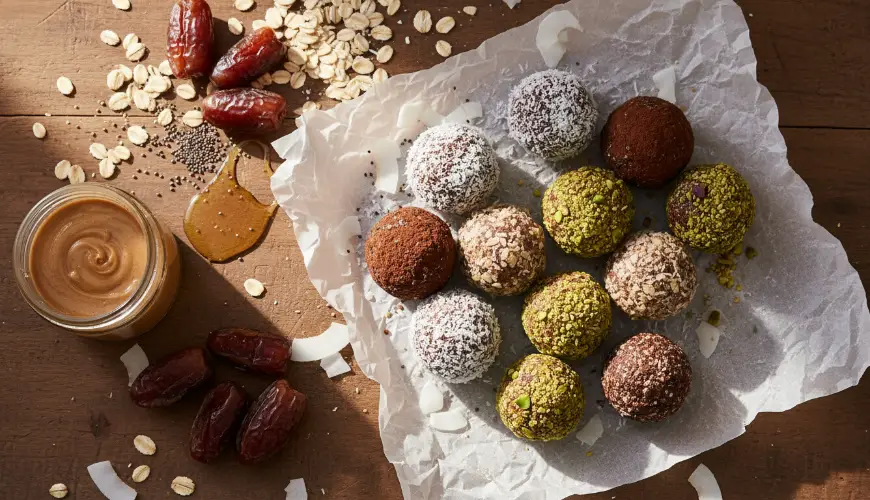
Energy balls – known in English as energy balls or bliss balls – are snacks made from natural ingredients, most commonly oats, nut butters, dried fruit, seeds, and natural sweeteners such as honey or maple syrup. The key is that they are not baked. The ingredients are simply mixed together, shaped into balls, and left to firm up in the fridge. The entire process truly takes around ten minutes, with the chilling in the fridge then happening on its own without any further effort.
Their popularity grew significantly with the rise of mindful eating and interest in the so-called whole food approach to eating – that is, consuming foods in their most natural form. According to the Harvard T.H. Chan School of Public Health, the healthy fats found in nuts and seeds are essential for proper brain function, vitamin absorption, and long-term satiety – precisely the kind of composition energy balls offer.
A typical homemade energy ball contains no added preservatives, stabilisers, or unnecessary additives that are standard in commercial bars. You know exactly what you're eating, because you made it yourself. And that is enormously valuable in today's world, where food labels are full of incomprehensible ingredient names.
Take Petra, a mother of two school-age children from Brno, who started making energy balls after she became unhappy with what her children were eating as school snacks. She replaced chocolate bars and salty crisps with homemade balls made from oats, peanut butter, and dates. The result? The children stay full longer after their snack, don't experience energy dips during the morning, and – most importantly to Petra – they took to the snack themselves and don't protest.
Basic recipe for no-bake energy balls
The foundation of the recipe is surprisingly simple and easily adaptable to what you have at home or what you enjoy. The most classic version uses oats as the base, nut butter as the binder, and honey or dates as the natural sweetener. Seeds, coconut flakes, or dark chocolate chips are added according to taste.
To make approximately 15–20 balls, you will need:
- 200 g oats (preferably fine or medium)
- 3 tablespoons peanut or almond butter
- 2–3 tablespoons honey or maple syrup
- 100 g medjool dates (or other dried fruit – raisins, cranberries)
- 2 tablespoons chia seeds or ground flaxseed
- 3 tablespoons desiccated coconut or cocoa powder
- a pinch of salt
The method is straightforward: pit the dates and blend them into a paste, or chop them very finely. In a bowl, combine the oats, chia seeds, and desiccated coconut. Add the nut butter, honey, and date paste. Mix everything thoroughly – best done with your hands, as this helps you gauge the consistency better. The mixture should be sticky enough to shape but not too wet. If the mixture is too dry, add a tablespoon of water or a little more honey. If it is too sticky, adding extra oats or a tablespoon of desiccated coconut will help.
Shape the mixture into balls roughly the size of a walnut. Place the finished balls on a tray lined with baking paper and leave them to firm up in the fridge for at least 30 minutes. Once firm, transfer them to a sealed container, where they will keep in the fridge for up to 10 days, or freeze them and use within 3 months.
How to adapt the recipe to your needs and tastes
One of the greatest advantages of this recipe is its flexibility. The basic ratios can easily be adjusted according to preferences, dietary restrictions, or whatever you happen to have in the kitchen. Energy balls are actually an ideal way to use up pantry leftovers – spare nuts, dried fruit, or seeds that would otherwise go unused.
For those following a vegan diet, simply replace the honey with maple syrup or agave nectar. The result is practically identical and equally satisfying in terms of flavour. People with gluten intolerance can opt for certified gluten-free oats, which are now widely available in health food shops.
If you want to increase the protein content – for example as a dietary supplement for physical activity – add one or two tablespoons of plant-based or whey protein powder to the mixture. This won't significantly alter the flavour, but will considerably boost the nutritional value of the balls. Sports nutritionists often recommend a combination of complex carbohydrates and protein as the ideal fuel before training, and this is precisely what this version of the recipe provides.
Flavour variations are virtually limitless. A popular version is the chocolate-coconut combination with added cocoa powder and cashew butter. A version with matcha powder is also widely sought after, giving the balls a gently bitter, sophisticated flavour while adding antioxidants. A lemon variant with a little lemon zest and vanilla tastes like a light dessert. As British chef and healthy eating author Ella Mills puts it: "Food that is good for your body doesn't have to be boring or flavourless – you just need to play with combinations."
An interesting option is also rolling the finished balls in a coating. Desiccated coconut, cocoa powder, crushed pistachios, or ground cinnamon add not only an attractive appearance but also an extra layer of flavour. If you plan to give the balls as a gift or bring them to a get-together with friends, coating them is an easy way to turn them into a visually appealing treat.
From a nutritional standpoint, it is worth highlighting the oats that form the base of the recipe. They contain beta-glucan, a type of soluble fibre that, according to research by the World Health Organization, helps lower cholesterol levels and stabilise blood sugar levels. This is precisely why energy balls don't just satisfy hunger briefly like a typical sweet, but keep you feeling full for longer.
Chia seeds added to the recipe are another nutritional treasure. They are rich in omega-3 fatty acids, calcium, and antioxidants – all in a minimal quantity. Two tablespoons of chia seeds add nutrients to the recipe that would otherwise need to be sought in far more complex meals. Flaxseeds work similarly and can be used as an alternative; they are generally more readily available and less expensive in Czech shops.
The choice of nut butter also matters. Peanut butter is the most accessible and affordable option, but almond butter offers a more delicate flavour and higher vitamin E content. Cashew butter is sweeter and creamier, while tahini – sesame seed paste – lends the balls a gently nutty, earthy flavour and is an excellent choice for those with tree nut allergies. When choosing a nut butter, always check the ingredients: ideally it should contain only nuts and possibly a pinch of salt, with no added palm oil or sugar.
When it comes to sweeteners, honey and maple syrup are the most natural choices, but rice syrup, coconut sugar, or simply dried fruit can also be used, provided there is enough of it to bind the mixture sufficiently. Dates are particularly effective in this regard – they contain natural sugars but also fibre, which slows their absorption into the bloodstream, so there is no sharp spike in blood sugar as there would be after consuming refined sweeteners.
Making energy balls is also a wonderful activity for children. Shaping the balls is simple, safe, and fun for children – and it also gives them a sense of having contributed to preparing the food, which according to psychologists increases the likelihood that they will happily eat the result. Parents thus gain not only a quick snack but also a brief shared ritual in the kitchen.
From an economic perspective, homemade energy balls are significantly cheaper than commercial alternatives. The cost of a single homemade ball amounts to just a few crowns, whereas premium energy bars in health food shops typically cost 40–70 crowns each. With regular consumption, the difference adds up quickly – and all of this while maintaining or even improving the quality of ingredients, since you have full control over what goes into the recipe.
No-bake energy balls are proof that healthy eating doesn't have to be complicated, time-consuming, or expensive. Ten minutes of preparation, a few quality ingredients, and a little creativity in choosing flavours – that is all it takes. And the result? A snack that tastes good, satisfies hunger, and does something good for your body at the same time. It's hard to imagine a better input-to-output ratio in the kitchen.