
# Newborn Jaundice and Practical Tips for Home Care

The arrival of a new life at home is a moment of pure joy for most families, but also of nervousness – especially for those encountering parenthood for the first time. Among the most common worries of the first days is newborn jaundice, a condition that sounds alarming but in most cases is a completely natural part of a baby's adaptation to life outside the womb. Nevertheless, it is important to know what jaundice actually is, how to recognise it, and what parents can do at home to best help their newborn.
Jaundice in newborns occurs due to the accumulation of bilirubin in the blood. Bilirubin is a yellow pigment that forms through the natural breakdown of red blood cells. In an adult, the liver processes this pigment without difficulty and eliminates it from the body. However, in a newborn, the liver is still immature and cannot break down bilirubin quickly enough. The result is the characteristic yellowish colouring of the skin and the whites of the eyes, which parents usually notice between the second and fourth day after birth. According to data from the World Health Organization, physiological newborn jaundice occurs in approximately 60% of full-term newborns and in up to 80% of premature babies – making it one of the most widespread conditions in the neonatal period altogether.
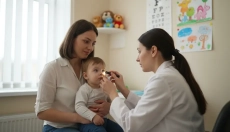
There is an important distinction that every parent should know: physiological jaundice and pathological jaundice. The physiological form appears after the second day of life, peaks around the fourth to fifth day, and resolves on its own within two weeks in healthy full-term infants. Pathological jaundice, on the other hand, is one that appears very early – within the first 24 hours after birth – or persists longer than usual, or is accompanied by other symptoms. The causes of the pathological form may include blood incompatibility between the mother and child, infection, or rarer metabolic diseases. This is precisely why it is always necessary for a paediatrician to monitor a newborn with jaundice, even if everything seems to be proceeding normally.
Try our natural products


What parents can do at home
Home care for newborn jaundice does not involve complex procedures – on the contrary, the key is simplicity and consistency. The most important step is adequate breastfeeding or feeding. Breast milk plays an irreplaceable role in this regard: it promotes the baby's bowel movements, thereby helping the body to excrete bilirubin more quickly through stools. Paediatricians recommend breastfeeding newborns at least eight to twelve times in 24 hours. If the mother does not yet have sufficient milk, it is important to discuss this with a midwife or lactation consultant, as inadequate fluid intake can actually increase bilirubin levels.
Many generations of parents remember how grandmothers would carry babies out into the sunshine. And while direct sunlight is certainly not suitable for newborns – there is a risk of overheating and sunburn to sensitive skin – indirect daylight truly does help. Diffused daylight passing through a window can mildly stimulate the conversion of bilirubin into a form that the body can more easily eliminate. It is sufficient to place the baby in the warmth and safety of the home closer to a window, but never in direct sunlight. This recommendation makes sense particularly for mild physiological jaundice, not as a substitute for medical phototherapy.
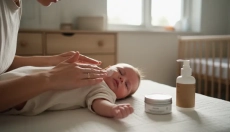
An important part of home care is also careful monitoring of the child's condition. Parents should check the colouring of the skin every day – ideally in daylight, as artificial lighting can conceal or distort the yellow colouring. A practical tip is to gently press a finger on the baby's forehead or nose: if the skin appears yellowish after releasing the pressure, jaundice is present. The whites of the eyes, the palms, and the soles of the feet should also be monitored – the further down the body the yellow colouring spreads, the higher the bilirubin level tends to be.
As American paediatrician and author of books on newborn care Dr. Harvey Karp once said: "Parents are the best observers of their child – their intuition is a valuable tool that doctors should not underestimate." These words hold true in the context of jaundice as well: a parental instinct that something is not right is reason for immediate contact with a doctor.

When to stop waiting and call a doctor
Although physiological jaundice is a benign condition, there are situations where home care is insufficient and prompt action is necessary. High levels of bilirubin, if left untreated, can in extreme cases damage the brain – this condition is called kernicterus and is a serious, but fortunately rare, complication. It is therefore important to know the warning signs.
Parents should immediately contact a paediatrician or seek medical help in the following cases:
- jaundice appears within the first 24 hours after birth
- the yellow colouring spreads rapidly to the abdomen, hands, and feet
- the baby is very sleepy, difficult to wake for feeding, or sucks weakly
- the child's urine is darkly coloured or the stools are too pale, almost white
- jaundice persists for more than two weeks in a full-term baby or more than three weeks in a premature baby
- the newborn is restless, cries in an unusual way, or has an arched back
Medical phototherapy – exposing the baby to special blue lamps – is the most common method of treating more severe newborn jaundice. Light of a specific wavelength converts bilirubin into a form that the liver can process more easily and the body can eliminate. In hospitals, this procedure is used routinely and is safe and effective. In some countries, portable phototherapy devices for home use exist, but in the Czech Republic they are still exceptional and their loan is exclusively on a doctor's recommendation.
Let us take as an example a family from Brno, where a little girl named Eliška was born in 2023. On the third day after coming home, her mother Petra noticed that her daughter's skin had a distinctly yellow tinge, reaching all the way to her abdomen. Because Eliška was also sucking weakly and was difficult to wake for feeding, Petra did not hesitate and called the paediatrician. The blood test results showed a bilirubin level at the threshold requiring a one-day hospitalisation with phototherapy. After returning home, Eliška recovered quickly. Petra's swift action prevented possible complications – and that is precisely the point: a timely response is the key to a safe outcome.
There is also a specific form called breast milk jaundice, which differs from physiological jaundice in that it appears somewhat later – usually after the first week of life – and can persist for several weeks. It is caused by substances in breast milk that temporarily slow down the breakdown of bilirubin. It is a benign condition that does not require the discontinuation of breastfeeding, but it must be distinguished from other causes of prolonged jaundice, so every such case should be assessed by a doctor. More detailed information about the various types of newborn jaundice and their differences is offered, for example, by the UpToDate portal, which is used by doctors worldwide as a source of medically verified information.
Modern parenthood brings countless sources of information, both reliable and misleading. In the case of newborn jaundice, the internet is full of advice on how to "treat" jaundice with herbal teas, water supplements, or various home remedies. It is important to reject this advice. Giving water or herbal teas to a newborn does not reduce bilirubin levels – on the contrary, it can disrupt breastfeeding and nutrient intake. The only things that truly help are frequent and effective feeding with breast milk or formula, or medically indicated phototherapy.
Why is it so important to speak openly and without unnecessary fear about newborn jaundice? Because informed parents are the best allies of paediatricians. Parents who know what to monitor and when to act can identify a problem before it worsens. At the same time, they do not panic unnecessarily at the sight of their newborn's mildly yellowish skin, because they understand that in most cases it is a transient and natural condition. Calm, regular breastfeeding, daylight, and careful observation – these are the four pillars of home care that truly make a difference.
Jaundice is for many families the first major test of parental vigilance. And it is precisely in these moments that the value of combining common sense, reliable information, and trust in one's own paediatrician becomes clear. A baby comes into the world equipped with a remarkable capacity for adaptation – and parents who accompany them through this process with love and knowledge give them the best possible start in life.