
Supporting motor skills in preschoolers starts with play
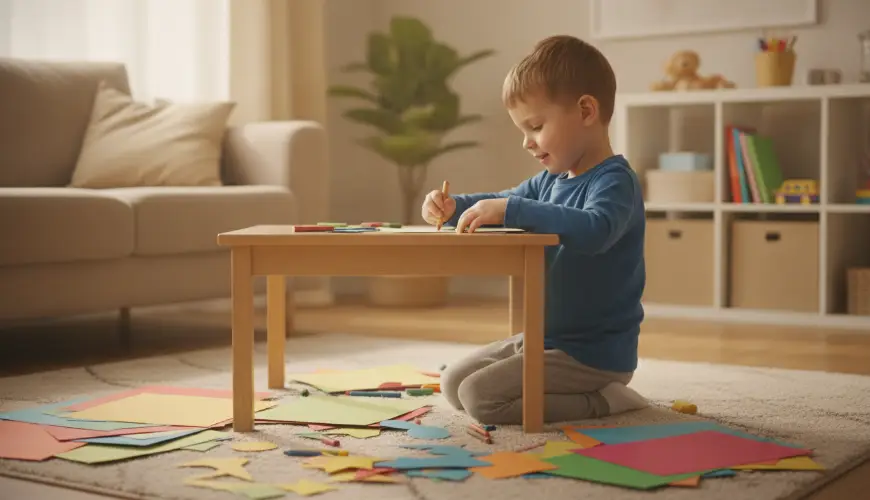
Movement is a natural part of life for young children. Yet it is becoming increasingly apparent that many preschool-aged children arrive at primary school with insufficiently developed motor skills – they cannot hold a pencil correctly, struggle with buttoning their clothes, or are unable to maintain balance while walking along a narrow line. This is not a trivial matter. The development of motor skills in the preschool years forms the foundation not only for physical abilities, but also for a child's capacity to learn, concentrate, and develop self-confidence. Why is this the case, and how can parents and educators truly help children during this crucial period?
Motor skills are traditionally divided into gross and fine motor skills. Gross motor skills involve large movements of the whole body – running, jumping, climbing, throwing a ball, or riding a bike. Fine motor skills, on the other hand, involve the small movements of the fingers and hands that are essential for drawing, cutting, modelling, or writing. Both areas complement and influence each other. A child who has insufficiently developed gross motor skills will typically also have difficulties with fine motor skills, because a stable trunk and shoulder girdle are prerequisites for precise finger movements. This interrelationship is key to understanding why it makes sense to pay attention to movement comprehensively, rather than in isolation.
Try our natural products


Why the preschool years are so crucial
The brain of a preschool-aged child develops at a remarkable pace. Between the ages of three and six, there is an intensive formation of neural connections responsible for, among other things, movement coordination, spatial orientation, and fine motor skills. Neurologists speak of so-called sensitive periods, during which the brain is exceptionally receptive to certain stimuli. Studies published in the journal Developmental Psychology have repeatedly confirmed that physical activity in early childhood has a direct impact not only on physical development, but also on cognitive functions, emotional regulation, and social skills.
It is therefore no coincidence that children who spend a lot of time playing outdoors during the preschool years – climbing trees, jumping over puddles, and rolling in the grass – tend to achieve better results at school later on. Movement stimulates the formation of new neural connections and supports the development of the cerebellum, which plays a key role in coordination and balance, as well as in information processing and learning. As educator and neuroscientist Carla Hannaford aptly observed: "Movement is the door to learning."
Yet the reality of preschool children's lives has changed significantly in recent decades. Children spend more and more time in front of screens, outdoor play is being displaced by organised activities, and free movement in nature is becoming the exception rather than the rule. According to data from the World Health Organization, up to 80% of school-aged children worldwide fail to meet the recommended levels of physical activity, with the problem beginning in the preschool years.
How to support motor development in everyday life
The good news is that supporting motor skills in preschoolers does not require expensive equipment or specialist courses. The most effective approach involves natural, everyday activities embedded in the context of play. Children learn most efficiently when they believe they are simply playing.
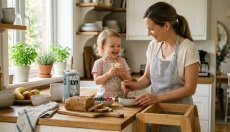
Take the example of four-year-old Eliška, who refuses to draw and quickly loses interest whenever she attempts to work with a pencil. Her mother noticed that Eliška also disliked modelling clay or using scissors. Rather than forcing her to "practise" fine motor skills at a table, she began involving her in cooking – kneading dough, shaping dumplings, and peeling eggs. She added play with kinetic sand and building with small construction pieces. After a few weeks, Eliška's ability to hold a pencil improved significantly – and crucially, she began drawing of her own accord, because her hands were finally doing what she expected of them.
This example illustrates a fundamental principle: fine motor skills develop best through meaningful, tactilely rich activities that the child enjoys and that are appropriate to their current level. Excessive pressure or premature demands, on the other hand, lead to frustration and resistance.
A similar principle applies to gross motor skills. Free outdoor play – chasing games, climbing on playground equipment, skipping rope, riding a balance bike or bicycle – is absolutely irreplaceable for gross motor development. Structured physical activities such as dance, children's yoga, or swimming are excellent supplements, but not substitutes for spontaneous movement. Children need space to experiment with movement on their own terms – to fall, get up, and try new things without fear of failure.
In the home environment, gross motor skills can also be supported in subtle ways. Walking on uneven terrain, carrying shopping, jumping over puddles, balancing on a kerb, or collecting pine cones in the forest – these are all activities that children love and that simultaneously provide intensive training in balance, coordination, and strength. Parents who wish to consciously support their child's development need not look far.
Activities that combine gross and fine motor skills are also highly effective. These include gardening – raking, planting, watering, carrying stones, or shaping flower beds. Gardening is also an excellent opportunity for developing other skills: patience, caring for living things, and a relationship with nature. It is no coincidence that many Montessori and Waldorf schools place great emphasis on working with soil and natural materials.
Another popular tool is natural and eco-friendly toys made from non-toxic materials – wooden building blocks, rope swings, bamboo tools for playing in sand, or fabric dolls. Unlike plastic toys with a predetermined function, these objects stimulate creativity and encourage children to think more about how to use them, which naturally develops both motor skills and cognitive abilities. When choosing toys, it is worth noting that FSC certification or eco-labelling provides a good guide for selecting safe and sustainably produced products.
When to take notice and seek professional help
Most children progress through motor development at their own pace, and minor variations are entirely normal. Nevertheless, there are situations in which it is appropriate to seek professional help. An occupational therapist or physiotherapist specialising in children can accurately assess whether a child's development is within the normal range and suggest specific tailored exercises.
Parents should take notice if a child at the age of four is still unable to jump with feet together, has significant difficulties with dressing, cannot copy a simple drawing (such as a circle or square), or avoids physical activities and play with peers. Similarly, a visit to a specialist is warranted if a child approaching school age cannot use scissors, fold paper, or thread beads.
Early intervention is crucial in cases of motor difficulties. The sooner a problem is identified and addressed, the easier it is to prevent difficulties at school. Occupational therapists, for example, work with children through play and show parents how to gently practise areas of weakness at home. This is not a stigma or a cause for panic – it is a natural part of caring for a child's healthy development.
Educators in nursery schools play an irreplaceable role in this regard. Quality early childhood education includes sufficient movement, work with various materials, art and music-movement activities, and time for free outdoor play. The Czech Framework Educational Programme for Preschool Education explicitly includes physical and movement activities among the key areas of development, reflecting the scientific consensus on their importance.
Parents should be active partners with the nursery school and take an interest in how much opportunity their child has for movement. At the same time, it remains true that the home environment and family habits continue to have the greatest influence. A child who spends afternoons outdoors with their parents, helps in the kitchen, paints, glues, and creates, has a significantly better starting position than a child who lacks these stimuli.
Supporting motor skills in preschoolers is ultimately not merely a matter of pencils and exercise plans. It is a way of giving children the joy of movement, pride in their own abilities, and confidence in their bodies. A child who believes in their ability to climb over an obstacle or make a gift for their grandmother with their own hands carries that self-confidence forward – into school, into relationships, and into life. And that is a gift well worth every effort made.