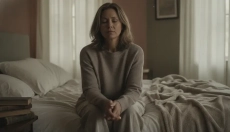

Hikikomori or isolation in adult women is growing around the world
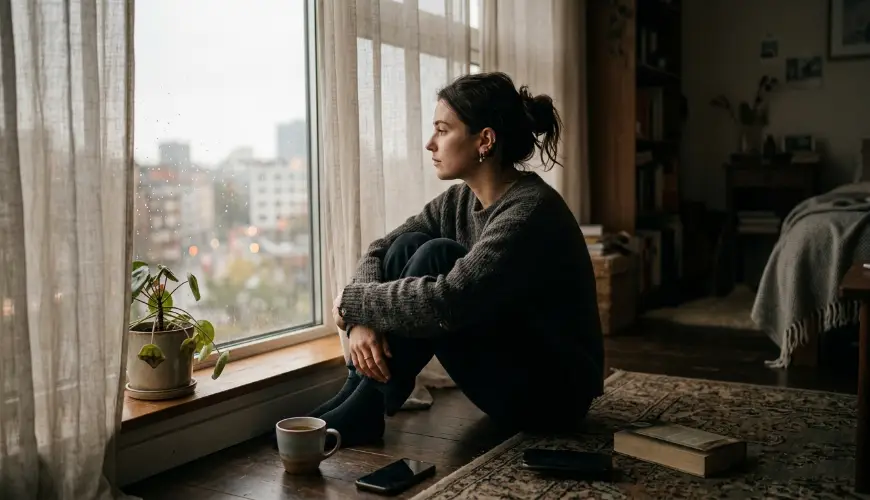
The word "hikikomori" comes from Japanese and roughly translates as "withdrawing inward" or "being shut in." Japanese psychiatrist Tamaki Saitō first described the term in the 1990s as a condition in which a person stops leaving home for a period of more than six months and avoids any social contact. It was originally assumed to be almost exclusively a problem among young Japanese men who were unable to cope with performance pressure in school and work environments. Today, however, we know that this perception was incomplete – and perhaps deliberately oversimplified. Hikikomori is increasingly affecting adult women, not only in Japan but around the world, including Europe.
Why did we not know about this for so long? The answer is surprisingly simple: women isolate themselves differently. Their withdrawal tends to be less conspicuous, more socially acceptable, and more easily overlooked by those around them. While a young man locked in his room attracts attention, a woman who takes care of the household, does not work, and does not go outside may be perceived as "the one who devotes herself to the family" or "the introverted type." Society, in a sense, permits her this invisibility – and that is precisely why the situation of many women is so serious.
Try our natural products

Why Women Remain Invisible
Research published in the academic journal World Psychiatry showed that the global prevalence of hikikomori is significantly higher than originally estimated, and that women make up a considerable proportion of those affected. The problem, however, lies in the fact that female isolation tends to be masked by the roles society assigns to women. Caring for the household, looking after children or sick relatives – all of these are legitimate reasons for a woman not to go outside, without anyone raising an eyebrow.
Imagine a thirty-five-year-old woman living in a medium-sized city. She stopped going to work after maternity leave because she "never got around to returning." She gradually reduced contact with her friends – first postponing meetings, then stopped responding to messages altogether. She shops exclusively online and has food delivered. Her partner works; the children go to nursery school. She is at home, alone, every day, and no one finds it strange. Not even she herself – at least not at first. Such a story is not exceptional. It is typical.
Female isolation develops slowly and imperceptibly, almost always under a pretext that sounds reasonable: fatigue, caring for others, the need for quiet. It is precisely this gradualness that makes it so insidious. It is not a dramatic break, but a series of small decisions, each of which makes sense individually, yet their sum creates a solid wall between the woman and the world.
Psychologists point out that hikikomori in women is very often underpinned by a combination of anxiety disorders, depression, and trauma – all of which tend to be diagnosed late or not at all in women. According to data from the World Health Organization, approximately twice as many women as men suffer from depression, with a large proportion of them never seeking professional help. Isolation then functions as a relief strategy – it reduces anxiety in the short term while deepening it in the long term.
It is important to distinguish between intentional solitude, which can be healthy and restorative, and pathological isolation, which gradually paralyzes a person. Philosopher and writer May Sarton wrote: "Being alone with myself is enormously important to me. But being imprisoned alone with myself – that is hell." It is precisely this boundary – between healthy solitude and imprisonment – that is crucial in the case of hikikomori, and at the same time very difficult to recognize.
A Silent Epidemic of Modern Times
The COVID-19 pandemic dramatically worsened the situation. Lockdowns normalized staying at home to such an extent that many women who were already hovering on the edge of isolation quietly crossed that line – and never returned. The home became not only a refuge but also a prison, with the walls between these two states being thin and easily overlooked.
Digital technology plays an ambiguous role in this context. On one hand, it allows isolated women to maintain at least minimal contact with the outside world – through social media, video calls, or online communities. On the other hand, it paradoxically deepens isolation by reducing the necessity of physical contact to an absolute minimum. When everything can be handled from the sofa – shopping, working, communicating, entertaining oneself – the motivation to leave home disappears. And with it, the ability to do so.
Social media also adds a layer of comparison that is particularly toxic for women with a tendency toward isolation. The constant stream of images depicting the "perfect lives" of other women reinforces feelings of personal inadequacy and shame – and shame is one of the most powerful drivers of hikikomori. Shame says: I am not good enough to be out in the world. I am not good enough to be seen.
Researchers from the Japanese National Police Agency and Ministry of Health estimate that over one million people in Japan live in varying degrees of isolation. European studies suggest that the situation on the old continent is not much better – merely less documented. In the Czech Republic, no systematic data on the prevalence of hikikomori currently exists, which in itself speaks to how little this topic is reflected upon in the domestic context.
Yet the signs are all around us. They are women who stopped coming to neighborhood events. Friends who always find a reason why they cannot meet. Colleagues who disappeared from view after parental leave. Sisters who "are fine, they just need some quiet." This invisibility is not coincidental – it is the consequence of how society allows women (or rather, does not prevent them from) disappearing.
Perfectionism also plays an important role – it is statistically more pronounced in women than in men and manifests in a specific way in the context of hikikomori. A woman does not withdraw because she has given up – she withdraws because she is afraid of failing. She is afraid of not being funny enough, pretty enough, successful enough, interesting enough. And because the outside world poses the threat of judgment and comparison, she would rather stay where it is safe. At home. Alone.
Physical health must not be left out of consideration. Prolonged sedentariness, lack of natural light, disrupted sleep patterns, and neglected nutrition – these are all accompanying features of isolation that gradually take their toll on the body. Movement, fresh air, and natural light are scientifically proven factors that support psychological balance. A study published in JAMA Psychiatry has repeatedly confirmed that regular outdoor exercise reduces the risk of depression by tens of percent. Isolation completely blocks this natural defense mechanism.
Caring for one's own body and the environment in which a woman lives can, in turn, become one of the first steps back. It is not about grand gestures, but about small rituals – a morning cup of tea by the window, tending to a houseplant, a conscious choice of foods that nourish the body. A healthy lifestyle in the broadest sense – as care for oneself, one's environment, and one's relationship with the world – can serve as a quiet bridge from isolation back to life. It is not a cure, but rather anchors that remind us that both body and mind need care and contact with the world.
But how does one recognize isolation – in oneself or in someone close? There are several warning signs worth paying attention to:
- Gradual reduction of social activities without any apparent external reason
- Avoidance of phone calls and in-person meetings, with communication taking place exclusively in writing or not at all
- A sense of relief when canceling plans and growing anxiety at the prospect of leaving home
- Loss of interest in activities that previously brought joy
- Growing dependence on the online environment as a substitute for real relationships
- Shame and the feeling of "not being good enough" for contact with the outside world
If someone recognizes themselves in these signals, it is important to know that this is not a sign of weakness or failure. Hikikomori is not a choice – it is the psyche's response to overload, trauma, or long-term unmet needs. And like any response, it has a cause that can be named and addressed.
Professional help – whether in the form of psychotherapy, psychiatric care, or self-help groups – is crucial in such cases. In the Czech Republic, one can contact, for example, the Centre for Mental Health or use online platforms for psychological counseling, which are naturally more accessible for women in isolation than a physical visit to a clinic.
Hikikomori in adult women is a topic that deserves loud attention – precisely because it happens in silence. It happens behind closed doors, under the guise of everyday life, with a face that does not at first glance look like the face of someone in need. And perhaps that is precisely why it is so urgent to speak about it – while there is still someone to listen.