

# How an Air Ionizer Works and What to Expect from It An air ionizer is a device that is increasing
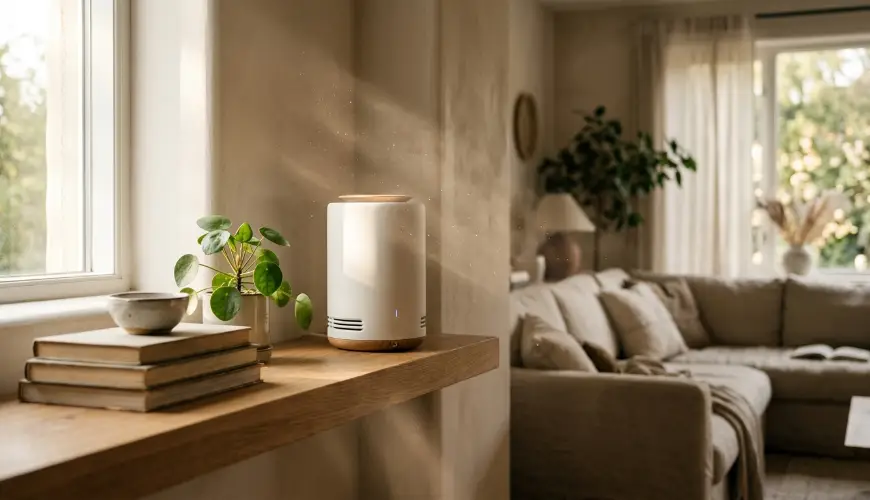
The air we breathe at home, in the office or at school can be surprisingly more polluted than the air outside. Dust, mites, chemical fumes from furniture, pollen, mould – all of this accumulates in enclosed spaces and we inhale it throughout the day without even noticing. It is no wonder, then, that the market for air purification devices has exploded in recent years. Among the most discussed products in this category are air ionisers – devices that promise cleaner, fresher and healthier air with almost no effort. But are these claims backed by real evidence, or is it simply cleverly packaged marketing?
The answer is not as straightforward as it might seem. Air ionisers have decades of research behind them, a host of supporters and critics alike, and a whole range of different models with varying levels of effectiveness. To judge whether such a device makes sense in the home, one needs to understand how it actually works and what to realistically expect from it.
Try our natural products
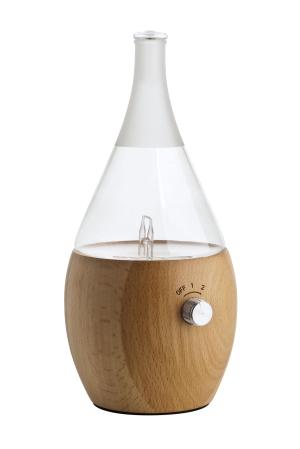
How does an air ioniser actually work?
The principle behind an air ioniser is rather elegant. The device uses high voltage to generate negatively charged ions – molecules of oxygen with an extra electron. These ions are released into the surrounding air, where they attach to dust particles, allergens, bacteria and other contaminants. The charged particles are then attracted to an electrically conductive surface – either a dedicated collection plate inside the device, or simply the nearest wall, furniture or floor. The result is air stripped of some of its impurities, which settle on surfaces rather than floating through the air and entering the lungs.
Negative ions are not, in fact, an invention of modern technology. They occur naturally in the wild – near waterfalls, after thunderstorms, in forests or along the sea shore. It is no coincidence that people feel refreshed and energised in these places. Research shows that the concentration of negative ions in natural environments can be up to ten times higher than in enclosed rooms, particularly those equipped with electronics, air conditioning or synthetic materials.
This is precisely where an air ioniser comes in as a technological substitute for the natural environment. The logic is straightforward: if negative ions occur naturally in places where people feel good, why not produce them artificially at home or in the office?
The scientific basis for this approach is real, but as is often the case, the devil is in the details. Different studies yield different results, and their interpretation depends on the type of ioniser tested, the conditions under which it was tested, and the measure of success used. A review of research published in the academic journal Indoor Air, for example, shows that ionisers can indeed reduce the concentration of dust particles in the air, but their effect on biological contaminants such as bacteria or viruses is less clear-cut and depends on the specific design of the device.
What an air ioniser can handle – and what it cannot
Let us consider a specific situation: a family with a young child living in a panel-block flat in the city. The windows are rarely opened due to smog and noise, the flat has a carpet, two cats and a father who works from home at a computer. The air in such a flat is literally charged – with dust, animal allergens, microplastics from the carpet and electromagnetic fields from the electronics. The mother, who herself suffers from seasonal allergies, begins to consider an air ioniser as a possible solution.
In this case, an ioniser may genuinely help, but only to a certain extent. The device can reduce the amount of dust particles and allergens floating freely in the air – they attach to the charged ions and settle on surfaces, where they can then be wiped or vacuumed away. This is real relief for allergy sufferers, as fewer allergens in the air means less contact with the airways. Some studies also suggest that negative ions may have a beneficial effect on mood and mental wellbeing – research published on the PubMed platform points to a possible link between negative ionisation and the alleviation of seasonal depression symptoms, although the authors themselves note the need for further research.
It is equally important to know what an ioniser cannot do. It will not remove odours caused by smoking or cooking – for that, devices with an activated carbon filter are more suitable. It does not reliably eliminate viruses or bacteria to a degree that would allow it to replace disinfection. And last but not least – ionisers that produce ozone as a by-product can actually be harmful to health at higher concentrations. The United States Environmental Protection Agency (EPA) explicitly warns against ozone-producing ionisers, as this gas can irritate the airways and worsen asthma. It is therefore crucial when selecting a device to check whether the manufacturer guarantees zero or minimal ozone emissions.
This nuance is often deliberately overlooked in marketing materials. Manufacturers emphasise the benefits while remaining silent about the risks – and a consumer who does not take the trouble to research more deeply may bring home a device that paradoxically does more harm than good.
What to watch out for when choosing
The market for air ionisers is now flooded with products of varying quality, from cheap imitations to sophisticated devices from reputable manufacturers. Navigating this offering without basic knowledge is almost impossible. A few key parameters, however, can make the selection process significantly easier:
- Ozone: Choose devices certified as "ozone-free" or with ozone emissions below 0.05 ppm, which is the threshold set by the EPA.
- Collection plate versus passive ionisation: Devices with a collection plate are more effective, as they capture contaminants inside the unit. Passive ionisers allow particles to settle on walls.
- Room coverage: Every ioniser has a recommended room size – using a device that is too weak in a large space will have no effect.
- Combination with a HEPA filter: The most effective devices combine ionisation with mechanical filtration via a HEPA filter, which captures even very fine particles.
- Certification and testing: Look for devices with independent certifications, such as AHAM (Association of Home Appliance Manufacturers) or certification from accredited European laboratories.
As leading American indoor air quality expert Jeffrey Siegel once remarked: "The best air purifier is the one that actually works in the conditions of your home – not the one that looks best in an advertisement." This thought applies perfectly to ionisers as well.
It is also important not to forget that no device is a substitute for basic hygiene habits. Regular ventilation, frequent vacuuming, reducing synthetic materials in the interior and maintaining optimal humidity levels (ideally between 40 and 60%) are steps that will improve indoor air quality more reliably than any device. An air ioniser should complement these measures, not replace them.
An interesting perspective is also offered by comparing ionisers with other air purification technologies. Classic air purifiers with HEPA filters have long enjoyed stronger support within the expert community, because their principle – the mechanical capture of particles – is more easily measurable and less dependent on variable environmental factors. Ionisers, by contrast, are quieter, more energy-efficient and do not require filter replacement, making them an attractive choice for those seeking a low-maintenance solution. The ideal combination for allergy sufferers or asthmatics is a device that combines both technologies – that is, ionisation supplemented by HEPA filtration.
The media and influencers, who in recent years have presented air ionisers as miraculous devices capable of curing everything from fatigue to chronic respiratory disease, also bear their share of responsibility. Such exaggeration not only misleads consumers but also undermines trust in products that, when used correctly, can genuinely provide relief. Healthy scepticism and the ability to distinguish marketing language from scientifically substantiated claims are invaluable skills in this regard.
Ultimately, it becomes clear that an air ioniser is neither a miraculous invention nor a pointless marketing gimmick. It is a tool with real potential and real limitations – like most things in life. For someone living in an environment with elevated dust levels, suffering from allergies or spending most of the day in an enclosed office, a quality air ioniser with no ozone emissions can represent a meaningful investment in health. For someone who ventilates regularly, lives in a house surrounded by greenery and has no respiratory health problems, it will be more of a pleasant addition than a necessity. The key is an informed decision – and that requires the ability to read between the lines of an advertising message and turn to verified sources, such as the World Health Organization's recommendations on indoor air quality or independent consumer tests.