

Nutritional yeast smells like cheese and is good for your health
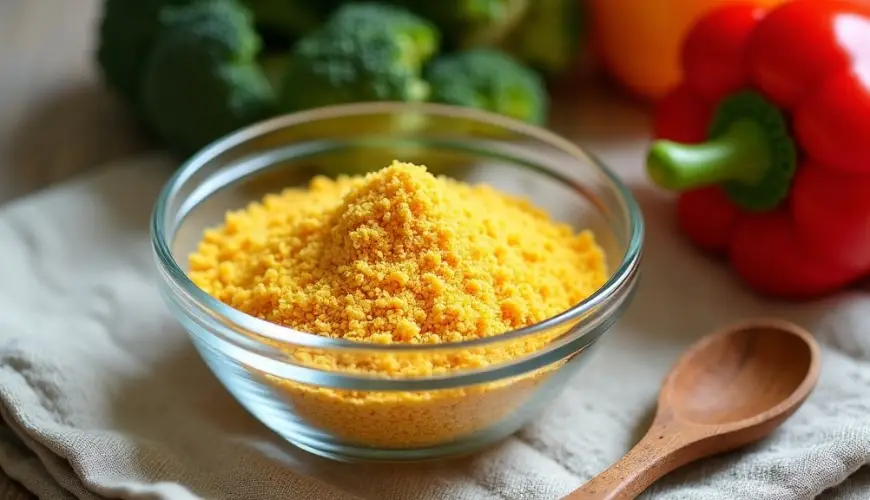
Somewhere on the boundary between kitchen seasoning and dietary supplement lies an ingredient that has gained devoted fans around the world in recent years. Nutritional yeast – known in English-speaking countries as nutritional yeast or colloquially as "nooch" – is slowly making its way into Czech households, and for good reason. Yet for many, it remains a mystery. What exactly is it, what does it taste like, what is it used for, and why is it spoken about with such enthusiasm?
The answers are not complicated, but they deserve a little context.
Try our natural products
What exactly is nutritional yeast?
Nutritional yeast is a deactivated form of yeast, specifically the species Saccharomyces cerevisiae – the same organism used in brewing beer, making wine, or producing conventional baker's yeast. The key difference is that nutritional yeast has undergone a heating process during which the yeast cells lost their biological activity. This means that it does not ferment, does not react with dough, and has no leavening properties. Instead, it remains in the form of dry flakes or a fine powder that is stable at room temperature and will keep for a very long time in a sealed container.
Visually, it resembles fine yellow flakes or powder, somewhat similar to grated Parmesan. And this visual similarity is no coincidence – nutritional yeast has a distinctive, cheesy, nutty flavour with a characteristic depth that in the culinary world is called umami. This flavour is the result of naturally occurring amino acids, particularly glutamic acid, which is responsible for that pleasant, full sensation on the palate familiar to anyone who has ever tasted a mature cheese or a well-made broth.
The origins of nutritional yeast date back to the first half of the 20th century, when it was first systematically studied as a nutritional source. Today it is produced by numerous manufacturers around the world – the yeast is grown on various substrates, most commonly molasses from sugar cane or sugar beet, then harvested, washed, heated and dried. The result is a product with a remarkable nutritional profile that deserves attention.
The composition of nutritional yeast is one of its greatest strengths. It is an exceptionally rich source of protein – typically containing around 40 to 50 grams of protein per 100 grams of product, and these proteins are complete, meaning they contain all the essential amino acids that the human body cannot synthesise on its own. This is rare in the plant world, as most plant-based protein sources lack at least one essential amino acid. For this reason, nutritional yeast has become particularly popular among vegans and vegetarians, though it is certainly not intended for them alone.
Alongside protein, nutritional yeast is a natural source of B vitamins – thiamine (B1), riboflavin (B2), niacin (B3), pantothenic acid (B5) and pyridoxine (B6). Many commercially available varieties are also fortified with vitamin B12, which is otherwise virtually absent from plant-based diets and whose deficiency can have serious health consequences with long-term veganism. As noted by Healthline, for example, one tablespoon of fortified nutritional yeast can cover more than 100% of the recommended daily intake of vitamin B12.
It also contains minerals such as zinc, selenium, manganese and molybdenum, beta-glucans (fibres with a positive effect on the immune system) and antioxidants. At the same time, it is naturally gluten-free, lactose-free, cholesterol-free and has a low fat and sodium content. It is hard to imagine an ingredient that could offer more nutritionally in such a small quantity.
Why keep it at home and how to use it in the kitchen
Theory is one thing, practice another. And it is in practice that nutritional yeast truly shines. Consider Lenka, a thirty-year-old graphic designer from Brno who switched to a predominantly plant-based diet two years ago. At first, she missed that cheesy flavour that makes food satisfying – in pasta, on toast, in soups. Then she discovered nutritional yeast. Today she adds it to almost everything: she sprinkles it over freshly cooked spaghetti, stirs it into potato soup, uses it as the base for homemade vegan Parmesan, or as a seasoning for popcorn. She says she can no longer imagine her kitchen without it.
Lenka's experience is not unusual. Nutritional yeast is surprisingly versatile in the kitchen. It works as a natural flavour enhancer, adding depth to food without the addition of salt or artificial additives. Added to sauces, soups or dips, it creates a rich, full flavour that would otherwise require hours of cooking or expensive ingredients. Mixed with cashews, lemon juice and garlic, it produces a surprisingly faithful substitute for cream cheese. Stirred into a little olive oil and spread on bread before baking, it creates a crispy, golden crust with a distinctive flavour.
The most common ways to use nutritional yeast in the kitchen include:
- sprinkling over pasta, rice or potatoes instead of cheese
- adding to soups, sauces and ragouts for umami depth
- stirring into pancake batter or savoury muffins
- using as the base of a vegan "cheese" dressing
- mixing into popcorn together with olive oil and spices
- adding to smoothies or protein shakes (the flavour is subtle when combined with fruit)
It is important to know that nutritional yeast should not be exposed to excessively high temperatures for extended periods, as heat can degrade some of the vitamins, particularly B12. It works best when added at the end of cooking or directly to the finished dish.
For those interested in the scientific background, it is worth noting that research into the beta-glucans found in nutritional yeast suggests they have a positive effect on the body's immune response. Studies published in the peer-reviewed journal Nutrition Journal, for example, suggest that regular consumption of beta-glucans may contribute to a healthier immune system and better management of oxidative stress. These are promising findings, though it is always worth bearing in mind that no single food is a cure-all.
As a wise aside, nutritional consultant Sharon Palmer, author of The Plant-Powered Diet, has said: "Food should be delicious first – and only then nutritious. Nutritional yeast is one of the few ingredients where both go hand in hand without compromise."
The practical side of things also includes the question of availability and cost. Just a few years ago, nutritional yeast was almost impossible to find in the Czech Republic and had to be ordered from abroad. Today it can be found in specialist health food shops, eco-focused online stores and some larger supermarkets. The price ranges from roughly 150 to 300 crowns for 100 to 200 grams, which may seem high, but given how little is used per serving (typically one to three tablespoons), a packet lasts a very long time.
When choosing a product, it is worth paying attention to a few things. Fortified varieties – those supplemented with vitamin B12 – are more suitable for people who are reducing or eliminating animal products. Unfortified varieties are still nutritious, but do not naturally contain B12. It is also worth checking the ingredients list: quality nutritional yeast should not contain unnecessary additives, fillers or artificial flavourings. The shorter and more readable the list of ingredients, the better.
Is nutritional yeast suitable for everyone? Generally yes, but there are exceptions. People with gout or elevated uric acid levels should exercise caution, as yeast contains purines that can raise uric acid levels. Similarly, people with Crohn's disease should consult a doctor, as some studies suggest that yeast may contribute to inflammation in sensitive individuals. For a healthy person without these specific conditions, however, nutritional yeast is a safe and beneficial part of the diet.
Nutritional yeast as part of a sustainable lifestyle
The ecological dimension of nutritional yeast is also worth mentioning. At a time when more and more people are concerned about the impact of their diet on the planet, it is important to know that the production of nutritional yeast has a significantly lower ecological footprint than the production of animal proteins. Yeast grows quickly, on a relatively small area and with minimal water consumption compared to livestock farming or growing soya for feed purposes. Nutritional yeast thus fits into the broader picture of a sustainable, plant-based diet, which according to a report by the Intergovernmental Panel on Climate Change (IPCC) is one of the key tools for reducing greenhouse gas emissions in the food system.
This does not mean that everyone must immediately switch to veganism. But incorporating nutritional yeast into the kitchen – as a simple, nutritious and flavourful seasoning – is a small step that makes sense both from a health perspective and from the perspective of environmental responsibility.
For many people, the greatest barrier is simply unfamiliarity. Yeast – the word evokes risen buns rather than a modern superfood. But this apparent ordinariness is part of the charm of nutritional yeast. It is not some exotic powder with an untranslatable name, nor an expensive supplement packaged in a glossy wrapper. It is a simple, natural, thousands-of-years-old solution in a modern guise – and perhaps exactly what your kitchen is missing.