

Try aqua fitness and your body will thank you
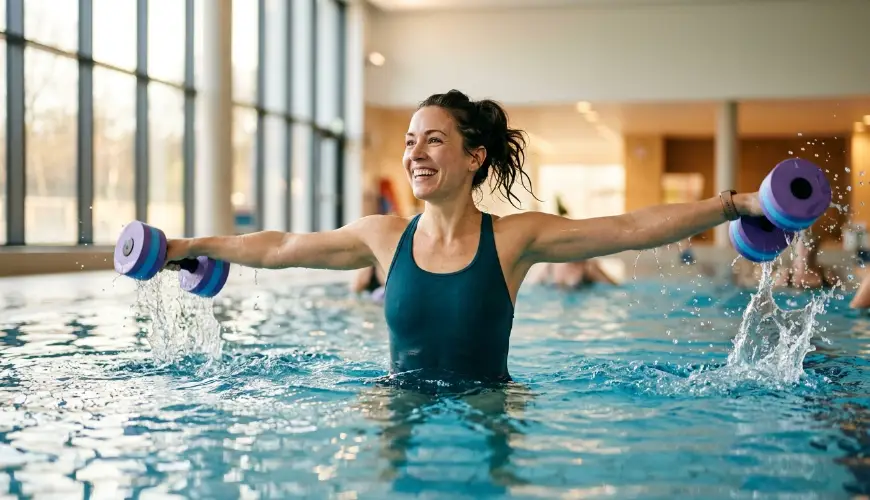
When people hear the word fitness, most imagine a gym full of dumbbells, a treadmill, or perhaps an hour of yoga on a mat. Aqua fitness, however, offers something entirely different – and yet it remains a surprisingly overlooked sport. Why is that? Perhaps because many people associate it exclusively with seniors or post-injury rehabilitation. But that is a major misconception, and one that is worth reconsidering.
Aqua fitness, that is, exercising in water, experienced its greatest boom in the 1990s, when pools across Europe were filled with groups of enthusiasts holding aqua dumbbells. Then came a wave of new fitness trends – crossfit, HIIT, spinning – and water-based exercise gradually faded from the spotlight. Today, however, it is slowly making a comeback, backed by new scientific findings that demonstrate just how remarkably effective and versatile this form of exercise truly is.
Try our natural products




What aqua fitness actually involves
At first glance, it looks simple: a group of people standing in a pool and exercising. In reality, however, it is a complex physical activity that engages virtually the entire body at once. Water creates natural resistance from all directions, meaning every movement – whether raising an arm, jumping, or rotating the torso – requires greater muscular effort than the same movement on land. At the same time, due to the buoyancy of water, the body loses approximately 90% of its actual weight, as stated by the American Council on Exercise, which dramatically reduces the load on joints, the spine, and ligaments.
In practice, this means a person can exercise intensely, burn calories, and strengthen muscles without exposing themselves to the risk of overexertion or injury, which are fairly common in land-based sports. A typical aqua fitness session includes an aerobic component – rapid leg movements, jogging in water, or jumping jacks – and a strengthening component targeting the core, arms, or glutes. Everything takes place in a vertical position, with no need to swim, so aqua fitness is accessible even to those who struggle with swimming.
The range of exercises is surprisingly varied. There are sessions focused on cardio, others on flexibility and stretching, still others on strength training, or even dance choreography. Modern aqua fitness is therefore not monotonous splashing in the water, but a dynamic discipline that continues to evolve.
Why aqua fitness is so beneficial for body and mind
The health benefits of exercising in water are well documented and extend far beyond simple weight loss. One of the most significant advantages is precisely joint protection. People suffering from osteoarthritis, chronic back pain, or recovering from orthopaedic surgery can exercise in water in ways that would be unacceptable for their bodies on land. Research published in the journal Arthritis Care & Research demonstrated that regular aquatic exercise significantly reduces pain and improves mobility in patients with knee osteoarthritis.
However, aqua fitness is not only for people with limitations. Elite athletes regularly incorporate it into their recovery programmes precisely because water allows them to maintain fitness even when muscles are fatigued or mildly injured. Runners suffering from inflammatory problems with their knees or Achilles tendons can maintain cardiovascular performance in water without further irritating the injured tissue.
The cardiovascular system benefits no less from aqua fitness. The hydrostatic pressure of water – that is, the pressure exerted by water on the submerged parts of the body – facilitates the return of blood from the periphery back to the heart. This helps the heart work more efficiently while simultaneously reducing swelling in the lower limbs, which is particularly appreciated by pregnant women or those with venous system problems. Regular exercise in water demonstrably lowers blood pressure and improves overall cardiac fitness.
Less is said about the psychological dimension of aqua fitness. Water has a naturally calming effect on the nervous system – it is no coincidence that people intuitively seek out the proximity of seas, lakes, or rivers in times of stress. Exercising in water combines physical activity with this natural relaxation effect, leading to a more pronounced reduction in cortisol levels – the stress hormone – than comparable activity on land. As American physiotherapist and aquatic therapy expert Andrea Salzman put it: "Water returns us to the state in which we began – and the body remembers."
We must not overlook the strengthening of the deep stabilising system either. The unstable aquatic environment continuously activates the muscles of the trunk, which ensure balance and correct posture. People who exercise regularly in water therefore often notice improvements in their posture in everyday life – when sitting at a computer, walking, or standing.
Who benefits most from aqua fitness
It would be a mistake to claim that aqua fitness is intended only for a specific group. Nevertheless, there are categories of people for whom this activity is quite literally an ideal choice.
Pregnant women are among the greatest advocates of water-based exercise. The buoyancy of water relieves the strain on overloaded joints and the spine, hydrostatic pressure helps with swelling, and it is an activity that, during a normal pregnancy, is safe virtually right up until delivery. Many maternity units and fitness centres therefore offer specialist aqua fitness classes for expectant mothers.
Seniors form another natural group of participants. With ageing come increasing joint problems, declining muscle strength, and deteriorating balance – and these are precisely the areas that aqua fitness specifically addresses. Moreover, the risk of falls and injury in water is minimal, which is a crucial advantage for older participants.
People who are overweight or obese frequently encounter the problem that conventional forms of exercise are painful or outright dangerous for them due to joint overload. Water removes this barrier and allows them to exercise effectively right from the start, without having to wait until their weight has dropped enough to make land-based activities feasible.
But even young, healthy athletes should not overlook aqua fitness. Incorporating it as a supplement to running, cycling, or strength training is an excellent way to prevent overexertion, improve recovery, and simultaneously develop aspects of fitness that are easily neglected on land – particularly core stability and coordination.
Consider a specific example: Markéta, a thirty-three-year-old accountant from Brno, took up aqua fitness after the birth of her second child. She wanted to return to exercise, but back pain following her pregnancy made running or aerobics impossible. After three months of regular aqua fitness sessions twice a week, her back pain had significantly diminished, her abdomen had toned up, and Markéta had grown so fond of the exercise that she continued even after the pain had completely disappeared. "I never thought I'd enjoy exercising in a pool," she says. "But the hour flew by incredibly quickly and the next day I had no muscle soreness, even though I had genuinely worked up a sweat."
Markéta's story is, in fact, very typical. Aqua fitness has a low entry barrier – no specialist equipment or exceptional physical fitness is required – and yet it delivers results that are surprisingly rapid and tangible for many people.
How to get started and what to watch out for
Getting started with aqua fitness is easier than it might seem. Most larger fitness centres and swimming pools offer group classes led by certified instructors. For beginners, a group class is the ideal choice, as the instructor monitors correct exercise technique and adjusts the intensity to suit the group's needs. The water depth is typically around waist or chest height, so the ability to swim is not a requirement.
In terms of equipment, the basics are a comfortable swimsuit and, if desired, a swimming cap. Many classes make use of additional accessories such as aqua dumbbells (foam or plastic weights), aqua noodles, flotation belts, or aqua gloves with webbing between the fingers to increase water resistance. These accessories are usually available to borrow from the pool, so beginners need not invest in anything.
It is important to choose a class suited to one's own fitness level and health status. There are courses for complete beginners, intensive cardio sessions for more advanced participants, specialist classes for seniors or pregnant women, as well as aqua yoga or aqua Zumba for those seeking movement with a dance element. If someone has a specific health condition, it is advisable to consult a doctor or physiotherapist before choosing a class.
One of the few drawbacks of aqua fitness is the need for access to a pool, which may not be straightforward for everyone. The cost of classes typically ranges from 100 to 200 Czech crowns per hour, which is comparable to other group fitness activities. Some enthusiasts eventually acquire their own equipment so they can exercise independently – for example, during recreational swimming sessions.
Aqua fitness has once again been winning fans across generations in recent years, precisely because it offers something that modern fitness trends often lack: genuine accessibility for everyone, regardless of age, fitness level, or health status. The combination of low injury risk, proven health benefits, and the surprisingly enjoyable experience of moving in water makes aqua fitness a discipline that truly deserves far more attention than it currently receives. Those who try it once rarely come away disappointed.