

Antidepressants Combined with Psychotherapy Deliver the Best Results in Treating Depression
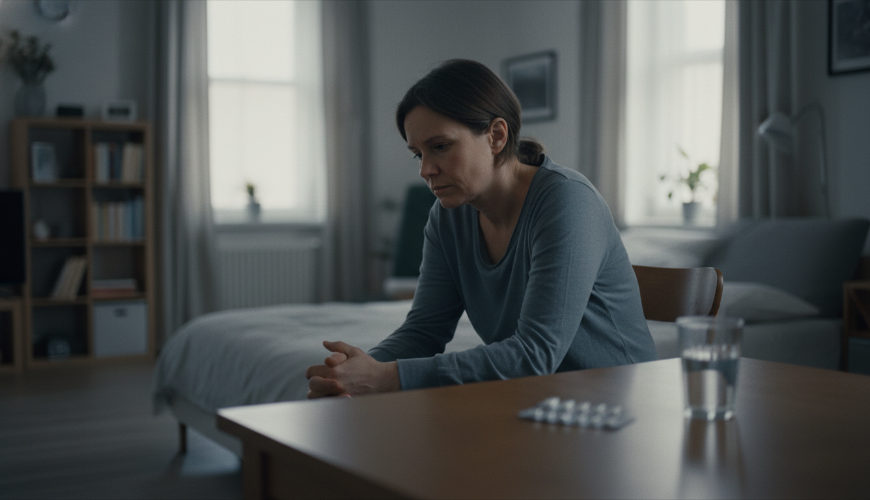
One in five Czechs will experience depression during their lifetime. And although this illness is today one of the most common causes of work disability in Europe, it is still surrounded by numerous myths and misunderstandings – especially when it comes to its treatment. Antidepressants, medications that can fundamentally improve the quality of life for millions of people, are often the subject of concerns, fear, and sometimes even demonization. Some people fear they will become addicted. Others believe the drugs will turn them into "a different person." And still others refuse medical help because they think they need to cope on their own. So what should we know about antidepressants before forming a definitive opinion?
It's worth looking at the facts – at how these medications actually work, what science says about their safety, and why it's important to have an open and informed discussion about them. Because it's precisely the lack of information that most often discourages people from effective treatment.
Try our natural products



How antidepressants work: what happens in the brain
To understand why and how antidepressants work, we need to take at least a brief look at what happens in the brain during depression. The brain communicates through chemical substances called neurotransmitters – among the most important ones in terms of mood are serotonin, norepinephrine, and dopamine. In a person suffering from depression, the balance of these substances is typically disrupted. It's not a simple equation of "too little serotonin = depression," as is sometimes stated in oversimplified terms. Current neuroscience understands depression as a complex disorder involving changes in communication between nerve cells, in brain neuroplasticity, and in the regulation of the stress response. Nevertheless, influencing neurotransmitter systems remains the key mechanism by which antidepressants help.
Selective serotonin reuptake inhibitors, known by the abbreviation SSRIs, are today the most commonly prescribed group of antidepressants. This group includes, for example, fluoxetine, sertraline, or escitalopram. Their mechanism of action involves blocking the reuptake of serotonin from the intercellular space (synaptic cleft) back into the nerve cell that released it. The result is that serotonin remains in the synaptic cleft longer and can more effectively stimulate the receiving nerve cell. SNRIs (serotonin and norepinephrine reuptake inhibitors), such as venlafaxine or duloxetine, work similarly but also affect norepinephrine in addition to serotonin.
However, there are other groups as well. Older tricyclic antidepressants (amitriptyline, imipramine) act on multiple neurotransmitter systems simultaneously, which makes them effective but also carries a greater risk of side effects. Monoamine oxidase inhibitors (MAOIs) prevent the breakdown of neurotransmitters by the enzyme monoamine oxidase, thereby increasing their availability. And then there are newer medications, such as bupropion, which primarily affects dopamine and norepinephrine, or mirtazapine, which has a specific mechanism of action on receptors.
What's important to realize: antidepressants don't work immediately. Unlike anxiolytics, which can provide relief within minutes, antidepressants typically need two to six weeks before their full effect manifests. This isn't because they "don't work," but because their therapeutic effect depends on gradual adaptive changes in the brain – the remodeling of receptors, strengthening of synaptic connections, and support of neuroplasticity. This fact is one of the main reasons why patients abandon treatment prematurely. Waiting for the effect to kick in is frustrating, especially when a person is suffering. But it is precisely during this phase that cooperation with a doctor is absolutely crucial.
As Professor Guy Goodwin, former president of the European Psychiatric Association, noted: "Antidepressants are not perfect, but for many people they represent the difference between a life of suffering and a life worth living."
Is it safe to take antidepressants?
The question of antidepressant safety is probably the most common one people ask – and rightly so. Every medication has its side effects, and antidepressants are no exception. However, it's important to put these risks in context and compare them with the risks of untreated depression.
Among the most common side effects of SSRIs are nausea, headaches, insomnia or conversely increased drowsiness, sexual dysfunction, and weight gain. Most of these problems tend to be most intense in the first days to weeks of treatment and gradually subside. Sexual dysfunction, unfortunately, is among those that can persist throughout the duration of medication use and is one of the most common reasons patients want to discontinue treatment. In such cases, a psychiatrist may suggest switching medications – not all antidepressants have this side effect to the same degree.
A frequently voiced concern is whether antidepressants cause addiction. The answer from experts is fairly unequivocal: antidepressants are not addictive in the way that benzodiazepines or opiates are addictive. They do not cause craving or the need to increase the dose to achieve the same effect. What they can cause, however, is so-called discontinuation syndrome – a set of symptoms (dizziness, irritability, "brain zaps," nausea) that appear when treatment is abruptly stopped. This is precisely why antidepressants should never be discontinued overnight but always gradually, under a doctor's supervision. This discontinuation syndrome is sometimes mistakenly confused with addiction, but from a pharmacological standpoint, it is a distinct phenomenon.
Special attention deserves the topic of antidepressants in children, adolescents, and young adults. The U.S. Food and Drug Administration (FDA) issued a warning in 2004 that some antidepressants may increase the risk of suicidal thoughts in individuals under 25 during the initial phase of treatment. This warning should be taken seriously, but it also needs to be understood in context: meta-analyses published in scientific journals show that in adult patients, antidepressants reduce rather than increase the risk of suicide. In younger patients, careful monitoring during the first weeks of treatment is essential.
The safety of antidepressant treatment also depends on interactions with other medications. For example, combining SSRIs with certain pain medications (tramadol), with triptans for migraines, or with other serotonergic substances can, in extreme cases, lead to potentially dangerous serotonin syndrome – a condition where there is too much serotonin in the brain. It is therefore absolutely essential that patients inform their doctor about all medications and dietary supplements they are taking, including seemingly harmless preparations such as St. John's wort, which has significant interactions with a number of antidepressants.
And then there is a question that few people ask, but which is no less important: what are the risks of untreated depression? Depression is not just a "bad mood." It is a disease that increases the risk of cardiovascular diseases, weakens the immune system, disrupts relationships and the ability to work, and in the worst cases leads to suicide. According to the World Health Organization, depression is one of the leading causes of disability worldwide. When considering the safety of antidepressants, it is therefore always necessary to compare the risks of treatment with the risks of what happens when a person does not receive treatment.
Let's imagine a specific situation. Mrs. Markéta, a forty-year-old teacher from Brno, suffered from untreated depression for two years. She gradually stopped going for walks, reduced contact with friends, her work performance declined, and her relationship with her partner was on the verge of collapse. When she finally visited a psychiatrist and began taking escitalopram, the first two weeks she felt worse – she suffered from nausea and increased anxiety. However, her doctor had prepared her in advance for these initial difficulties, so she didn't give up on the treatment. After six weeks, she began to feel gradual improvement. After three months, she returned to activities she had previously enjoyed. After a year of stable treatment, she began planning gradual discontinuation with her doctor. Her story is not exceptional – it is typical of millions of people whom antidepressants have helped return to a full life.
It is also important to mention that antidepressants should not be the only component of treatment. Research repeatedly confirms that the most effective approach to treating moderate to severe depression is a combination of pharmacotherapy and psychotherapy, particularly cognitive-behavioral therapy (CBT). Medications help stabilize brain neurochemistry enough for the patient to be able to actively work on changing thought patterns and habits within therapy. One without the other can work, but together they work significantly better – similar to treating diabetes, where insulin alone without lifestyle changes is not an ideal solution.
The role of lifestyle should not be overlooked either. Regular exercise, quality sleep, a balanced diet rich in omega-3 fatty acids, limiting alcohol, and building social connections – all of these are factors that demonstrably affect the course of depression and can increase the effectiveness of antidepressant treatment. It's not about replacing medication with a walk in the park, but about creating a comprehensive approach in which the individual components reinforce each other.
If a person is deciding whether to start taking antidepressants, they should know several practical things. First, finding the right medication may take some time. Not every medication suits every patient on the first try. A psychiatrist may need to try two or three different medications before finding the one with the best ratio of efficacy and tolerability. Second, treating depression is a long-distance run. The recommended minimum duration of antidepressant use after symptoms have resolved is six to nine months, and for recurrent episodes of depression, it may be even longer. Premature discontinuation is one of the most common causes of relapse. Third, the decision about treatment should always be the result of a dialogue between patient and doctor – it should never be a unilateral directive nor a decision made based on advice from internet forums.
Moreover, the world of psychiatry is constantly evolving. In recent years, new approaches to treating depression have attracted considerable attention, such as esketamine (a nasal spray approved for treatment-resistant depression) or research into psychedelics, specifically psilocybin, in controlled therapeutic settings. These approaches are not yet widely available and their place in clinical practice is still being defined, but they show that science is continually seeking better and more targeted ways to help people with depression.
Fear of antidepressants is understandable – after all, these are medications that affect the most complex organ in the human body. But informed fear is something different from fear based on myths. Antidepressants are not miracle pills that will solve all of life's problems. But neither are they dangerous drugs that will turn a person into a zombie. They are tools of modern medicine that, when used correctly, under professional supervision, and in combination with other therapeutic approaches, can fundamentally help people who suffer from one of the most widespread diseases of our time. And that – help and hope – is what every discussion about mental health should ultimately be about.