
Solar punk combines ecology with hope for a better world
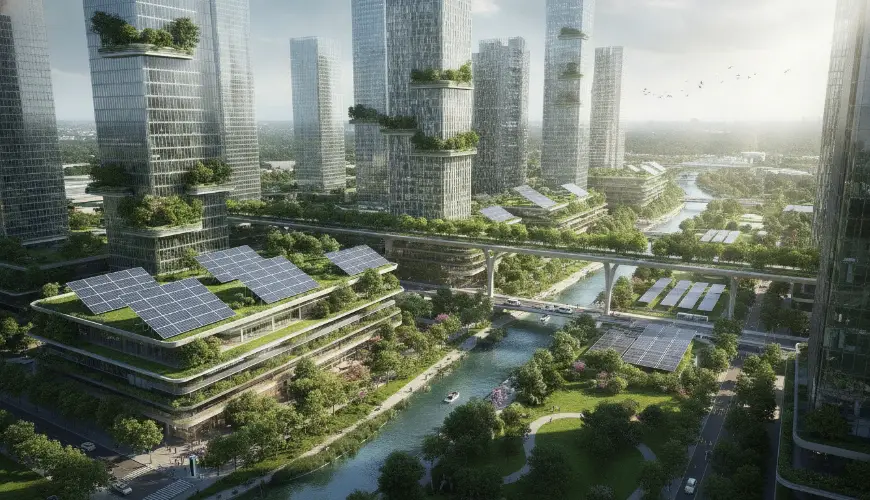
Imagine a city where rooftops are covered with solar panels intertwined with climbing plants, where community gardens sit next to a wind-powered café, and where neighbours share tools, seeds, and ideas. This isn't a utopia from a distant galaxy – it's the aesthetic and philosophy of a movement called solarpunk, which in recent years has been attracting a growing number of people exhausted by apocalyptic visions of the climate crisis. And perhaps this very exhaustion is the key to understanding why solarpunk emerged and why it matters so much.
Climate change is real, scientifically grounded, and serious. Reports from the Intergovernmental Panel on Climate Change (IPCC) confirm this with ever greater urgency year after year. Yet it is becoming increasingly clear that an approach built exclusively on fear and catastrophic scenarios doesn't work the way environmental activists had hoped. People paralysed by anxiety don't change their behaviour – instead, they disconnect from the problem, stop following the news, and fall into what psychologists call "climate apathy". Solarpunk offers a radically different response: instead of frightening people, it offers a dream.
Try our natural products


What solarpunk actually is and where it comes from
The term solarpunk first appeared around 2008 on internet forums and in the blogosphere, but as a cohesive movement it began gaining momentum during the second decade of the 21st century. It draws on the tradition of the literary science fiction genre, specifically from the branch known as "punk" – much like cyberpunk or steampunk. While cyberpunk depicts a dystopian future dominated by corporations and technologies that alienate humans from nature, solarpunk sets itself precisely the opposite goal: to show a world where technology and nature coexist in harmony, where communities are self-sufficient, and where justice is not merely an empty word.
Visually, solarpunk is unmistakable. It draws inspiration from Art Nouveau, Afrofuturism, Japanese architecture, and indigenous cultures. It envisions buildings wrapped in greenery, transparent greenhouses in the middle of cities, wind turbines of elegant design, and people of diverse backgrounds living in communities built on mutual aid. It is no coincidence that solarpunk art is full of light, colour, and life – all of this is a deliberate contrast to the grey aesthetic of the dystopias that have flooded our books, films, and series for decades.
In English, solarpunk translates straightforwardly, but even in other languages both literal renderings tend to lose part of the original charge. This is because it's not only about solar energy, but about an entire set of values: ecological sustainability, technological optimism, social justice, and community self-sufficiency. Writer and activist Rhys Williams put it aptly: "Solarpunk is about what the world could look like if we actually decided to save it."
Why is it so refreshing to read or watch stories where the future isn't a grey apocalypse but a flowering garden full of possibilities? The answer may be simpler than it seems.
Climate fear as a trap: Why anxiety alone is not enough
The psychology of environmental behaviour has been intensively examining the question of how best to motivate people towards more sustainable action over the past two decades. The results are surprising and uncomfortable for many activists. Research from the Yale Program on Climate Change Communication repeatedly shows that communication built exclusively on fear and guilt does attract attention in the short term, but in the long run leads to paralysis, cynicism, or denial.
Climate anxiety – that is, chronic fear associated with the planet's future – has become a recognised phenomenon. Young people around the world, including those in the Czech Republic, report feelings of hopelessness that prevent them from planning for the future, starting families, or investing in long-term projects. The American Psychological Association described climate anxiety as one of the key psychological trends of the 21st century. But anxiety in itself solves nothing – it needs to be transformed into action, and for that, hope is required.
Take a concrete example. Jana, a thirty-three-year-old graphic designer from Brno, describes her relationship with ecology like this: for years she watched documentaries about disappearing glaciers, read reports about species extinction, and felt increasingly unable to change anything. "The more I knew, the worse I felt and the less I did," she says. The turning point came when she stumbled upon solarpunk art and communities on social media. Instead of yet another catastrophic scenario, she saw beautiful images of a possible future and a list of concrete, small steps to move towards it. Today she grows vegetables on her balcony, shops at a zero-waste store, and is a member of a local community garden. She hasn't saved the planet – but she stopped being paralysed and started taking action.
Jana's story is not exceptional. It is precisely the mechanism that solarpunk consciously activates: replacing fear with a vision, so that fear becomes energy. Psychologists call this "constructive hope" – hope that is neither naïve nor blind, but is grounded in concrete possibilities and actions.
It is important to emphasise that solarpunk is not a denial of the climate crisis, nor a naïve claim that everything will turn out fine on its own. On the contrary – it is rooted in a precise understanding of what needs to change. It simply refuses to accept that despair is the only appropriate emotional response to this challenge.
Solarpunk in practice: From fiction to the garden next door
One of solarpunk's greatest strengths is its practicality. It is not merely an aesthetic style or a literary genre – it is a set of real practices and community projects that can be implemented today, here and now, in a panel-block flat just as readily as on a rural farm.
Community gardens and shared spaces are among the most visible manifestations of solarpunk philosophy in the real world. Dozens have sprung up in Czech cities in recent years – Prague, Brno, Ostrava, and smaller towns all have their community gardens, where people of different generations and backgrounds grow vegetables, herbs, and fruit together. These spaces are not just about food – they are about building relationships, sharing knowledge, and rediscovering a sense of community that urbanisation has largely dismantled.
Another pillar is sustainable fashion and conscious consumption. Solarpunk rejects both fast fashion and the puritanical asceticism that would put most people off sustainability altogether. Instead, it promotes beautiful, well-designed objects that are produced ethically, last a long time, and can be repaired or recycled. A quality garment made from organic cotton, natural cosmetics without unnecessary plastic packaging, furniture from certified wood – these are all small, everyday choices that together add up to a different way of life.
In solarpunk's conception, technology is not an enemy but a tool. Solar panels, community wind farms, open-source guides to repairing appliances, a shared electric bicycle in the neighbourhood – these are examples of technologies that serve people and the planet rather than corporate profits. The Right to Repair movement, which is fighting across Europe for consumers' right to repair their own electronics, is a directly solarpunk project, even if it doesn't call itself that.
It is interesting that solarpunk resonates particularly with the younger generation, which grew up with digital technologies and is simultaneously deeply troubled by the state of the planet. This generation does not want to choose between technological progress and ecology – it wants both, and solarpunk tells them that this is possible. It is no coincidence that solarpunk communities flourish on platforms such as Tumblr, Instagram, and Reddit, where they share art, recipes, composting guides, and political essays alike.
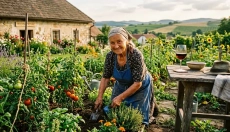
There is also a fascinating overlap between solarpunk and traditional, rural ways of life. Many solarpunk practices – fermentation, rainwater harvesting, growing one's own food, repairing rather than discarding – are in fact as old as human civilisation itself. In this sense, solarpunk is also a return to wisdom that industrial modernity marginalised, but informed by contemporary scientific knowledge and social values.
The Czech Republic may have better prerequisites for this way of thinking than might initially appear. The strong tradition of cottage culture and allotment gardening, a deep-rooted relationship with nature, and a relatively vibrant DIY and repair culture are precisely the cultural resources from which solarpunk draws. There is no need to invent everything from scratch – it is enough to name what already exists here and consciously develop it in the direction of a more sustainable future.
Solarpunk also raises an important question that goes beyond individual consumer choices: what stories do we as a society tell ourselves about the future? After decades of dystopias in cinemas, series, and books, many people can no longer even imagine a world that might be better than today's. Solarpunk trains and expands this imagination. And that may be its greatest contribution – not as a specific political programme, but as a cultural tool that helps us see that a different future is not only possible, but also beautiful and worth striving for. Because to achieve change we need more than the right arguments – we need dreams worth following.