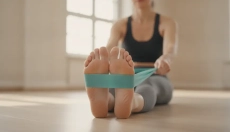

Deep postural muscles are the support of the entire body
Most people, when they hear the term "muscle strength," picture well-developed biceps, a firm stomach, or strong legs. But the body operates on a completely different principle than the one presented by fitness magazines or workout videos on the internet. The true foundation of the entire musculoskeletal system doesn't reside on the surface — it hides deep within, far from sight and from conscious control. These are the deep postural muscles, which most people don't even know exist, even though without them they would be unable to stand up, maintain balance, or move without pain.
The topic of deep muscles has been gaining increasing awareness among physiotherapists, rehabilitation specialists, and sports coaches in recent years. And no wonder — chronic back pain, poor posture, and recurring musculoskeletal injuries very often share a common denominator: these muscles are weakened, overloaded, or functioning incorrectly. Yet most standard exercise programs don't target them at all.
Try our natural products





What deep postural muscles actually are and why they matter so much
The human body can be divided, in terms of muscular architecture, into two basic layers. The superficial layer — the muscles that are easy to feel and visibly defined beneath the skin — provides movement and generates significant force. This includes, for example, the rectus abdominis, the gluteus maximus, and the triceps surae. This layer is powerful, fast, and reactive.
Beneath it, however, lies an entirely different layer. Deep postural muscles are smaller, lie closer to the skeleton and spine, and their primary role is not movement itself, but stabilisation. They work continuously, mostly completely automatically and without conscious effort — or at least they should. They ensure that joints move within a safe range of motion, that the spine maintains its correct curvature, and that the entire body functions as a harmonious whole, rather than a collection of isolated muscles.
Among the most important deep postural muscles are the transverse abdominis, the pelvic floor muscles, the diaphragm, and the deep spinal muscles known as the multifidi. Together, they form what experts call the "core" — but not in the sense of a six-pack abdomen, as the term is often distorted in popular media. The true core is a functional unit that surrounds the spine like a corset and protects it during every movement, lift, and even simple standing.
Physiotherapist and author of books on movement medicine Pavel Kolář, whose approaches are recognised internationally, emphasises in his concept of Dynamic Neuromuscular Stabilisation (DNS) that proper function of the deep stabilisation system of the spine is a fundamental prerequisite for healthy movement. Without it, the superficial muscles take over the work — muscles that are not suited for this role — and become overloaded.
Why modern lifestyle weakens these muscles
Evolutionarily, deep postural muscles are programmed for constant activity. Our ancestors engaged them naturally — walking over uneven terrain, carrying loads, sitting on the ground, or squatting. Today's way of life, however, is the exact opposite of what the musculoskeletal system was designed for.
Imagine a typical day for a modern person: they get up from bed in the morning, sit at breakfast, sit in a car or on public transport, sit at work in front of a computer, sit at lunch, sit in meetings, sit in front of the television in the evening. The average European spends more than ten hours a day sitting, as data from the World Health Organisation shows. And it is precisely prolonged sitting that is devastating for deep postural muscles — they gradually "switch off" and cease to fulfil their function.
But the problem is not only the amount of sitting. It is also the type of movement people typically engage in. Most fitness activities — machine-based strength training, treadmill running, group aerobics classes — primarily engage the superficial muscles. The deep layer is left aside. The body then develops compensatory patterns: superficial muscles take on the role of stabilisers, shorten, become overloaded, and the result is pain that seems to come "from nowhere."
Physiotherapist and author Greg Lehman put it very aptly when he noted: "Back pain is not a disease of the spine — it is a failure of the system that was meant to protect it."
This is precisely why it is so important to pay attention to how the body functions as a whole, not just how it looks or how much weight it can lift.
How to tell when deep muscles aren't functioning properly
Weakening of the deep postural muscles manifests in various ways, and the cause is not always immediately obvious. The most common signal is chronic pain in the lower back — dull, persistent, worsening after prolonged sitting or, conversely, after physical exertion. People with this pain often describe it as "spinal fatigue" or a feeling that their back "can't hold up."
Another symptom may be instability in the knees or hips, where imaging examinations (X-ray, MRI) reveal no structural damage. The joints are anatomically intact, but they lack the dynamic support that the deep muscles should provide. Similarly manifested is a tendency toward recurring minor injuries — sprained ankles, groin strains, or neck pain that returns even after apparent recovery.
An interesting yet lesser-known symptom is breathing dysfunction. The diaphragm, which is part of the deep stabilisation system, serves a dual function — respiratory and postural. If the system is imbalanced, this can manifest as shallow chest breathing, reduced exercise tolerance, or even chronic tension in the chest and shoulder area.
An experienced physiotherapist or rehabilitation physician can identify these dysfunctions through functional movement assessment. It is not enough to look only at strength or range of motion — what is crucial is observing how the body coordinates movement, how it engages different muscle groups, and where it creates compensations. Detailed methodologies for such assessment are described, for example, by the American Physical Therapy Association, which is dedicated to research into movement dysfunctions and their correction.
How to train deep postural muscles correctly
Here comes the key question: how do we strengthen these muscles when we can neither see them nor consciously control them the way we can a bicep?
The answer lies in the fact that training deep postural muscles requires a different approach than conventional strength training. It is not about maximum load or number of repetitions — it is about the quality of movement, conscious engagement of the correct muscle groups, and patience. This is precisely why methods such as yoga, Pilates, tai chi, or concepts such as the aforementioned DNS are so effective — they work with the body as a whole and teach it to move correctly, not merely more forcefully.
The foundation is learning to consciously activate the transverse abdominis — the deepest one, which surrounds the spine like a corset. This does not involve drawing the stomach inward (which activates different muscles), but rather a gentle "bracing" of the area below the navel, as if one wanted to reduce the circumference of the waist without holding one's breath. This skill seems simple, but many people only manage it after several sessions with a specialist.
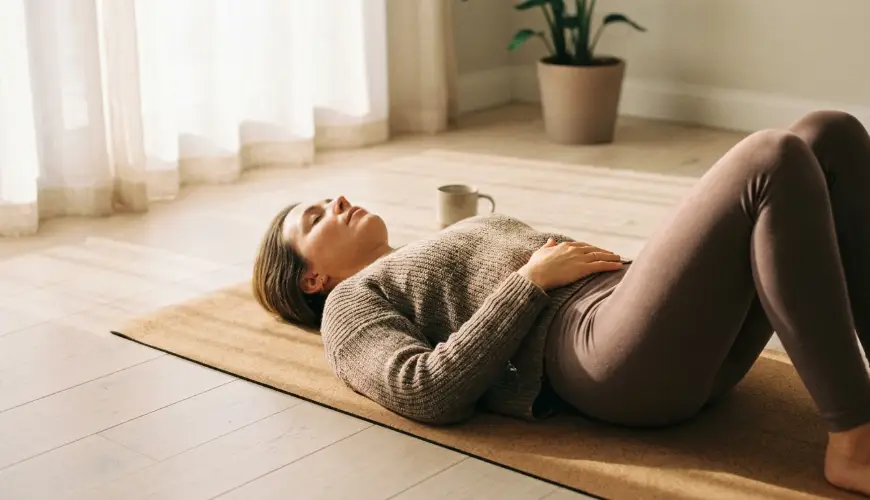
Equally important is learning to breathe correctly — that is, using the diaphragm rather than the chest. Diaphragmatic breathing can be practised lying on one's back: the hand on the abdomen should rise with each inhalation, while the hand on the chest remains relatively still. This seemingly trivial exercise has a profound effect on the entire postural system, because when breathing correctly, the diaphragm automatically activates the other muscles of the deep corset as well.
Another effective tool is exercises on an unstable surface — such as balance cushions or a BOSU ball. Instability forces the nervous system to quickly and automatically activate the deep stabilisers, because the superficial muscles react too slowly to such a situation. It is important, however, to start cautiously and progress gradually — overloading an unstable surface without prior preparation can actually lead to injury.
The experiences of people who have undergone rehabilitation focused on the deep stabilisation system are remarkably similar. Jana, a forty-year-old administrative worker from Prague, suffered from chronic back pain for several years that did not subside even with massage or gym workouts. It was only when she began regularly visiting a physiotherapist and working on activating her deep muscles that the pain gradually receded. "It seemed strange to me that the exercises that helped were so small and gentle. I expected to have to work as hard as in a gym," she described her surprise. Her story is by no means exceptional — thousands of people go through a similar experience every year.
Regularity is more important than intensity in this case. Ten minutes of daily conscious exercise targeting the deep muscles will yield far better results than an hour-long workout once a week. The nervous system learns new movement patterns through repetition, not through exhaustion.
The environment in which a person spends most of their day also plays a significant role. An ergonomically adjusted workstation, a quality mattress, or appropriate footwear — all of these influence how the body holds its posture and how the deep muscles are loaded. In this context, it is worth noting that even the choice of everyday accessories, such as supportive pillows, balance chairs, or ergonomic cushions, can play a supporting role in caring for postural health — and products of this kind, focused on a healthy lifestyle, are offered by, for example, Ferwer.
Deep postural muscles are the silent heroes of the human musculoskeletal system. They don't attract attention, they don't show up in photos, they don't earn admiration in the changing room. Yet it is precisely they who determine whether a person ages without pain or with daily discomfort, whether they fully recover from an injury or continue to battle recurring setbacks. Paying attention to them is not a fashionable trend or an alternative approach — it is an investment in the quality of movement, and therefore in the quality of life as a whole.