
# Learn How to Shop Locally Step by Step
Every year, thousands of people decide to change the way they shop for food. Some start visiting farmers' markets, others order a vegetable box directly from a grower, and others join community projects that connect consumers with local producers. This trend is not driven merely by a fashionable wave of healthy living – it is a conscious decision with far-reaching impacts on the environment, the local economy, and personal health. But where do you actually start, and how do you find your way through all the options available?
The answer is not as complicated as it might seem. Shopping locally does not necessarily mean giving up convenience or spending hours searching for the right supplier. It is more about reconsidering a few habits and opening yourself up to possibilities that, in many cases, are literally just around the corner.
Try our natural products





Why local shopping makes sense
Let's start with the basic question: why bother thinking about where food comes from? After all, supermarkets are full of vegetables, fruit, and meat. The problem, however, lies in what happens to food before it reaches the shelf. A tomato that was harvested unripe in southern Spain, transported thousands of kilometres in a refrigerated lorry, and ripened in a warehouse has very little in common with a tomato that a farmer picked in the morning and sold at a local market that afternoon. The difference is not just a matter of taste – it is also nutritional. According to research published in the peer-reviewed journal Journal of Agricultural and Food Chemistry, many types of fruit and vegetables experience a significant decline in vitamin and antioxidant content within just a few days of harvesting.
But local shopping is not only about nutritional value. It is also about relationships. When a person buys directly from a farmer or through a verified local project, they know who grew the food, under what conditions, and with what approach to the land. This transparency is something that large retail chains simply cannot offer. And it is precisely this transparency that is becoming a key criterion for a growing number of people when making purchasing decisions.
There is also an economic dimension. Money spent with a local grower stays in the region – it supports jobs, rural development, and the preservation of agricultural landscapes. According to data from the Czech Statistical Office, small and medium-sized agricultural enterprises form the backbone of rural communities, yet they face enormous pressure from cheap imported produce. Every purchase at a farmers' market or box order is, in this context, a concrete gesture of support.
Farmers' markets as the foundation of local shopping
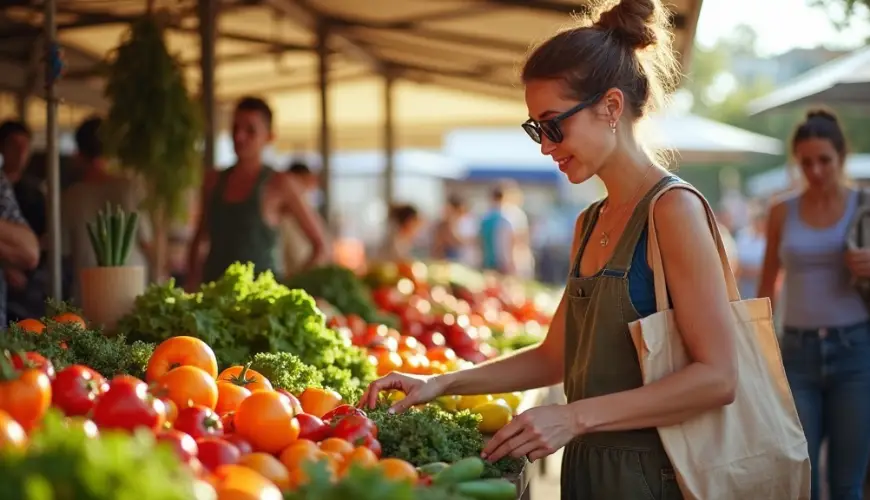
Farmers' markets are probably the best-known form of local shopping and have been experiencing a genuine boom in the Czech Republic in recent years. In Prague alone, dozens of regular markets operate, from the renowned Manifesto Market to the markets at Kulaťák and smaller community markets in individual neighbourhoods. Similar initiatives are emerging in Brno, Olomouc, Plzeň, and smaller towns, attracting both sellers and shoppers alike.
But what makes a good farmers' market? It is not simply the presence of vegetable stalls. The key is that vendors should be actual producers, not resellers. A good market has clear rules about the origin of goods, and the organisers genuinely enforce them. If a vendor cannot say where and how they grew their produce, that is a warning sign. Conversely, a farmer who enthusiastically talks about their orchard, a specific apple variety, or their method of keeping chickens is exactly the type of seller that farmers' markets were created for.
Regular market visits have another less obvious benefit – rhythm. People who visit the same market every Saturday gradually adapt their diet to what is currently in season. Instead of buying watery strawberries from Morocco in January, they learn to savour fermented vegetables, stored apples, or root vegetables. This shift is, incidentally, one of the most effective ways to reduce the environmental impact of one's diet.
A practical tip for beginners: arrive at the market early, but not right at opening time. Vendors tend to be calmer then and more willing to chat. Don't be afraid to ask about recipes or storage methods – most farmers welcome this kind of interaction and can offer tips you won't find anywhere else. And bring your own bag or basket. Unnecessary plastic packaging is a thing of the past at good farmers' markets, but bringing your own containers is always a good idea.
Vegetable boxes: the convenience of local shopping
Not everyone has the time or opportunity to regularly visit a farmers' market. For these situations, the box scheme was created – regular deliveries of fresh produce directly from a farmer or group of farmers. The principle is simple: the customer subscribes to a delivery and every week or fortnight receives a box filled with seasonal vegetables, fruit, and possibly dairy products, eggs, or meat.
The box scheme has a long history in the Czech Republic, and today there are a wide range of providers, from small family farms to larger distribution networks such as Naše bedýnka or Farmbox. Each operates slightly differently – they vary in the ability to customise the contents, the frequency of deliveries, and the method of distribution. Some schemes allow customers to select specific products, while others rely on the element of surprise and seasonal variety.
It is precisely this variety that often catches new subscribers off guard. Jana, a teacher from Brno who ordered her first box three years ago, recalls: "A turnip arrived and I had no idea what to do with it. But then I cooked it into a soup and it was wonderful. Today, turnip is one of my favourite winter vegetables." This kind of experience is typical – boxes encourage people to cook with what they have, rather than shopping for what they are used to. In doing so, they quietly broaden the culinary horizons of the whole family.
It is important to choose a supplier carefully. Find out where the produce comes from, whether the farmers use organic or at least environmentally considerate farming practices, and how logistics are handled. A box that travels hundreds of kilometres loses part of its ecological purpose. Ideally, you should choose a local or regional supplier whose farms are within a reasonable distance.
Community projects and other routes to local food
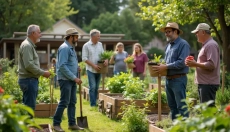
Alongside farmers' markets and box schemes, there are a whole range of community initiatives that connect consumers with local produce. One of the most interesting forms is known as Community Supported Agriculture (CSA). In this model, consumers directly fund a farm at the start of the season and receive a share of the harvest throughout the year. They thus share both the risk of a poor harvest and the joy of a good one. In the Czech Republic, this model operates through initiatives such as Zachraňme jídlo and various regional projects.
Another way to shop locally is through food groups, or so-called "food clubs" – informal associations of neighbours or friends who order together from local farmers and share transport costs. This model is particularly widespread in larger cities, where direct contact with farmers is not so easy. All it takes is a few motivated people, a shared document or group chat, and suddenly local shopping becomes accessible even to people who would not otherwise make the trip to a farmers' market.
Let us not forget local health food shops or zero-waste stores, which are increasingly working with regional producers. Shopping at such a store does not have to be more expensive than at a supermarket – especially if the customer focuses on seasonal products and shops thoughtfully. And when it comes to sustainability, shopping without unnecessary packaging combined with local produce is one of the most effective strategies for reducing your personal ecological footprint.
There are also digital platforms that make local shopping easier. Apps and websites such as Lokálně.cz or various regional online shops with farm products make it possible to find producers in your area, compare offerings, and order online. Technology thus paradoxically helps bring shopping back to its roots – to a direct relationship between the person who grows and the person who eats.
The transition to local shopping does not need to be radical or immediate. It is enough to start with one step – visit the nearest farmers' market, order a trial box, or ask around the neighbourhood whether anyone organises group purchases from farmers. Gradually, a person builds up a network of suppliers they trust, and shopping becomes a natural part of their lifestyle rather than a virtuous obligation. And perhaps, just like that teacher from Brno with her turnip, they will also discover a taste for things they would otherwise never have known about.