
How to Prepare Your Home for the Arrival of a Baby
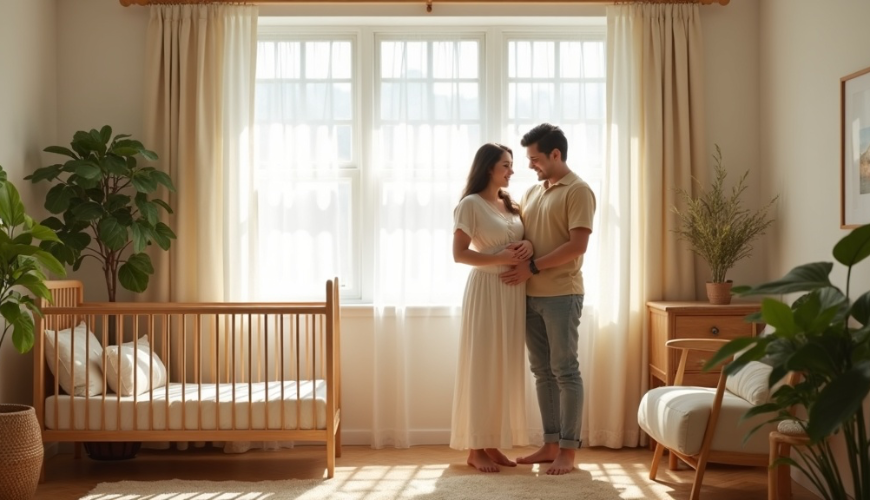
Waiting for a baby is a unique mix of joy and mild panic: suddenly even an ordinary household begins to seem like a place full of questions. Is it necessary to sterilize, disinfect, and replace everything? And what if the apartment "smells clean" only thanks to a strong perfume in the cleaning agent? Especially during the period when the question is how to prepare the household for the arrival of a baby, it makes sense to switch towards what is simple, gentle, and sustainable in the long term. It's not about perfection or a sterile bubble, but about a healthy environment for the baby where it will breathe, sleep, and grow well—and where the parents won't go crazy from endless lists.
The basic idea is surprisingly reassuring: most changes that help the baby also improve the environment for everyone at home. In practice, this often means fewer scents, less unnecessary chemicals, less dust, and more fresh air, natural materials, and smart habits. And also a bit of selection—because not everything sold as "for babies" is automatically the gentlest.
Try our natural products
Healthy Environment for the Baby: Less Sterility, More Reasonable Cleanliness
When people think of a healthy environment for a baby, many imagine a perfectly groomed apartment where you could eat off the floor. However, a newborn doesn't need a sterile laboratory. It's much more important that the home isn't unnecessarily smoky (including "just on the balcony"), that it is well ventilated, and that irritants in the air are minimized—typically strongly scented sprays, aggressive cleaners, or intense fragrances from fabric softeners. Babies have more sensitive respiratory systems and skin, and what an adult barely notices can cause discomfort for a small person.
A major topic is air. Dust, small particles from outside, cooking fumes, and scents from cosmetics and cleaning products commonly accumulate in the apartment. Something that sounds almost banal helps: regular short intensive ventilation several times a day, ideally even in winter. It's also good to maintain appropriate humidity—air that is too dry can irritate the mucous membranes, while air that is too humid can promote mold. If mold appears at home, it's a clear signal to address it: not just because of the baby, but also for the adults. As a reasonable context for why indoor air quality is important, information from the World Health Organization (WHO) about air pollution serves well—even though it mainly focuses on outdoor environments, it nicely reminds us that what we breathe is not a detail.
Next to air, the second big block is surfaces and textiles. While a newborn is mainly carried and lying down in the first weeks, they will soon begin to explore the world with their hands and mouth. And that's precisely when it's worth having an environment at home that is easily maintainable and gentle at the same time. It's not about washing the floor three times a day, but rather about ensuring that dust layers don't accumulate on it and that cleaning products used don't leave aggressive residues.
One thing that often goes unnoticed is scents. "Clean home" still often equals "fragrant home" with us. However, intense fragrances are precisely what can bother sensitive people the most—and babies often fall into this group. If it's customary at home to use home perfumes, scented candles, or electric air fresheners, this is one of the simplest steps in the category of what to change before the baby's arrival: reduce. Scents can be replaced with ventilation and regular cleaning, or possibly gentle natural alternatives without synthetic perfumes.
And then there's a simple rule that sounds like it's from grandma's kitchen, but it works: "The fewer ingredients, the better." It applies to food and cleaning. A natural and ecological household isn't about having twenty "eco" bottles at home, but rather about a few proven, gentle products handling most situations.
How to Prepare the Household for a Baby's Arrival Without Stress: Small Changes with a Big Impact
The idea of a general cleaning is tempting, but in practice, it's exhausting. Much better is the gradual fine-tuning of the household according to where the baby will most often be: bedroom, living room, bathroom, kitchen. And also according to what most often touches the skin—laundry, towels, bedding, cloth diapers, clothes of parents who carry the baby.
Let's start with laundry. Strongly scented laundry detergents and fabric softeners are a common source of irritation. Switching to a gentle, unscented laundry gel and skipping the fabric softener sometimes does more than replacing half the equipment. If the laundry needs softening, often mechanics help (dryer with balls, thorough rinsing) or simple alternatives that don't leave a strong scent mark. It's also important that "the scent of cleanliness" is not the same as cleanliness—cleanliness is the absence of dirt, not the presence of perfume.
Similarly, it applies in the bathroom. A baby doesn't need soap every day, let alone strongly degreasing shower gels. For parents, it's advantageous to have gentle cleaning agents for the bathtub, sink, and toilet that don't burden the air with irritating fumes. When it comes to tips for a healthy environment for the baby, the bathroom is surprisingly important: it's a small space where scents and fumes linger the longest. Regular ventilation helps, and if possible, limiting aerosols (cleaning sprays, air fresheners).
In the kitchen, it's worth considering what comes into contact with food and mouths. With small children, heating milk, baby food, and food storage soon become issues. It's practical to have safe containers on hand and, above all, a gentle dishwashing detergent without unnecessary perfumes. From the perspective of home comfort, it's also nice to limit disposable items that accumulate and create chaos at home—chaos arises with a baby even without them.
When it comes to cleaning, in an ecological household, a simple principle often proves effective: clean regularly, but gently. Aggressive agents might "work immediately," but they often unnecessarily burden the air and surfaces. For regular maintenance, a gentle all-purpose cleaner, dishwashing detergent, something for the bathroom, and laundry detergent are sufficient. If the home is cleaned often, there's the advantage that "chemical strength" isn't needed—because dirt doesn't have time to settle.
In the category of what to change before the baby's arrival, there are also small things that don't seem significant, but can improve everyday life. For example, the area by the entrance: a place where shoes, coats, and things from outside are placed. Dust and dirt are mainly brought into the apartment on the soles, so an ordinary doormat, the habit of taking off shoes, and occasional wiping of this area do a lot. Does it sound too simple? That's precisely its strength—the most effective changes are those that are easily sustainable.
And one more thing that's talked about less: noise and light. Babies sleep often, but not always "when it's convenient." Blackout curtains help (not necessarily absolute darkness, rather pleasant dimness), a quieter environment, and also ensuring the home isn't cluttered with things that are constantly moved around and fall over. Minimalism here isn't seen as an aesthetic but as practical help.
"It's not about having a perfect home, but a home you can live in peacefully."
A Short Real-Life Example: When "Baby Scent" Means Fewer Scents at Home
One common situation: an expecting couple starts preparing the baby's essentials and automatically buys baby fabric softener "for sensitive skin," a disinfectant spray for everything, and several scented cleaners because "now it really has to be clean." After a few weeks, they find that the air at home feels heavy, the parents have irritated noses, and the baby is restless during diaper changes. When they gradually skip the fabric softener, replace scented cleaners with gentle alternatives, and start ventilating more, the household paradoxically seems cleaner—not because it's scented, but because it breathes better. And when a visitor comments "it doesn't smell here," the answer is simple: that's exactly how it's supposed to be.
This shift is crucial for many people. A healthy environment for the baby often doesn't arise from adding new products but from removing unnecessary ones.
Natural and Ecological Household: Gentle Materials, Less Waste, and More Calm
Ecology in a household with a baby isn't a competition in perfection. It's more about finding balance: what is healthy, what is practical, and what can be managed even on days when sleep occurs in two-hour stretches. Nevertheless, there are areas where sustainable choices naturally align with what is pleasant for the baby.
A big topic is materials. Where possible, it's worth preferring natural textiles, which are breathable and pleasant to the touch. It doesn't mean everything must be "organic" and new. On the contrary: it's often good to use second-hand items—clothing that has been washed many times is usually softer and often has "faded out" residues of manufacturing finishes. For baby clothes, this makes double sense because they outgrow them faster than they wear out.
Similarly, it's the same with household equipment. If a new mattress for the crib or new furniture is purchased, it's sensible to consider that new items may release odors for some time. Ventilation helps, letting things "settle" and not overdoing it with fresheners. In sensitive households, it makes sense to go for simple materials and avoid unnecessary perfumed "impregnations."
In cleaning and hygiene, gentleness to nature is connected with gentleness to the skin. The baby will come into contact with towels, bedding, changing mats, and later the floor. When gentle agents that don't leave aggressive residues are used, it's an advantage for everyone. Additionally, this often reduces the amount of plastic packaging, as many ecological options offer concentrated refills or larger packaging.
And what about waste? A baby can produce a lot of it—and there's no need to idealize that. Even here, there are small steps that aren't "all or nothing." Someone might choose cloth diapers, another might stick to disposables but switch to gentler options. Someone might start using reusable cosmetic pads or cloths instead of disposable wipes for every small wipe. In reality, it's mainly about ensuring the change isn't a burden but a help.
If there should be a single practical compass for tips on a healthy environment for the baby, it's the question: "Will this make life at home simpler or more complicated?" Once the household is filled with things that require special handling, parents often end up frustrated. On the other hand, a few well-chosen, gentle, and universal helpers (whether for cleaning, laundry, or storage) are exactly what keeps the household running.
And since credibility is important, it's worth having a broader framework in mind: The European Union has long been working on limiting the most problematic chemical substances in products and the environment, which is nicely explained by the overview on chemical regulation within ECHA and the REACH system. There's no need to delve into the details, but it's useful to know that "less unnecessary chemistry" is not just a social media trend.
In the end, everything returns to ordinary life: the baby will want closeness, warmth, and peace. A household where you can breathe freely, where fragrances aren't overdone, and where cleaning doesn't rely on aggressive agents, supports this. And when a few sustainable habits are added—less disposable items, more reusable ones, gentler washing, and sensible ventilation—it creates an environment that is pleasant not only "for the first months," but possibly for the entire childhood. What more could you wish for than a home that functions quietly in the background while the most important things happen within it?