

# How to Tell the Difference Between Dry Skin and Eczema
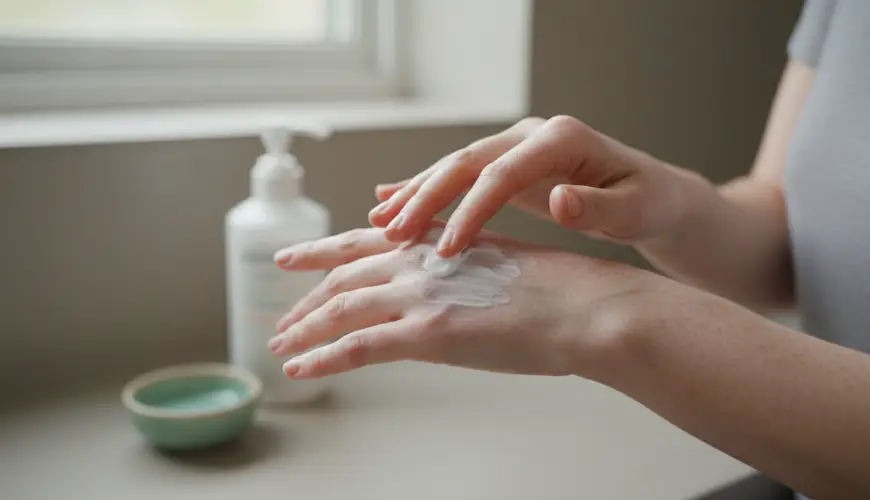
Itching, flaking, uncomfortable skin tightness – almost everyone knows these sensations. But not every dry or irritated skin condition is the same. While some people suffer from simple dry skin caused by external factors, others deal with eczema – a chronic inflammatory disease that requires an entirely different approach. The difference between these two conditions is not always immediately obvious, which is precisely why people often treat eczema as mere dry skin for years – or vice versa. The result is unnecessary suffering, frustration, and a wallet emptied on products that don't help.
Understanding what you're actually dealing with is therefore the first and most important step. And while a final diagnosis should always be made by a dermatologist, there are signs that can help distinguish between the two conditions even without a visit to the clinic.
Try our natural products
What exactly is dry skin and why does it occur
Dry skin, medically known as xerosis, is not a disease in the true sense of the word. It is a condition in which the skin loses more moisture than it can retain, or produces insufficient natural skin lipids. The result is a compromised skin barrier, which manifests as a feeling of tightness, fine flaking, and sometimes mild itching. Dry skin can affect anyone – a small child or a senior, someone with otherwise healthy skin or someone who takes regular care of it.
The causes are quite varied. The most common include cold and windy weather, overheated rooms with dry air, frequent hot showers, the use of harsh soaps and cleansing products, or simply genetic predisposition. Age also plays a role – as the years pass, the skin naturally produces less sebum and retains water less effectively. Certain medications, such as diuretics or cholesterol-lowering drugs, can have a similar effect, as can various health conditions like hypothyroidism or diabetes.
The key thing about simple dry skin is that once the cause is removed or regular moisturisation is started, the condition typically improves quickly. The right moisturising cream or body lotion applied after a shower can restore skin suppleness and comfort within days. Dry skin also typically lacks clearly defined patches – it affects larger areas evenly, most commonly the lower legs, arms, hands, or face.
An interesting real-life example: a young woman working in an office began complaining of extremely dry skin on her hands during winter. A thorough examination revealed that the combination of central heating, frequent hand sanitisation at work, and hot showers in the evening had completely depleted her skin's natural lipids. All it took was switching to a gentle cleansing gel, starting to regularly use a cream with hyaluronic acid and ceramides, and within two weeks the problem was resolved. No treatment, no medication – just a change in habits.
Eczema: when it's about more than just dry skin
Eczema – most commonly in the form of atopic dermatitis – is a chronic inflammatory skin disease with a significant immunological component. According to data from the World Health Organization, approximately 15 to 20% of children and 1 to 3% of adults worldwide suffer from atopic eczema, with its prevalence increasing in recent decades. It is therefore not a marginal problem, but a very widespread condition that significantly affects quality of life.
Unlike simple dry skin, eczema has both genetic and immunological underpinnings. People with eczema have a naturally compromised skin barrier caused by a mutation in the gene for filaggrin, a protein crucial for proper skin function. This compromised barrier then allows allergens and irritants to penetrate into deeper layers of the skin, triggering an inflammatory response. The result is characteristic red, intensely itchy patches that may weep, form crusts, and become secondarily infected through scratching.
Eczema also behaves differently from dry skin. It appears in typical locations – in children most commonly on the cheeks, scalp, and extensor surfaces of the limbs, and in adults in the folds of the elbows and knees, on the wrists, neck, and around the eyes. Its course is cyclical: periods of relative calm alternate with acute flare-ups, which can be triggered by a wide range of factors. The most common include pollen, dust mites, animal dander, certain foods, stress, sweating, or contact with irritants such as fragrances, wool, or synthetic materials.
As leading Czech dermatologist Prof. MUDr. Jana Hercogová states: "Atopic dermatitis is not just a skin disease – it is a systemic condition that affects the entire body and significantly impacts the patient's psychological wellbeing." It is precisely this complexity that distinguishes eczema from mere dry skin and explains why its treatment requires a different, more systematic approach.
A crucial difference that many people fail to recognise also lies in the intensity of itching. With dry skin, itching is present but mild and manageable. With eczema, the itching can be utterly unbearable, particularly at night, and leads to uncontrollable scratching that further worsens the condition. This so-called "itch-scratch cycle" is one of the most characteristic features of eczema and simultaneously one of the greatest challenges in managing it.
How to properly care for each of these conditions
Distinguishing between the two conditions has a direct impact on what kind of care the skin needs. Treating eczema as simple dry skin can lead to prolonged inflammation and unnecessary suffering. Conversely, treating simple dry skin with corticosteroids would be unnecessary and potentially harmful.
For dry skin, the foundation is regular and consistent moisturisation. Dermatologists recommend applying a moisturising product immediately after showering, while the skin is still slightly damp – this helps seal moisture in more effectively. Key ingredients worth looking for on labels include ceramides, hyaluronic acid, glycerin, squalane, and panthenol. Equally important is limiting the factors that cause dryness: shortening shower time, lowering water temperature, switching to gentle, sulphate- and fragrance-free cleansing products, and using a humidifier at home during winter.
Caring for eczema is more complex and should always be carried out under the supervision of a dermatologist. The foundation consists of so-called emollients – specialist products that not only moisturise but actively restore the compromised skin barrier. They differ from ordinary creams in that they contain a higher proportion of lipids and are formulated to mimic the natural structure of the skin barrier. Regular use of emollients can significantly reduce both the frequency and intensity of eczema flare-ups. During acute inflammation, a doctor will typically prescribe topical corticosteroids or newer preparations based on calcineurin inhibitors, which suppress the inflammatory response.
An important part of eczema care is also the identification and elimination of triggers. Allergy testing, which can identify specific allergens, may help, as can keeping a diary in which the patient records what they ate, what they came into contact with, or what their stress levels were at the time of a flare-up. This approach is labour-intensive but highly effective – many people with eczema find that their condition improves significantly simply by switching to hypoallergenic bedding, replacing washing powder with a fragrance-free product, or reducing contact with a pet.
The choice of clothing also plays a major role in eczema. Natural materials such as organic cotton, bamboo, or linen are considerably gentler on sensitive skin than synthetics or coarse wool. Loose cuts that don't cling to the body and allow the skin to breathe can also help reduce irritation. This is precisely why it is worth paying attention to clothing composition just as much as to cosmetics composition.
Nutrition is another factor that cannot be overlooked in eczema. Some studies suggest that a diet rich in omega-3 fatty acids – found in flaxseed, walnuts, and oily fish, for example – may help suppress inflammation. Probiotics may help regulate the immune response, particularly in children. A review study published in the Journal of Allergy and Clinical Immunology confirmed that the gut and skin microbiomes are closely interconnected and that their balance has a direct influence on the course of atopic dermatitis.
Whether dealing with dry skin or eczema, one universal principle applies: less is sometimes more. An excess of products, frequent brand-switching, and experimenting with harsh ingredients typically worsen the situation. Sensitive and compromised skin appreciates simplicity, consistency, and products with the shortest and cleanest ingredient lists possible. It is equally worthwhile to consider one's overall lifestyle – adequate sleep, stress management, proper hydration, and a balanced diet are factors that show up in the condition of the skin just as clearly as the most expensive cream.
If someone is unsure whether they are dealing with dry skin or eczema, or if home care fails to bring relief within two to three weeks, it is always sensible to visit a dermatologist. An accurate diagnosis is the most valuable foundation from which everything else follows – and skin certainly deserves that attention.