

# How to Properly Thaw Meat and Fish Without Risk Thawing food is one of the most underestimated st
Defrosting meat and fish is one of those everyday kitchen tasks that few people pay much attention to. Yet the way food is defrosted fundamentally affects not only its taste and texture, but above all the safety of the entire meal. An incorrect approach can lead to bacterial growth, loss of nutrients, and spoilage of food that would otherwise be perfectly fine. And yet most households still reach for the quickest, though riskiest, solution – simply leaving the meat on the counter at room temperature.
The topic of proper defrosting may seem trivial at first glance, but in reality it is backed by solid scientific foundations. Bacteria such as Salmonella, Listeria, and Campylobacter multiply at a staggering rate at temperatures between 4°C and 60°C – microbiologists refer to this range as the "danger zone." Once the surface of the meat reaches room temperature while the centre is still frozen, ideal conditions are created for exactly this unwanted process. Moreover, even thorough heat treatment may not always save food that has been defrosted improperly for too long.
Try our natural products






Methods That Actually Work
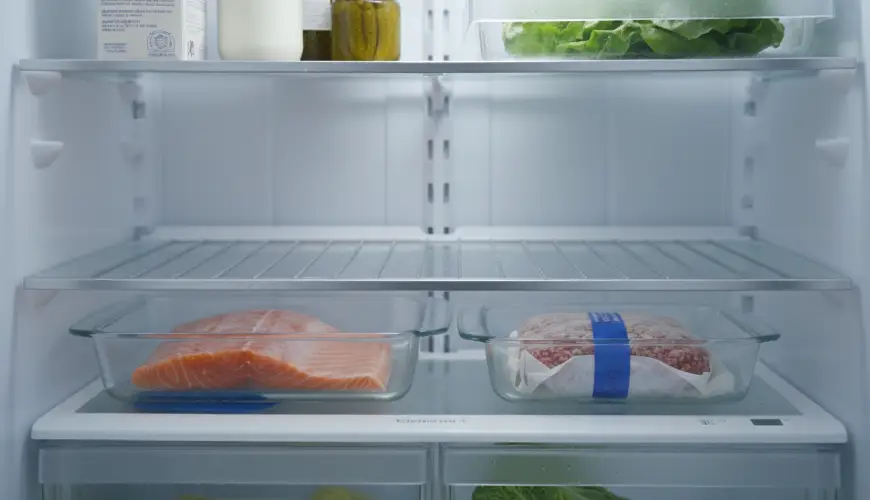
The safest and most gentle method is slow defrosting in the refrigerator. Meat or fish is transferred from the freezer to the fridge ideally the day before – larger cuts of meat, such as a whole chicken or pork shoulder, may need as long as 24 to 48 hours. The temperature in the refrigerator remains stable below 4°C, so the food defrosts evenly and bacteria have no chance to multiply uncontrollably. An added advantage is that meat defrosted this way can be refrozen if necessary, although it is recommended to do so as rarely as possible – each freeze-thaw cycle degrades the quality of the food.
The second reliable method is defrosting in cold water. The meat or fish is placed in a leak-proof bag and submerged in cold water, which is changed every thirty minutes. This method is significantly faster than the refrigerator – one kilogram of meat can be defrosted in approximately one hour. However, two conditions must be observed: the water must be genuinely cold, not lukewarm, and the food must be hermetically sealed to prevent contact with the water and potential leaching of nutrients or, conversely, penetration of contaminants. After defrosting this way, the meat must be cooked immediately.
The third option, suitable when pressed for time, is defrosting in a microwave oven. Most modern appliances have a dedicated defrosting programme that alternates short pulses of heating with pauses. Even so, this method is the least gentle – the edges of the meat may begin to cook while the centre remains frozen, and the resulting texture tends to be less satisfactory. If this method is used, the food must be cooked or fried immediately after defrosting.
A telling real-life example is a situation familiar to anyone who has ever prepared a Sunday lunch. Meat is taken out of the freezer on Friday evening with the intention of putting it in the fridge. On Saturday morning it turns out to be still as hard as a rock, so it ends up on the counter. By midday the surface has thawed and is warm, but the inside is still solid. The result? A dish that tastes acceptable enough, yet has passed through conditions that food safety experts would consider problematic. The solution in such cases is to plan defrosting well in advance – or to reach for the cold water method, which resolves the situation without unnecessary risk.
Fish and seafood represent a specific chapter, as they are generally more sensitive than red meat or poultry. Their tissue contains different enzymes and fats that degrade more quickly when defrosted improperly. Fish defrosted too rapidly or at too high a temperature loses its firmness, becomes mushy, and its flavour deteriorates significantly. Experts from the US Food and Drug Administration (FDA) recommend defrosting fish exclusively in the refrigerator or in cold water, with smaller fillets requiring only an overnight stay in the fridge. Fish should never be defrosted at room temperature – not even when a recipe seems to suggest it.
What Definitely Not to Do
The most widespread mistake remains the aforementioned defrosting at room temperature. This practice is so ingrained that many people consider it completely normal and standard. Yet the World Health Organization explicitly states in its food safety recommendations that food should never be defrosted outside of cold conditions – not on the counter, not in the sun, and not near a heat source. "Safe food handling begins before foodborne illnesses ever manifest," WHO experts remind us in their food hygiene materials.
Another common mistake is defrosting in warm or hot water. The logic behind this approach is understandable – warmer water defrosts meat faster. However, it simultaneously heats the surface into the danger zone where bacteria thrive. The result is the same as defrosting on the counter, only faster. Warm water also negatively affects the texture of the meat and causes more juices to run out, resulting in a loss of both flavour and nutritional value.
A less obvious but equally serious mistake is defrosting in the original shop packaging, in the case of vacuum-packed meat or fish. Such packaging does protect the food from contamination, but it is not designed for defrosting – it can deform, become permeable, or release undesirable substances when in contact with water. Meat should be transferred to a clean, food-safe bag before defrosting in water.
A separate category of mistakes involves overlooking cross-contamination. Defrosting meat or fish can drip and contaminate other foods in the refrigerator, particularly those consumed raw – vegetables, fruit, or ready-made dishes. It is therefore correct to always store defrosting meat on the lowest shelf of the refrigerator, ideally in a closed container or on a plate to catch any dripping juices.
Many people also underestimate how long defrosted meat can be stored. Once meat or fish has been defrosted in the refrigerator, it must be consumed within one to two days in the case of poultry and fish, or within three to five days in the case of red meat. Defrosted food that has not been cooked cannot be kept in the refrigerator indefinitely on the assumption that it "will still be fine."
There are also situations where defrosting is not necessary at all. Many types of meat and fish can be prepared directly from frozen – it is simply a matter of extending the cooking time by approximately fifty percent. This method is safe and, in the case of smaller cuts such as fish fillets or chicken breasts, very practical. The results are surprisingly good, as the meat retains its juiciness better.
A sensible approach to defrosting food naturally aligns with the broader philosophy of mindful and sustainable care for what we eat. Just as it pays to choose quality, environmentally friendly products and to pay attention to the origin of ingredients, it makes sense to pay care to the way we handle food. Wasting food that ends up in the bin due to improperly defrosted meat is an unnecessary loss – both economically and environmentally. According to data from the Food and Agriculture Organization of the United Nations (FAO), approximately one third of all food produced for human consumption is wasted worldwide, with domestic food handling playing a significant role in this figure.
Proper defrosting is therefore far more than just a kitchen detail. It is part of an overall approach to food that encompasses respect for ingredients, consideration for one's own health, and responsibility towards the environment. Relatively little is required – planning preparation in advance, choosing the right method, and avoiding ingrained but risky habits. The result will be not only safer food, but also better flavour and the preservation of nutrients that would otherwise needlessly disappear down the kitchen drain.