

How to Achieve Healthier Joints Through Movement When You Want to Relieve Everyday Pain
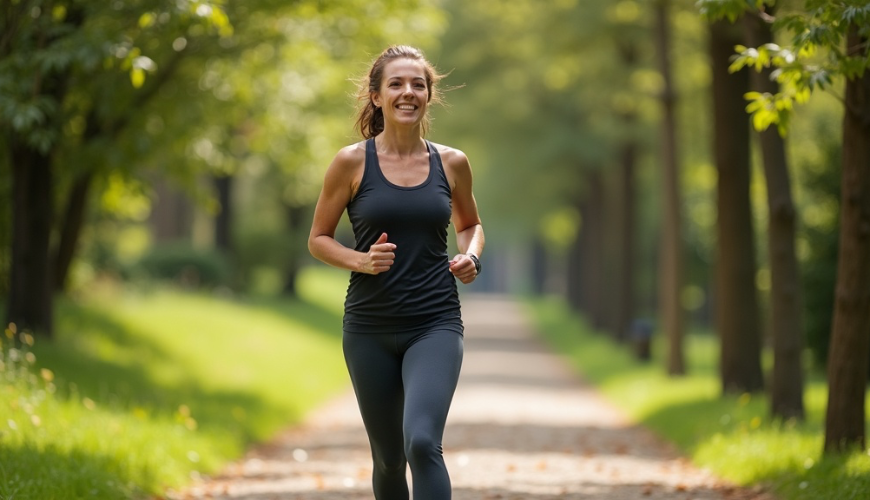
Knee pain when descending stairs, a stiff hip after prolonged sitting, or "crunching" shoulders while hanging laundry – joints often make themselves known just when we expect them to function effortlessly. There's a unique paradox with joints: when they move appropriately and wisely, they often feel better. When they don't move at all, they start to stiffen and weaken. And when they are overused without regard to technique and recovery, they can cause unpleasant and long-term issues. In everyday life, a natural question arises: how does movement affect joints and what can be done so that joints and movement relate more to ease rather than pain?
Joints are not just "hinges" in the body. They are complex structures where bone, cartilage, joint capsules, ligaments, tendons, and muscles meet – as well as joint fluid, which aids in nutrition and smoothness. And since joint cartilage doesn't have its own blood vessels, a large part of its nutrition depends on what happens during movement: alternating pressure and release acts as a gentle pump. That's why well-chosen activity can be one of the most practical tools for healthier joints through movement – without complicated plans and without extremes.
Try our natural products

How Movement Affects Joints: Lubrication, Stability, and the "Quiet" Strength of Muscles
When talking about joints, the discussion often simplifies to cartilage. However, the joint holds together an entire "ecosystem" and movement affects it in several ways. Firstly, it helps maintain joint range – that is, the knee bends and extends as it should, the hip can rotate, and the shoulder lifts the arm without needing compensation from the back. Stiffness often doesn't develop overnight; it's more a silent consequence of the body using only part of its capabilities for a long time.
Secondly, there is stability. Joints themselves are not designed to "hold" all the load without the help of surrounding muscles. When the muscles around the joint weaken or engage unevenly, the joint can end up in less advantageous positions and become overloaded. This is where it shows how much joints and movement are related: quality movement is not just about "doing something," but about the body learning to distribute work among muscles, tendons, and joints so that the joint isn't the victim.
Thirdly, movement affects the perception of pain and the "mood" of the nervous system. Many people know the situation of feeling stiff in the morning, but after a short walk or gentle movement, the body "gets going." This doesn't mean that pain should be ignored, but that appropriate movement can be a signal to the joints and nerves: "we're safe, we can function."
Authoritative sources confirm this logic. For example, the NHS (National Health Service) recommends regular movement and strengthening for joint pain and osteoarthritis as part of routine care – naturally with regard to the individual condition. Similarly, the CDC highlights that physical activity can reduce pain and improve function in arthritis. In other words: sensible movement is often not just a "bonus," but a basic necessity.
"Movement is like regular maintenance for joints – not because they are broken, but to ensure they serve well for a long time."
When Joints Hurt: Is Rest or Movement Better?
In real life, the biggest dilemma is simple: when something hurts, there's a tendency to rest. And sometimes that's the right thing to do – for example, in cases of acute injury, swelling, significant inflammation, or when the pain is sharp, stabbing, and "new." However, in cases of long-term stiffness and overload, complete rest can paradoxically maintain the problems. The body adapts to what it often does. If it sits often, some muscles shorten, others weaken, and the joint then works under less ideal conditions.
A practical example from a typical day: a person starts working from home, saving the trip to the tram and the office stairs. The first weeks are pleasant, but over time the hip or knee starts to hurt. Not necessarily because the "cartilage is gone," but because the natural movement volume has decreased: less walking, less position changing, more static sitting. When the weekend comes and there's an attempt to "catch up" with a longer hike without preparation, the joint can hurt even more. In such a situation, neither a heroic effort nor complete inactivity usually helps, but a return to regularity: short walks, gentle strengthening, and mobility.
It makes sense to monitor simple signals. If pain gradually "dissolves" during movement and the body feels better or the same after activity, it's often a good sign. If pain intensifies during activity, turns sharp, the joint swells, or worsens even at night, it's time to slow down and possibly consult a physiotherapist or doctor. The goal is not to win over your own body but to learn to cooperate with it.
How to Promote Healthier Joints Through Movement: Habits That Work Without a Gym
Healthier joints don't come from one "miraculous" exercise. Rather, from small decisions that repeat. The good news is that most of them are accessible without equipment and without complicated theory. And since it's about long-term sustainability (just like in an eco-friendly home), it's worth choosing a realistic path.
The foundation is usually regular walking. It's natural, easily dosed, and for many people represents the gentlest way to "lubricate" joints while engaging muscles. If walking is uncomfortable, shortening the route, slowing the pace, or choosing a softer surface often helps. For someone, a bike is a great alternative, for another swimming – the important thing is that the activity is sustainable long-term.
Another pillar is strengthening. Not in the sense of "pushing records," but building muscles that protect the joint. For knees, the work of the thighs and glutes is crucial, for hips, pelvic stability, for shoulders, the scapular muscles and rotator cuff. It's often underestimated how much relief joints get when the body doesn't have to "improvise" with every step.
Then there's mobility and movement control – the ability to perform movements within a reasonable range without jerky compensations. It's not about gymnastics, but about ensuring the hip can bend, the ankle allows the knee to move forward, and the chest can rotate. When one link in the chain doesn't work, another becomes overloaded. And that's often why a joint "acts up" when it itself isn't the main problem.
In practice, it's worth thinking about small things: interrupting long sitting every 30–60 minutes with a short stand and a few steps, alternating sides and positions during household chores, distributing weight when carrying groceries. The body likes variability. So do joints.
Tips for Joint-Friendly Exercise and Movement
Most people appreciate specific inspiration, but it's also important to keep it simple. The following tips for joint-friendly exercises are generally safe for a wide population if performed slowly, painlessly, and within a comfortable range. In the presence of an injury, significant swelling, or diagnosed illness, it's advisable to consult a specialist.
- Short brisk walks (10–30 minutes) several times a week, even divided into smaller segments; regularity is more important than heroic length.
- Sit-stand from a chair (slowly, using hand support as needed): strengthens thighs and glutes, which often relieve the knees.
- Bridge (lifting the pelvis while lying down): gently strengthens the glutes and back side of the body, helps pelvic and hip stability.
- Heel raises at a support: support calf and ankle work, which affect knees during walking.
- Scapular pull and "chest opening" (standing or sitting): relieve shoulders and neck, as the shoulder often suffers when the scapula doesn't work.
- Gentle hip and spine mobility (pelvic circles, cat-cow): to relieve stiffness after sitting.
For all these variants, it's worth following a simple rule: movement should be smooth, breathing free, and the feeling in the joint more "warm" than "prickly". If sharp pain occurs, adjust the exercise, reduce the range, or skip it.
Why Technique and Tempo Are Important
It's often said that running or squats destroy joints. But the reality is usually more nuanced. Joints typically aren't harmed by the type of movement itself, but by poorly dosed load, lack of recovery, and technique that forces the body to bypass weak spots. A squat can be great when adapted (perhaps only to half the range, with support, slowly). Running can be fine when gradual, with good footwear and leg strengthening. Conversely, even "innocent" activities like gardening can overload joints when kneeling for hours without breaks and position changes.
Tempo is surprisingly key here. Slow, controlled repetitions often do more for joints than quick "workouts." Muscles get a chance to work, and the joint doesn't have to rely on inertia and impact. Additionally, slow movement teaches a person to notice where the body is escaping – like the knee falling inward or the shoulder rising to the ear.
Small Supports That Make a Big Difference
Movement is fundamental, but to be sustainable long-term, it's good to support it with other habits. Sleep is important (the body repairs tissues mainly at night), hydration, and also a diet with enough protein, vitamin C, and minerals that the body uses for connective tissues. From the perspective of trustworthy recommendations, the general framework of a healthy diet according to the World Health Organization (WHO) is worth noting, which can easily be applied to everyday practice – more diverse plant foods, fewer highly processed products, reasonable amounts of salt and sugar.
Then there's one often overlooked thing: the environment. When the home is set up to support natural movement (a comfortable place for a short stretch, the possibility to ventilate and walk around, more ergonomic seating), the body moves more often "incidentally." A sustainable lifestyle isn't just about materials and consumption, but also about how the space is lived in and moved through. Joints can tell.
Ultimately, it all comes back to a simple idea: joints are not fragile glass, but they need sensible handling. Regular, appropriate, and diverse movement often gives them exactly what they need – blood flow to surrounding tissues, an active muscular "corset," and the feeling that the body is capable. And when a bit of patience is added, since joints love gradualness, even an ordinary walk, a few minutes of strengthening, and a few changes in daily habits can turn into a surprisingly effective recipe for a lighter step.