

How to Move to Keep Your Nervous System Calm When You Are Overloaded for a Long Time
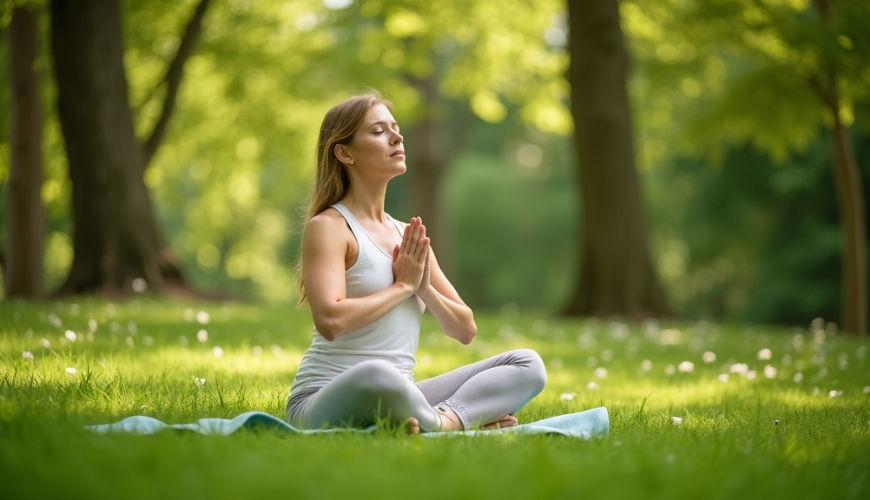
On an average day, a person is bombarded with more than they are willing to admit. Notifications, noise, deadlines, quick transitions between work and family, along with news that rarely soothes. It's no surprise that there is increasing talk about how to calm the nervous system – and that a surprisingly simple topic is coming to the forefront: movement and stress. However, the recommendation to "go exercise" is so broad that it encompasses everything from a marathon to a walk with a dog. This is where a small excursion into neuroscience pays off: not every movement calms in the same way, and not every exercise is a good idea during times of tension.
It is now known that the body and brain are one connected system. When the mind is overwhelmed, the body often reveals it with tense shoulders, shallow breathing, or that peculiar "inner tremble" that can't be shaken off by willpower. Conversely, when you move appropriately, the brain receives a signal that it's safe. This isn't some esoteric magic. It's about the nervous system constantly assessing whether to fight, flee, freeze, or allow rest. The question, therefore, isn't just how and what to exercise, but rather: how to move so that the nervous system is calm – and so that relief doesn't turn into more stress.
Try our natural products






Why Movement Can Calm the Nervous System (and When It Adds Fuel to the Fire)
The nervous system has, in simple terms, two "modes": activation and calming. In activation, the body is ready for performance, heart rate increases, attention rises, and muscles are alert. In calming, it restores, digests, repairs, and "cleans up." In real life, it's not a switch but more of a smooth slider. And the best movement for the nervous system is often the one that can work sensitively with this slider: it raises energy when a person is dull and calms when they are overstretched.
From a neuroscience perspective, it is crucial that the brain continuously reads signals from the body – breath, heart rate, muscle tension, movement pace, stability. If a person moves too hard when they've been stressed for a long time, the body may remain in "alarm" mode. Typically: an intense workout might provide short-term relief (endorphins are released, the mind "switches"), but at night, restlessness, overload, or poor sleep may follow. This doesn't mean that intensity is bad – it's just not a universal remedy for everything.
A good guideline is a simple question: does the movement bring a feeling of more space after it's over, or more tension? With calming movement, there's often a more natural breath, warmth in the limbs, relaxation of the jaw, a feeling of "being back in the body." With movement that strengthens stress, the breath is even shallower, the mind continues to race, and the body is more jittery than pleasantly tired.
It's also useful to remember that stress isn't just psychological. It can be physiological – lack of sleep, too much caffeine, irregular meals, prolonged sitting. In such a context, the best strategy may not be to "add more performance," but to signal safety to the nervous system through rhythm, stability, and moderation. What does this sound like in practice? Less "destroy oneself" and more "return to oneself."
And if you need to rely on authoritative sources, it's worth noting that recommendations for regular physical activity and long-term health are summarized, for example, by the World Health Organization (WHO). While it doesn't say "do this and that for the nervous system," it frames that movement is one of the most reliable tools for preventing issues often associated with stress.
How to Move So That the Nervous System is Calm: Rhythm, Breath, and "Good Enough" Pace
When discussing how to move to feel better, one often forgets one thing: the nervous system loves predictability. Not boring routine, but readability. Therefore, surprisingly effective movement has rhythm and allows for nasal breathing. It doesn't have to be complicated – quite the opposite. The simpler, the more reliable.
Calming movement is often characterized by allowing awareness of both the surroundings and the body simultaneously. A walk, light jog at a conversational pace, cycling without chasing averages, "leisurely" swimming, gentle yoga, tai chi, slow strength training with longer breaks. The body moves, but the brain gets the message: nothing threatens, you can regulate.
In this context, it pays to work with breathing, but without excessive ambitions. Sometimes a small effort is enough: while walking, try to prolong the exhale, perhaps over four to six steps, and let the inhale be shorter. Why? A longer exhale is usually a calming signal for the body. There's no need to count endlessly; it's more about a gentle "slowing down of the internal engine." And for those who tend to hold their breath in tension, simply noticing it can bring relief.
Interestingly, the topic of the so-called "zone 2" is also coming to the forefront – a moderately light endurance intensity at which you can speak in full sentences. It's not a magical zone, but it tends to be a pace that supports fitness while often not triggering an additional stress response. For a person who is chronically overstressed, this type of movement can paradoxically be "the fastest way to a slower life."
And now an example from real life, which is almost suspiciously common: Imagine someone who sits at the computer all day, runs on coffee and deadlines, and wants to "switch off" in the evening with a hard workout. The first weeks may seem great – fatigue overrides stress. But gradually, sleep worsens, and in the morning, the person wakes up feeling they are still running. When they swap two intense workouts a week for three brisk walks and one calmer strength session, something unexpected often happens: energy stabilizes, the mind is clearer, and the evening craving for sweets subsides. Not because a walk is "better" than a workout, but because it matches the current capacity of the nervous system.
The environment also plays a role. Movement outdoors, ideally in greenery, has a significant calming effect. Attention naturally spreads, the eyes look into the distance, and the body moves in natural patterns. A good crossroads can be an overview of how nature and movement relate to the psyche, which is long-term mapped by texts and resources from the American Psychological Association – a solid starting point is the stress section on the APA website.
And what if energy is lacking and a person is more "frozen"? That too is a state of the nervous system. In such cases, movement that is short, simple, and slightly livelier may help – perhaps 10 minutes of brisk walking, a few squats by a chair, light stretching with dynamics. The point is the same: the body receives information that it can move, but is not pushed to perform.
A sentence that captures it and is worth remembering is: "The body calms through movement, not through thinking." This is not a call to ignore emotions, but a gentle reminder that regulation often starts at the bottom – in breath, walking, and muscles.
How and What to Exercise When Stress is High: Less Heroism, More Long-term Approach
When stress is high, the biggest trap tends to be extremes. Either a person doesn't exercise at all because they "don't have the capacity," or they try to make up for everything and exercise so hard that the nervous system just spins more. Yet, often, it's enough to switch the track towards regularity and simplicity. The best movement for the nervous system is not usually the most efficient according to charts, but the one that can be repeated without a crash afterward.
Practically, it can be considered in three areas: endurance, strength, and mobility. In periods of tension, it's worth arranging them so that what calms predominates and what stimulates is dosed. It's not about banning intensity, but rather smart timing: a heavier workout on days when sleep is good and the mind is stable, and calmer movement on days when stress is on your heels.
As a guiding compass, a simple list can serve, not as a dogma, but as inspiration, how to move so that the nervous system is calm:
- Walking in rhythm (20–60 minutes): ideally outside, so that you can breathe through your nose and occasionally notice the surroundings.
- Light strength training (20–40 minutes): slower pace, longer breaks, focus on technique and feeling of stability; after the workout, it should feel "steady," not "scattered."
- Mobility and stretching (10–20 minutes): smooth, without pain, with breathing; suitable in the evening when the body is stiff from sitting.
- Short dynamics (5–10 minutes): when feeling dull – a few stairs, brisk walking, simple bodyweight exercises, but without maximalism.
In this, you can add a small detail that is often underestimated: the end of the workout. The nervous system often remembers the last minutes. If the exercise ends with a few minutes of calm walking, relaxing shoulders, and a longer exhale, the body receives a clearer signal that "the mission is over." Conversely, if the workout is cut short and one immediately jumps into the shower, emails, and screens, the transition to calm is delayed.
A significant role is also played by how one perceives their own performance. In a culture of "more is more," it's easy to forget that the nervous system also responds to the pressure one creates in their head. When exercise is another obligation, another metric, and another proof that "it's never enough," the body takes it as a stressor. On the other hand, when movement is a moment to be in the body, breathe, and perceive what's happening, it becomes regulation.
Sometimes a slight change in the question helps. Instead of "how much can I do today?" it helps to ask: What would bring me a greater sense of calm today? And what is realistically sustainable next week? Because it is long-term that the nervous system loves most.
And one more practical note related to everyday life: stress often worsens because the body "runs on empty." If the goal is calming, it's worth considering the basic supports – regular meals, sufficient fluids, morning light, limiting alcohol in the evening. Not as a moral list, but as a reminder that the nervous system is not separate from the rest of life. In this regard, you can rely on long-respected information about sleep and recovery, for instance, on the NHS – the UK health service, which explains complex things humanly.
Perhaps the most important thing is the paradox: when a person is stressed, they often look for the "ideal plan." Yet, the nervous system calms more through good enough repetition than through a perfect program. Sometimes it's a walk, other times calm strength training, or just a few minutes of stretching between meetings. And that counts too. At a time when the mind is full, the biggest relief may be that movement stops being a test of will and starts being a simple signal to the body: it's safe now, you can exhale.