
# How Arguments in Front of Children Affect Their Psychology Arguments and conflicts between parent
Every family argues. This is a truth that many parents are reluctant to admit, but which is a completely normal part of living together. The question is not whether parents argue in front of their children at all, but rather how and when it happens – and what impact it leaves on the children. The difference between an argument that traumatizes a child and a conflict that subtly equips them with valuable social skills is surprisingly thin. And yet it is fundamental.
Modern psychology of the family environment increasingly distinguishes between so-called destructive and constructive conflicts. While the former leave deep marks on a child's psyche, the latter can paradoxically serve as a natural school of emotional intelligence. It depends on the form, content, intensity, and – perhaps most importantly – on how the conflict ends.
Try our natural products




When arguments truly harm children
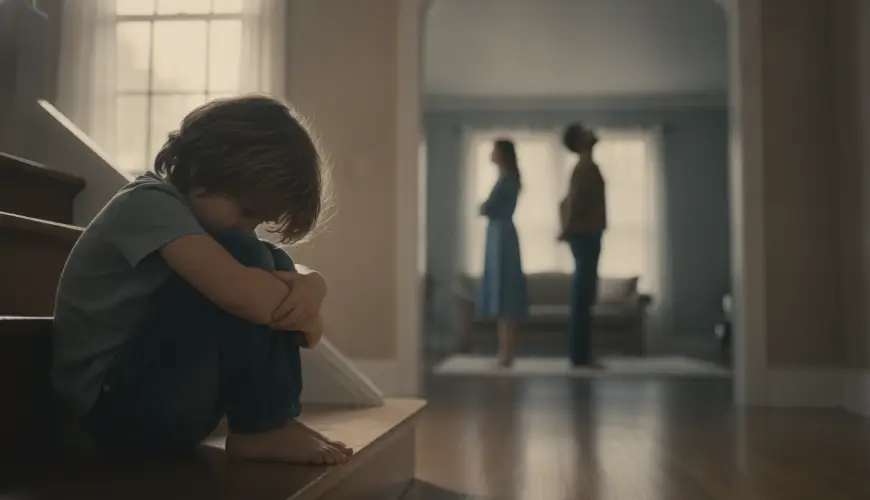
Research repeatedly confirms that long-term exposure to parental conflicts increases children's risk of anxiety, depression, and behavioral problems. A study from the prestigious University of Notre Dame showed that children growing up in households with chronic conflict have significantly disrupted sleep, poorer academic performance, and difficulties forming friendships. It is not only direct witnesses to loud exchanges of opinions who are affected – even children who merely "sense" conflicts in the tense atmosphere of the home carry a similar psychological burden.
Particularly harmful are arguments that involve physical aggression or threats, insults and humiliation of one partner by the other, or topics into which children are directly drawn. If a parent says in the heat of the moment "we're arguing like this because of you," or begins using the child as an intermediary or ally in the conflict, so-called parentification sets in – a phenomenon where the child takes on emotional responsibility that is not theirs to bear. Psychologist Jana Procházková, who has long devoted herself to family therapy, describes it aptly: "A child is not capable of processing parental conflict the way an adult can. They see it through the lens of an existential threat – they fear abandonment, loss of safety, the breakup of the family."
Another critical factor is the absence of reconciliation. Children who witness an argument but never see its resolution subconsciously develop the belief that conflicts are unsolvable and relationships are fragile. They then carry this pattern into their own adult relationships. It is no coincidence that many adults who grew up in households with unresolved conflicts either avoid conflict at all costs, or conversely slip into the same destructive patterns they experienced as children.
The child's age also plays a significant role. Infants and toddlers may not understand the content of an argument, but they are extraordinarily sensitive to the emotional tone of voice, physical tension, and changes in the behavior of their caregivers. Research shows that children as young as six months respond to an angry tone of voice with increased production of cortisol – the stress hormone. Preschool-age children then tend to take adult conflicts personally and blame themselves for them, even when the content has nothing to do with them.
Constructive conflict as a school of life
And yet – it would be an oversimplification to claim that any argument in front of a child is automatically harmful. Researcher E. Mark Cummings from the University of Notre Dame, who has studied conflict in the family environment for decades, repeatedly emphasizes that the way a conflict is resolved can be just as important for children as its mere presence. Children who see their parents argue and at the same time reach a compromise learn something that cannot be found in any textbook: that relationships can withstand tension, that disagreement does not have to mean the end, and that emotions can be expressed without being destructive.
Consider a specific example from everyday life. A family is planning a weekend – the father wants to go on a trip to the countryside, the mother prefers a quiet day at home. A dispute arises, both partners express their views, there is some back-and-forth, perhaps even a momentary raising of voices. In the end, they agree on a compromise: a Saturday outing, a Sunday relaxing at home. The child who watched the whole situation has just learned that two people can want different things, can say so out loud, and still find a solution that works for both. That is a lesson in empathy, negotiation, and emotional resilience all in one.
Constructive conflict differs from destructive conflict in several key ways. It remains substantive and focused on a specific situation, rather than involving personal attacks. Both partners listen, even when they disagree. The tone of voice may be raised, but it does not cross into threats or insults. And above all – the conflict has a visible resolution. Whether it is a compromise, an apology, or at least a mutual acknowledgment of differing perspectives.
Children are naturally equipped to read interpersonal dynamics. They perceive not only words, but also gestures, facial expressions, and physical tension. If they see their parents handling disagreements with respect and care for the relationship, they internalize this pattern as the norm. On the other hand, if conflicts are taboo in the family and parents argue exclusively behind closed doors, a child may grow up believing that conflicts are dangerous and must be avoided at all costs – which in adulthood leads to passivity, suppression of emotions, or an inability to defend their own boundaries.
What to do when an argument happens anyway
No parent is a robot, and self-control has its limits. Conflicts happen even in the most loving families, and sometimes in front of children, even when no one planned for it. What matters is what comes afterward.
Psychologists agree that repair after a conflict is one of the most valuable educational moments there is. If parents lost their temper in front of a child, they should also be able to make up in front of them – and ideally verbalize it. "Mummy and Daddy had an argument, but we've sorted it out now and we still love each other" is a sentence that can neutralize a large part of the stress the child experienced. It shows that relationships are solid, that adults take responsibility for their behavior, and that conflicts have solutions.
It is equally important to give the child space to name what they experienced. Young children do not have the vocabulary for complex emotions, but if a parent offers them a safe space – "You saw that we were arguing. How did you feel?" – they are also teaching them emotional literacy at the same time. Suppressing feelings or ignoring them is, in the long run, more harmful than the conflict itself.
Experts also recommend paying attention to so-called atmospheric conflicts – situations where parents are not openly arguing, but the household is filled with tension, cold silence, or passive aggression. Children are extraordinarily sensitive to this form of conflict and often experience it more intensely than an open argument, because they do not know what is happening and cannot get a handle on the situation in any way. An open, albeit unpleasant, conflict is paradoxically more comprehensible to a child than days of silence and tense glances.
Parents who are aware that their conflicts are exceeding a healthy level – whether in terms of frequency, intensity, or the way they are conducted – should not hesitate to seek professional help. Family therapy or couples counseling are not a sign of failure, but rather of a responsible approach to parenting. The Czech Association for Psychotherapy offers an overview of certified professionals across the entire country and can be a good starting point for finding support.
A special chapter involves situations where parents are separating or divorcing. In such cases, conflicts tend to be more intense and children are exposed to them during a vulnerable period. Research shows that for children, the separation itself is not the worst thing – the worst thing is the prolonged conflict that accompanies or precedes it. Children whose parents separated calmly and maintained mutual respect adapt significantly better than those who are witnesses to years-long disputes over property, custody, or child support.
Healthy family dynamics do not mean the absence of conflict. They mean the ability to manage conflict – with respect, empathy, and a willingness to find solutions. Parents who can do this give their children a gift whose value they may not fully appreciate until adulthood: the conviction that relationships are strong enough to weather a storm, and that every dispute can be the beginning of a deeper understanding. That is a lesson no school teaches, but every family has the chance to pass on.