

Plant-based balls that taste like the meat ones
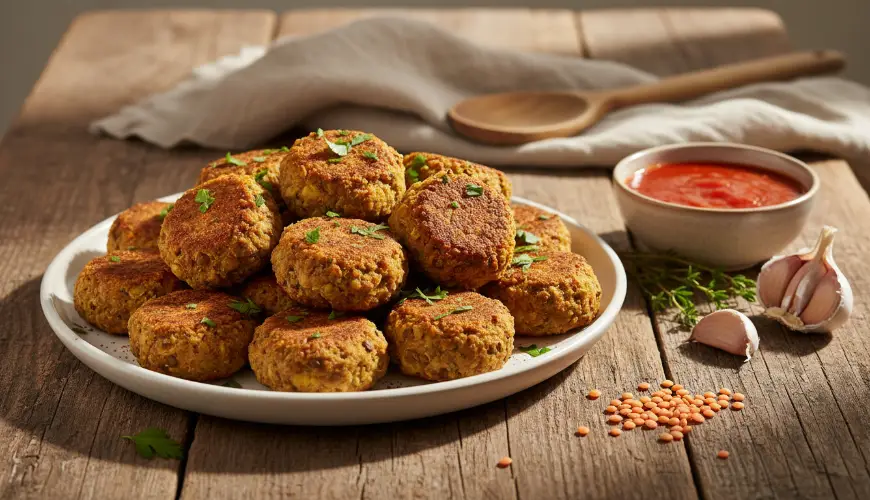
There are many dishes that people think simply cannot work without meat. Meatballs have been among the most popular for years – they smell of home cooking, are filling, versatile, and even a beginner can prepare them. But what happens when we remove meat from the equation entirely? Surprisingly – nothing bad at all. Meat-free "meatballs" are today one of the most popular recipes in plant-based cooking, and it's no wonder. They taste great, are filling, easy to prepare, and truly anyone can make them.
Interest in plant-based food has been growing significantly in recent years. According to data from the Good Food Institute, the market for plant-based meat alternatives is continuously expanding, and more and more households are trying to skip meat from their menu at least once a week. It's not always about committed vegans or vegetarians – a large portion consists of so-called "flexitarians," people who eat meat but consciously limit it. And for them, meat-free balls are an ideal entry point into the world of plant-based cooking.
Try our natural products

What makes a ball a ball?
At first glance, it might seem that the secret of a meatball lies precisely in the meat. In reality, however, it's a combination of several factors – the right consistency that holds its shape, enough fat for juiciness, bold seasoning, and aromatic ingredients like garlic, onion, or herbs. Once we know this, a whole world of possibilities opens up for achieving the same result without a single gram of animal products.
The base of meat-free balls is most commonly legumes – lentils, chickpeas, or beans. These ingredients have a naturally earthy, full flavour that surprisingly closely resembles the taste of meat. Red or green lentils are particularly popular because they cook quickly, mash easily, and create a compact base that shapes well. Chickpeas, on the other hand, add a slightly nutty note and a firmer texture.
Another key player is the binder. In a classic recipe, eggs and breadcrumbs hold the balls together. In the meat-free version, this role is excellently filled by flaxseed mixed with water – the so-called "flax egg" – or oat flakes, which absorb moisture while also giving the dough cohesion. Some swear by chickpea flour, others by potato starch. Each variation works slightly differently, but the result is always surprisingly solid.
We mustn't forget the seasoning. This is where many cooks make a mistake – plant-based ingredients are fairly neutral on their own, and if we don't season them sufficiently, the result will be bland. Smoked paprika, cumin, soy sauce, vegan worcestershire sauce, or even a little miso paste can transform a simple lentil mixture into something that truly tastes like meat. Soy sauce and miso contain a natural glutamate flavour – the so-called umami – which is typical of meat and which triggers a feeling of fullness and satisfaction in us.
Add to that garlic, onion, fresh or dried herbs such as parsley, oregano, or thyme, and the basic recipe is ready. Some cooks also add finely grated carrot or courgette, which contribute moisture and a slightly sweet flavour. Others bet on mushrooms – shiitake or portobello – which have a pronounced meaty texture and an intense flavour that can elevate the entire composition to a completely new level.
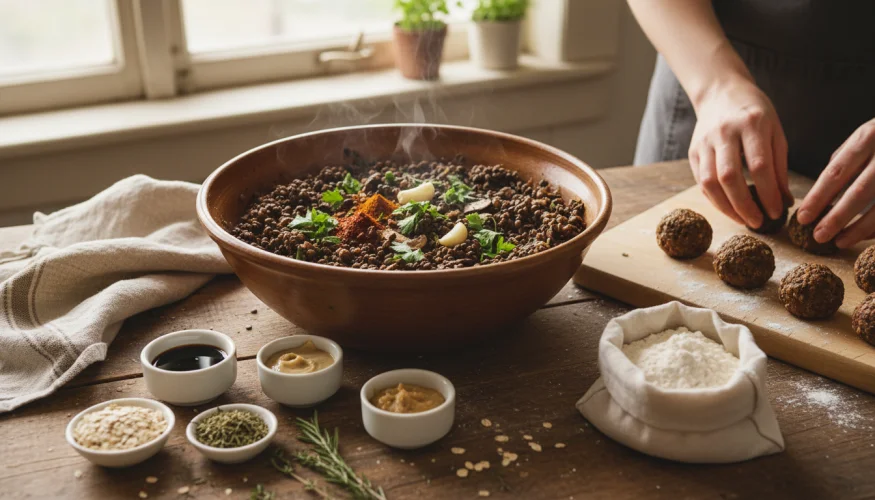
An interesting real-life example is Jana, a thirty-year-old mother from central Bohemia, who started making meat-free balls after her daughter stopped eating meat. "At first I was sceptical, but when I made them for the first time from lentils with smoked paprika and mushrooms, the whole family ate them before they had a chance to cool down. Now I make them every week," Jana says with a smile. Her story is not unique – thousands of people who got into plant-based cooking out of necessity and stayed with it out of joy share similar experiences.
How to prepare balls that are truly good
Preparing meat-free balls is not complicated, but a few principles are worth following. First and foremost, it's important that the base ingredient is not too wet. If we use cooked lentils or canned chickpeas, they need to be well drained and possibly lightly dried in a pan without fat. Excess moisture causes the balls to fall apart during baking or frying and lose their shape.
The second important point concerns resting. The finished mixture should rest in the refrigerator for at least thirty minutes before shaping, ideally an hour. During this time, the binders absorb moisture, the ingredients "come together," and the resulting mixture shapes more easily. It's a small trick that makes a big difference.
As for cooking methods, there are essentially three options. Baking in the oven is the simplest and healthiest – the balls brown on all sides if we turn them once during baking, and the result is beautifully golden. Frying in a pan with a little oil is faster and gives a more pronounced crust, but requires a bit more attention. The third option is deep frying, which is admittedly the least healthy, but let's be honest – they probably taste best that way.
Meat-free balls suit a countless number of dishes. They are classically served with pasta and tomato sauce – and in this context they are completely indistinguishable from their meat predecessors, especially if they are well seasoned. They also work wonderfully in an Asian style with rice and teriyaki sauce, in soup, in a sandwich, or simply as a snack with dip. Their versatility is one of their greatest advantages.
Nutritionally, meat-free balls fare very well. Legumes are a rich source of plant protein, fibre, iron, and other micronutrients. According to the Harvard T.H. Chan School of Public Health, legumes are one of the healthiest foods of all, and their regular consumption is associated with a reduced risk of heart disease, type 2 diabetes, and certain types of cancer. A serving of meat-free lentil balls can therefore cover a significant portion of the daily protein and fibre requirement – while containing significantly less saturated fat than their meat equivalent.
The ecological aspect is also not negligible. The production of legumes has a fraction of the carbon footprint compared to livestock farming. While a kilogram of beef produces an average of 27 kilograms of carbon dioxide, a kilogram of lentils causes emissions of approximately 0.9 kilograms of CO₂, as stated in a study published in the journal Nature Food. Choosing meat-free alternatives is therefore not just a matter of taste or health – it is also a conscious decision with an impact on the planet.
Plant-based cooking is sometimes perceived as complicated or time-consuming. Meat-free balls shatter this notion. The entire preparation from cooking the lentils to shaping the balls takes roughly forty-five minutes, with a large part of that being passive waiting. Active work in the kitchen takes barely fifteen minutes. And if we prepare a larger batch, the balls keep excellently in the refrigerator for three to four days, or they can be frozen to have a supply ready for several weeks ahead.
As British chef Yotam Ottolenghi, whose plant-based cooking inspires millions of people around the world, once said: "Vegetables and legumes are not a substitute for meat – they are the stars of the plate in their own right." This thought captures the essence of the modern approach to meat-free cooking. It's not about a lentil ball "pretending" to be made of meat. It's about being delicious, filling, and satisfying in its own right – and that it undoubtedly is.
Tips for those just starting out
For complete beginners, it's good to know that there are several simple ways to make preparation easier. A can of chickpeas or lentils saves the time spent cooking – just drain and rinse well. The finished mixture can be tasted before shaping and the seasoning adjusted to personal taste, which is a great advantage over meat balls, where this is not possible for hygiene reasons.
The basic ingredients for making meat-free balls include:
- cooked lentils or chickpeas as the base
- oat flakes or breadcrumbs as a binder
- garlic, onion, and seasoning for flavour (smoked paprika, cumin, salt, pepper)
- soy sauce or miso for the umami component
- fresh herbs such as parsley or basil
If we want to experiment, adding finely chopped sun-dried tomatoes or olive oil directly into the mixture gives the balls a pronounced Mediterranean flavour. An Asian style, on the other hand, is enhanced with ginger, sesame oil, and a little chilli. Meat-free balls are in this sense like a blank canvas – the basic technique remains the same, but the flavour profile can be varied endlessly.
Plant-based cooking has reached a completely different level in recent years compared to ten years ago. Recipes are more sophisticated, ingredients more accessible, and awareness of how to work with them much broader. Meat-free "meatballs" are a beautiful testament to this – they are simple, tasty, healthy, and accessible to anyone who has a pot, a bowl, and a little desire to cook. And that is precisely the kind of recipe worth having in reserve.