

# Female Athletes During Pregnancy and When to Reduce Intensity
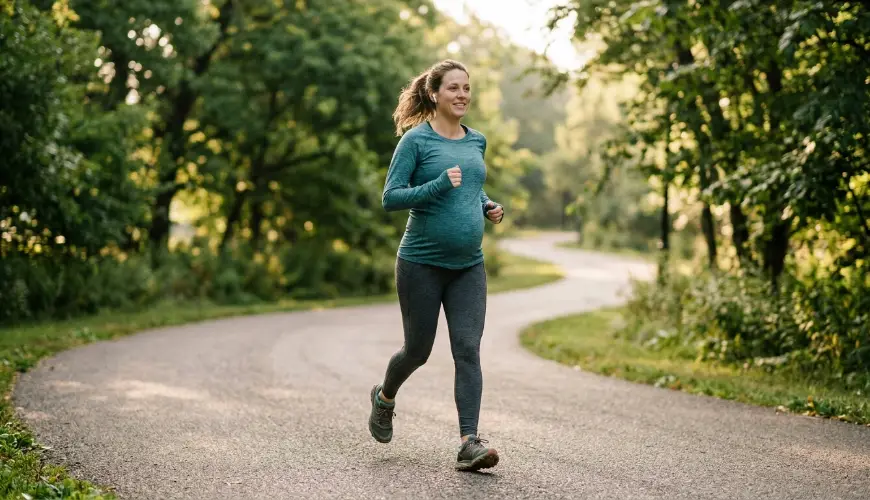
Pregnancy is a unique adventure for every woman – and for active athletes, it brings questions that are not always easy to answer. When should you stop intensive training? By how much should you reduce the load? What do experts say, and what does your own body say? The answers are not black and white, but there are specific guidelines that can help women move safely throughout all nine months – while maintaining their fitness and wellbeing.
Just twenty years ago, exercise during pregnancy was more of a taboo. Doctors recommended rest, family advised caution, and female athletes found themselves in a situation where they had to choose between their passion and the baby's health. Today we know that in most cases, this choice does not need to be made at all. Regular physical activity during pregnancy is not only safe, but directly beneficial – for both mother and child. The key, however, remains setting a sensible intensity level and responding promptly to the body's signals.
Try our natural products





What science says: exercise benefits pregnancy
The American College of Obstetricians and Gynecologists (ACOG) recommends that healthy pregnant women get at least 150 minutes of moderate-intensity aerobic activity per week. This is the same recommendation as for non-pregnant adults – and it is no coincidence. Research repeatedly shows that regular exercise during pregnancy reduces the risk of gestational diabetes by up to 27%, alleviates back pain, improves sleep, and shortens the duration of labour. Children of active mothers also have, on average, healthier birth weights and better cardiovascular indicators even in infancy.
For women who exercise regularly before becoming pregnant, there is even more encouraging news: they do not need to dramatically change their habits from the very first trimester. A trained athlete's body is adapted to physical load, the heart and muscles respond more efficiently, and the risks – when properly managed – are lower than for women who only begin exercising during pregnancy without prior physical experience. This does not mean, however, that one can continue the same routine as before conception – changes are necessary, they simply come more gradually and are based on specific numbers.
Let us consider a specific example: Markéta, a thirty-year-old triathlete, trained six days a week before pregnancy, logging approximately 12 hours per week. After a positive pregnancy test, she consulted a sports gynaecologist and together they drew up a plan to gradually reduce her volume and intensity so that Markéta could remain active without unnecessary risk. Her story illustrates what experts call a "managed retreat" – not a stop, but a conscious adaptation.
First trimester: fewer changes, more attention
The first twelve weeks of pregnancy are paradoxically the most complicated from a movement perspective – not because dramatic activity restrictions are necessary, but because the body undergoes turbulent hormonal changes that affect the perception of exertion, balance, and energy reserves. First-trimester fatigue is surprisingly intense for many athletes: a woman who had no trouble running a half marathon just last month suddenly feels exhausted after an hour of light jogging.
Heart rate is a key indicator in the first trimester. Earlier recommendations cited a fixed ceiling of 140 beats per minute, but this approach is now considered outdated. Modern guidelines work more with the concept of the "talk test" – if a woman is able to hold a flowing conversation while exercising, she is within a safe range. In practice, for a trained athlete this corresponds to approximately 65–75% of maximum heart rate, which is roughly 130–145 beats per minute depending on age and fitness level.
In terms of volume, research suggests that in the first trimester it is sensible to reduce weekly training volume by approximately 20–25% compared to pre-pregnancy levels. For Markéta in our example, this meant transitioning from 12 hours to approximately 9 hours per week – still an active lifestyle, but with a conscious space for rest and recovery. Intensive interval sessions, maximum efforts, and competitions are best postponed, because the vascular system undergoes restructuring in the first trimester and overheating of the body can have a negative impact on embryonic development, particularly during the first eight weeks.
It is also important to monitor hydration. Pregnant women need approximately 300–500 ml more fluid per day than before pregnancy, and this additional requirement increases further during physical activity. Underestimating fluid intake is one of the most common mistakes active pregnant women make in the first trimester.
Second trimester: the golden period of movement
The second trimester is often the most enjoyable period of the entire pregnancy for athletes. Morning sickness subsides, energy returns, and the bump is not yet large enough to significantly restrict movement. It is precisely during this period that many women paradoxically report feeling better than they did in the first trimester – and sometimes feel tempted to increase their intensity. This is where caution is needed.
Between weeks 13 and 28, a trained athlete should maintain volume at approximately 60–70% of her pre-pregnancy maximum and keep intensity within the range of 60–80% of maximum heart rate. Specifically: if a woman ran 50 km per week before pregnancy, during the second trimester she should aim for around 30–35 km, with pace naturally slower due to hormonal changes and weight gain.
A key change in the second trimester is the need to avoid exercising while lying on the back after week 20. The growing uterus can, in this position, compress the inferior vena cava and restrict blood flow to both the mother's heart and the foetus. Classic squats, deadlifts, and many strength exercises remain possible in safe modifications, but these should be discussed with a sports physiotherapist or midwife experienced in working with active pregnant women.
As world-renowned ultra-marathon runner and pioneer of sport during pregnancy Alysia Montaño – who competed in the 800 metres at eight months pregnant – said: "Exercise during pregnancy is not about proving strength – it is about listening to your body and respecting what is happening inside it." This attitude reflects precisely what experts recommend: movement yes, ego no.
The second trimester is also an ideal time to incorporate pelvic floor exercises into the daily routine. Training the pelvic floor muscles – so-called Kegel exercises – is not only a preventive measure against incontinence, but also supports the stability of the entire trunk, which shifts as the bump grows. Physiotherapists recommend 3 sets of 10–15 contractions per day, with each contraction held for 5–10 seconds.
Third trimester: conscious slowing down
The third trimester brings the most visible physical changes and, for most athletes, requires more significant adjustments to training. The centre of gravity shifts, joints become looser and more prone to injury due to the hormone relaxin, and resting and exertion heart rates naturally rise. Training volume should drop to approximately 40–50% of the pre-pregnancy maximum and intensity should remain predominantly in the range of 50–65% of maximum heart rate.
In practical terms, this means a runner transitioning from running to brisk walking or shorter light jogs. For a swimmer – and swimming is one of the most recommended activities in the third trimester – it means shortening distances and eliminating racing dives. For a cyclist, it is advisable to switch to a stationary bike to eliminate the risk of falling.
Activities that should be completely avoided in the third trimester include contact sports, sports with a risk of falling (skiing, horse riding, inline skating), exercising at high altitude without acclimatisation, and any activity that causes pain in the pelvic floor or pubic symphysis area. Diastasis recti – separation of the rectus abdominis muscles – is another issue to monitor: classic sit-ups and the standard plank position are unsuitable in advanced pregnancy and can worsen the condition.
Many athletes in their third trimester appreciate transitioning to prenatal yoga or Pilates as a complement to aerobic activity. These disciplines support breathing technique, strengthen the pelvic floor, maintain flexibility, and prepare the body for labour – while being safe for the vast majority of pregnant women without complications.
Key signals for immediately stopping exercise and contacting a doctor include: vaginal bleeding, shortness of breath before beginning activity, dizziness, chest pain, headache, swollen calves, or reduced foetal movement. These symptoms are not cause for panic, but they are a clear communication from the body that it needs attention.
Pregnancy and sport are therefore topics that not only do not exclude each other, but when approached correctly, mutually enrich one another. Active women who consciously adapt their movement to each phase of pregnancy statistically have shorter labours, faster postnatal recovery, and a lower incidence of postnatal depression, as shown by data published in the British Journal of Sports Medicine. Exercise during pregnancy is not a concession – it is an investment in the health of both mother and child, one that pays dividends long after the delivery room becomes a memory.