

# Aromatherapy and Its Real Effects on Health
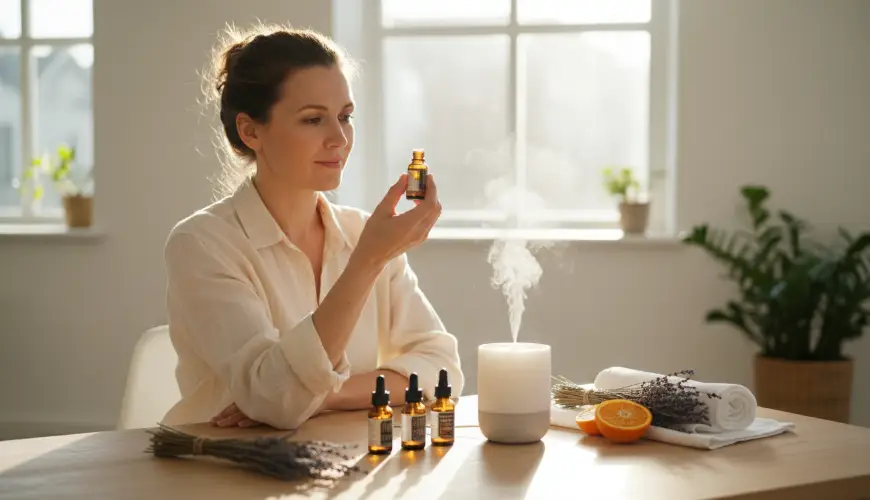
The scent of freshly brewed coffee that wakes us up, or lavender on a pillow that calms us before sleep – people have intuitively harnessed the power of scents for their benefit since time immemorial. Aromatherapy transforms this instinct into a systematic practice that has been attracting growing interest from both professionals and the general public in recent decades. But what exactly is aromatherapy, what are its actual effects, and when can it be risky? These are questions that deserve an honest answer.
Aromatherapy is a form of alternative or complementary therapy that uses plant-derived essential oils to support physical and mental health. These oils are obtained from various parts of plants – flowers, leaves, bark, roots, or fruits – most commonly through steam distillation or cold pressing. The result is a highly concentrated substance that carries the characteristic aroma and biologically active components of the given plant. Although aromatherapy is sometimes presented as a modern trend, its roots stretch back thousands of years – ancient Egyptians, Greeks, and Chinese used aromatic substances in rituals, healing, and everyday life. Modern aromatherapy as such began to take shape in the 20th century, when French chemist René-Maurice Gattefossé accidentally burned his hand and discovered that lavender oil significantly accelerated healing, leading him to systematically study the therapeutic potential of essential oils.
Try our natural products
How aromatherapy affects body and mind
The mechanism of aromatherapy is a fascinating interplay of chemistry and physiology. When a person inhales the scent of an essential oil, aromatic molecules travel through the nasal mucosa to olfactory receptors, which are directly connected by nerve pathways to the limbic system – the part of the brain responsible for emotions, memory, and stress regulation. This is precisely why a particular scent can instantly trigger a memory or shift a mood in a way that no other sense can. Essential oils are not only used through inhalation, however – they are also applied to the skin in diluted form, where they can be absorbed into the bloodstream and act both locally and systemically.
The scientifically best-documented effects of aromatherapy relate primarily to the psychological domain. Numerous studies confirm that lavender oil reduces cortisol levels – the stress hormone – and promotes better sleep quality. A review of research published in the journal Evidence-Based Complementary and Alternative Medicine shows that inhalation of lavender oil has a demonstrable anxiolytic effect – that is, the ability to reduce anxiety. Similarly, peppermint acts in a refreshing and stimulating way, improves concentration, and can alleviate tension headaches. Eucalyptus oil has long been used for its expectorant properties – helping to clear the airways during colds.
Aromatherapy also finds application in clinical settings. Hospitals in various countries are trialling it as a complement to conventional care – for example, in reducing nausea after chemotherapy, alleviating pre-operative anxiety, or as part of palliative care. Studies published in specialist journals suggest that ginger oil may help with nausea and vomiting, while bergamot and ylang-ylang have shown potential in reducing blood pressure and heart rate in situations of acute stress. It is important to emphasise, however, that aromatherapy in these contexts serves as a complement, not a replacement for conventional medicine.
An interesting real-world example comes from the experience of many parents struggling with their children's restless sleep. A diffuser with lavender or chamomile placed in a child's room has become a subtle yet effective part of the evening routine for many families. The result – calmer falling asleep and fewer night-time awakenings – may of course have multiple causes, but scent as part of a ritual undoubtedly plays its role. As the founder of modern aromatherapy, Gattefossé, once said: "Essential oils are not merely fragrances – they are living substances with their own power."
Beyond psychological and respiratory effects, aromatherapy is also used in skincare. Tea tree oil is valued for its antimicrobial and anti-inflammatory properties and is commonly found in acne products. Rose oil and neroli, meanwhile, have found a place in luxury cosmetics thanks to their moisturising and regenerative qualities. It is always important, however, to check a product's ingredients – not everything that smells like an essential oil actually is one. Synthetic fragrances, which are common on the market, do not possess the same biological properties as natural essential oils.
Risks of aromatherapy that must not be underestimated
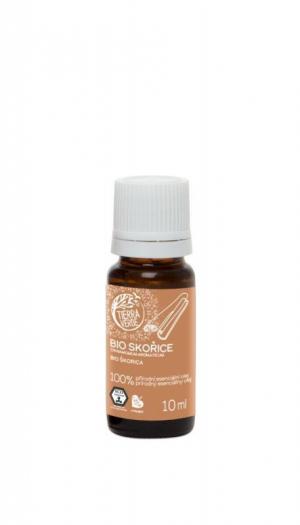
Although aromatherapy seems natural and safe, it is not without risks. One of the most common problems is allergic reactions and skin irritation. Essential oils are extremely concentrated – for example, producing one litre of lavender oil requires approximately 150 kilograms of lavender flowers. This concentration means that direct contact of undiluted oil with the skin can cause rashes, redness, or chemical burns. Cinnamon oil, oregano oil, and clove oil are among the most aggressive, and applying them directly to the skin can be very painful.
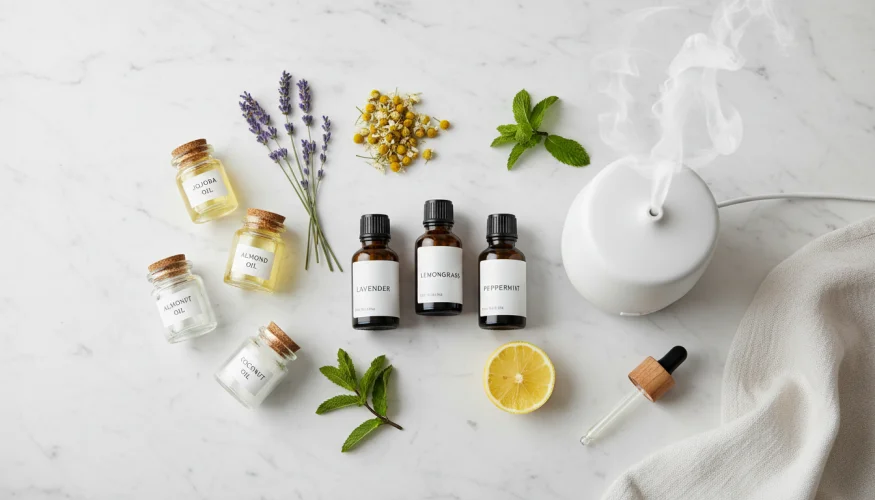
The fundamental rule of safe use is to always dilute essential oils in a carrier oil – such as jojoba, almond, or coconut oil. The standard recommended concentration for adults is approximately 2–3%, meaning roughly 12–18 drops of essential oil per 30 millilitres of carrier oil. For children, pregnant women, and elderly individuals, the concentration should be even lower and the choice of oils carefully considered. Some oils are directly contraindicated during pregnancy – for example, clary sage, rosemary, and fennel can stimulate uterine contractions.
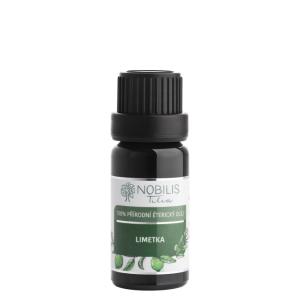
Another overlooked risk is phototoxicity. Citrus oils – bergamot, lime, grapefruit, and lemon oil – contain compounds called furanocoumarins, which, when applied to the skin and subsequently exposed to sunlight, can cause dark spots or serious burns. If a citrus oil is applied to the skin, direct sunlight must be avoided for at least 12 hours. An alternative is to use so-called phototoxicity-safe versions of these oils, labelled as "bergapten-free".
Inhalation of essential oils by people with asthma or other respiratory conditions deserves special attention. While the scent of eucalyptus may be pleasant and beneficial for a healthy person, it can paradoxically trigger an asthma attack in someone with the condition. Similarly, strong fragrances in enclosed spaces can cause headaches, dizziness, or nausea even in people without chronic illnesses. It is always advisable to ensure adequate ventilation and not to overdo the amount of oil used in a diffuser.
A critical warning concerns the internal use of essential oils. Although some sources – particularly in direct sales environments – promote this use, the majority of aromatherapy experts and the medical community strongly advise against it without the supervision of a qualified therapist. Essential oils are biologically active substances that, in inappropriate quantities, can damage mucous membranes, the liver, or the kidneys. The National Association for Holistic Aromatherapy (NAHA) explicitly warns against unsupervised internal use and recommends consulting a specialist.
How to properly incorporate aromatherapy into everyday life
If you decide to try aromatherapy, the key is an informed and thoughtful approach. The first step should be choosing high-quality essential oils from trusted producers. The market offers an enormous range of products of varying quality – from pure natural essential oils to synthetic imitations sold as "fragrance oils". A quality essential oil should have the botanical name of the plant, country of origin, method of extraction, and purity information listed on the label. Price is often a useful indicator – genuine rose oil or sandalwood oil are naturally expensive given the complexity of production, and suspiciously cheap alternatives are almost certainly not true essential oils.
For beginners, the simplest and safest method of aromatherapy is diffusion into the air. An ultrasonic diffuser disperses microscopic droplets of oil into a space without heating, thereby preserving all the biologically active components. Aroma lamps are an alternative, though it is preferable to choose ones where the oil is not heated directly by a flame but by steam or warm water. A simple option is also a drop of oil on a pillow, in a bath, or on a warm radiator. Palm inhalation – where a drop of oil is rubbed into the palms and then slowly inhaled – is popular for its quick effect during stress or headaches.
When using essential oils for massage, it is essential never to apply undiluted oil directly to the skin. A properly prepared massage oil should have the concentration mentioned above and should always be tested on a small area of skin first – ideally on the inner wrist – and monitored for 24 hours to check for any reaction.
For those who wish to use aromatherapy regularly and responsibly, a consultation with a certified aromatherapist can be a worthwhile investment. In the Czech Republic, this profession is represented by, for example, the Czech Aromatherapy Society, which brings together qualified professionals and offers the public basic information as well as a list of certified therapists.
Aromatherapy is not a miracle cure, and it would be a mistake to treat it as one. It is, however, a tool that – when used correctly – can meaningfully contribute to wellbeing, relaxation, and overall health. At a time when many people are seeking more natural approaches to self-care, aromatherapy offers an interesting path that respects the wisdom of nature while also demanding respect and knowledge from those who use it. And that is actually a good foundation for any relationship – whether with a person or with an essential oil.