

Children's teeth need care from the very first tooth
Every parent wants the best for their child – and healthy teeth are certainly part of that. Yet the same questions about children's dental care keep coming up again and again: when should you visit the dentist for the first time? Are baby teeth even important if they're just going to fall out anyway? And how do you prevent a young schoolchild from coming home from a check-up with news of their first cavity? The answers aren't always as straightforward as they might seem, and unfortunately many parents follow myths that end up doing their children more harm than good.
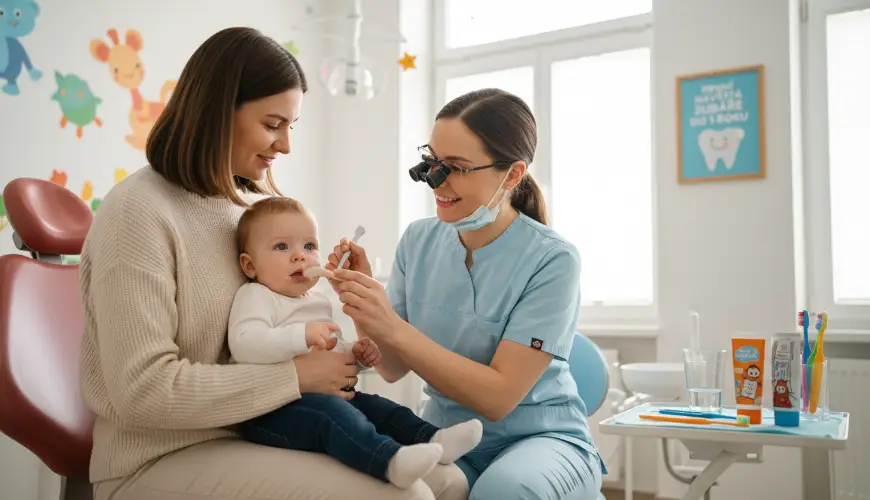
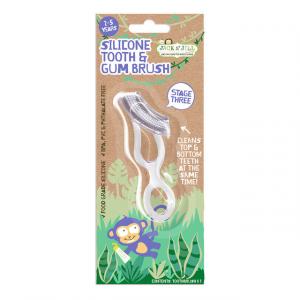
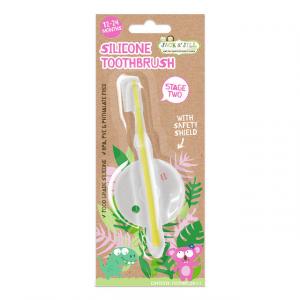
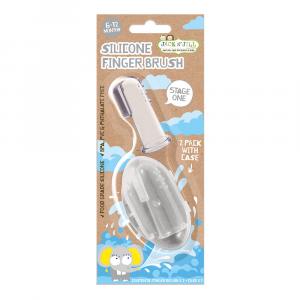
Children's dental care begins long before the first tooth even erupts. It's advisable to wipe a newborn's gums after every breastfeeding or bottle feeding with a clean damp cloth, because bacteria transmitted through parents' saliva can settle there too. Then, when the first baby tooth appears around six months of age, it's time for regular cleaning – first with a silicone finger brush, then gradually with a small-headed children's toothbrush. This seemingly trivial ritual has a significant impact on how a child will perceive oral hygiene throughout their entire life.
Try our natural products

When to take a child to the dentist for the first time?
Expert recommendations on this matter are surprisingly consistent – and unexpected for many parents. The American Academy of Pediatric Dentistry (AAPD) recommends a first dental visit by the child's first birthday, or no later than six months after the first tooth erupts. Czech dentists and the Czech Dental Chamber hold similar recommendations. In other words – waiting until a child starts nursery or school is, from a professional standpoint, too late.
Why so soon? There are several reasons. At the first visit, the dentist not only checks the condition of the erupting teeth and gums, but also assesses whether the child is prone to early cavities – the so-called baby bottle tooth decay syndrome, which affects infants and toddlers who drink sweetened beverages or fruit juices from a bottle. In addition, the dentist advises parents on brushing technique, appropriate toothpaste, and dietary habits. Equally important is the psychological dimension: a child who comes to the dentist when nothing hurts and their teeth are in good shape will come to see the dental office as a natural and safe place. The fear of dentists that troubles so many adults has its roots in childhood – and a first negative experience in the dental chair can leave a mark for years.
Take, for example, a family from Brno, where a mother named Petra brought her daughter Sofia to the dentist for the first time at age three, because she "didn't have all her baby teeth yet anyway." The dentist found an early cavity on an upper incisor and a minor bite irregularity. Both were eventually treated, but Petra admits that had she come sooner, the cavity could probably have been prevented with a simple change to Sofia's diet. "I didn't know that juice from a bottle before bedtime was such a big problem," she says. That's precisely what the first dental visit is about – that kind of guidance.
How to prevent cavities in children
Tooth decay is the most widespread chronic disease of childhood – and yet it is largely preventable. The key to success is a combination of proper hygiene, an appropriate diet, and regular check-ups. None of these three pillars is sufficient on its own, but together they form a very effective form of protection.
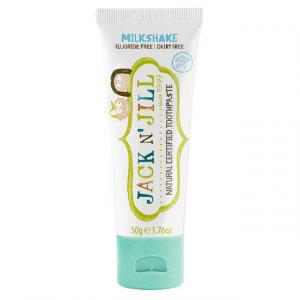
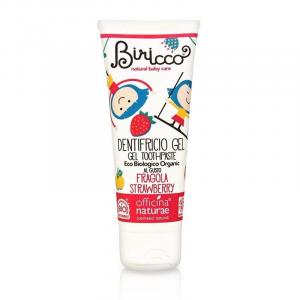
Proper tooth brushing is the foundation, yet in practice it is often underestimated. Children should brush their teeth twice a day – morning and evening – for at least two minutes. Up to around the age of eight, children don't have sufficiently developed fine motor skills to brush thoroughly on their own, so a parent should help them or at least check their work. Fluoride toothpaste is recommended from the moment the first tooth erupts – for the youngest children, a rice grain-sized amount is sufficient, and for preschool-aged children, approximately a pea-sized amount. Fluoride strengthens tooth enamel and significantly reduces the risk of cavities, as confirmed by a number of clinical studies by the World Health Organization.
Diet plays a role in cavity prevention that may be even greater than many parents realise. Sugar is a breeding ground for bacteria in the mouth, which produce acids that attack enamel. And it's not just sweets – fruit juices, sweetened yoghurts, cereal bars, and white bread behave in much the same way in the mouth. What matters is not only the amount of sugar, but particularly the frequency of its consumption. A child who has a piece of chocolate once a day as a snack is in better shape dentally than a child who sips fruit juice throughout the day. Between meals, children should ideally drink only water – even when parents find this seems strict.
Another important preventive tool that receives less attention is dental sealants, also known as fissure sealants. These are a thin protective coating that a dentist applies to the grooves and recesses of the chewing surfaces of molars – the areas where cavities most commonly develop and where even careful brushing cannot reach all the way in. The application is painless, quick, and is covered by health insurance as part of preventive check-ups. Yet many parents are entirely unaware of it or don't consider it important. And yet, according to data from the Czech Institute of Health Information and Statistics, molar cavities are among the most common findings in school-age children.
As a leading Czech paediatric dentist aptly noted: "Preventing cavities isn't just about brushing teeth. It's an overall lifestyle that a child absorbs from the very first months of life." And it is precisely this complexity that is why relying on a single strategy is not enough.
A separate chapter concerns baby teeth and their importance. A widespread myth holds that baby teeth don't need to be treated because they'll fall out anyway. The opposite is true. Baby teeth serve several essential functions: they allow a child to chew properly and absorb nutrients, they are necessary for proper speech development, and they hold space for the incoming permanent teeth. Premature loss of a baby tooth – whether due to a cavity or an injury – can cause neighbouring teeth to shift, leaving no room for the permanent tooth to grow in. The result is often a need for orthodontic treatment, which is both financially and time-consuming. Treating a baby tooth with a cavity is therefore always worthwhile.
Regular preventive check-ups should take place ideally every six months. At this interval, the dentist can catch cavities at an early stage, when they are still easy and inexpensive to treat, and can monitor the development of the bite on an ongoing basis. In the Czech Republic, children are entitled to covered preventive dental check-ups – parents should actively make use of this option and not only bring their child in when something hurts. Pain only comes when the cavity is advanced and treatment is more complex.
Alongside all the practical measures, one less-discussed factor is also worth mentioning: the transmission of bacteria from parents to children. The bacteria that cause cavities, primarily Streptococcus mutans, are transmitted through saliva – for example when a parent licks a child's dummy, tastes their food with the same spoon, or kisses them on the mouth. This doesn't mean parents should stop showing affection to their child, but it's worth being aware that the better a parent's own dental health, the fewer aggressive bacteria they pass on to their children. Looking after your own teeth is therefore, paradoxically, also part of looking after your child's health.
Orthodontic problems – meaning misaligned teeth or bite irregularities – are another topic closely related to preventive check-ups. A dentist or orthodontist is able to identify potential bite problems in preschool-aged children and recommend early intervention – whether that means exercises with a myofunctional trainer, breaking the habit of thumb-sucking, or monitoring jaw development. The earlier such problems are identified, the less invasive and costly their treatment tends to be.
Parents who want to give their children a solid foundation of dental health actually have a fairly straightforward guide available to them: start caring for teeth from the very first erupted tooth, visit the dentist by the child's first birthday at the latest, brush twice daily with fluoride toothpaste, limit sweetened drinks and foods between meals, and attend regular check-ups every six months. Healthy children's teeth are not a matter of luck or genetics – they are the result of conscious everyday decisions. And the most important of those decisions are made long before a child ever sets foot in a school canteen or picks up a toothbrush on their own for the first time.