
Why seed libraries belong to the future of gardens
There is something deeply comforting about the idea that a small paper envelope can hold the legacy of several generations of gardeners. Tomato seeds grown by a grandmother, legumes from Carpathian villages, or cucumbers whose lineage stretches back hundreds of years – all of this is disappearing today faster than most people realise. Industrial agriculture has taken its toll over the past hundred years: according to data from the Food and Agriculture Organization of the United Nations (FAO), the world has lost approximately 75% of all agricultural biological diversity. Yet there are people, communities and institutions that are actively resisting this trend. They are called seed libraries, and their story is worth knowing.
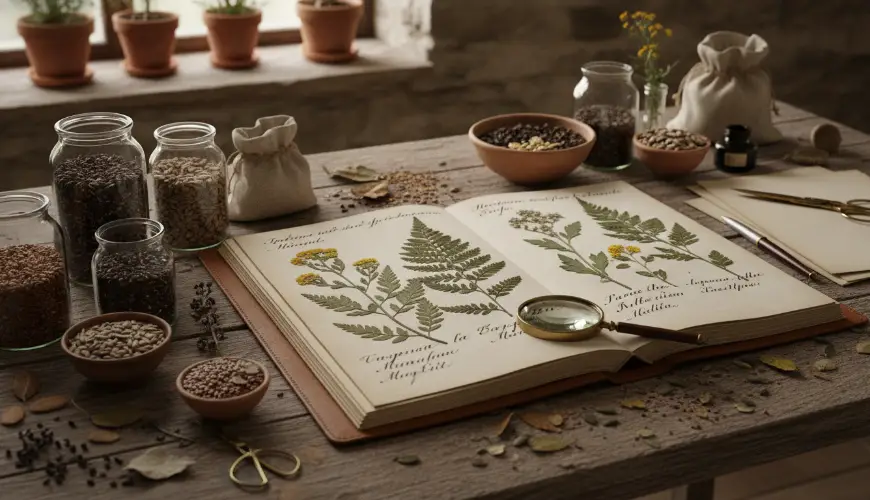
The term "seed library" may sound somewhat abstract, but in reality it is a very concrete and tangible thing. It is a place – physical or organisational – where seeds of old, so-called heritage or landrace varieties are preserved, catalogued and, above all, shared. Unlike commercial seed banks, which function as closed vaults, seed libraries are by their very nature living and open. Seeds are lent or donated to gardeners who plant them, grow the plants and return a portion of the harvest back to the collection. It is a beautiful example of circular thinking applied to nature itself.
Try our natural products





Why old varieties matter
Before we explore the specific places and organisations where seeds can be obtained in the Czech Republic, it is important to understand why this entire world exists in the first place. Modern varieties of vegetables and grains are bred with a single goal: to maximise yield, extend shelf life and facilitate mechanical harvesting. From the perspective of the food industry, these are legitimate requirements. Yet in this process, other qualities are inevitably lost – flavour, aroma, resilience to specific local conditions, or the ability to reproduce naturally and produce viable seeds.
Old varieties that have naturally adapted over generations to specific climatic conditions, soils and farming practices carry within them a genetic memory that modern science has yet to fully replicate. They are more resistant to local diseases, tolerate drought or waterlogging better than their bred relatives, and last but not least, they taste different – fuller, more complex, more authentic. Anyone who has once tasted an Ox Heart tomato or a Czech landrace cucumber called Démon will find it hard to return to the supermarket standard.
The dimension of food security is also important. The genetic uniformity of modern agriculture is vulnerable – a single new disease or climatic anomaly can devastate an entire harvest if all plants are genetically identical. The diversity of old varieties, on the other hand, represents an insurance policy, a reserve of adaptability for unpredictable situations. The renowned botanist and biodiversity advocate Gary Paul Nabhan expressed it aptly: "Seeds are the most concentrated form of hope that humanity has ever created."
Where to actually find seeds of old varieties in the Czech Republic
The Czech Republic has a surprisingly rich and active scene in this regard. There are several ways to obtain old varieties – from state institutions and non-profit organisations to informal networks of enthusiastic gardeners.
The best-known and most accessible platform for sharing seeds of old varieties in the Czech Republic is the association Kokoza and the associated initiative Semínkoviště, which functions as both an online catalogue and a physical exchange network. Gardeners can offer surplus seeds here, search for specific varieties or simply find inspiration. A similar principle operates within community gardens across the country – Prague's Kokoza, Brno's Svornost or the Prádelna garden in Ostrava regularly hold seed fairs where seeds can be exchanged in person.
For those seeking greater systematisation and scientific backing, the key player is the Crop Research Institute in Prague-Ruzyně, which administers the National Gene Bank of the Czech Republic. This institution preserves tens of thousands of samples of genetic material and, while it primarily serves research purposes, part of its collections is accessible to registered growers and breeders. It forms the scientific backbone of the entire system of plant genetic resource conservation in the country.
Perhaps closest in spirit to a true "living library" is the initiative Archa semen (Ark of Seeds), which brings together growers of old varieties from across the country and operates on the principle of mutual trust and sharing. Members send seeds to each other by post each year, share growing experiences and jointly document the history of individual varieties. A similar role is played by the Permaculture Association of the Czech Republic, which has seed exchange embedded directly in its activities.
One must also mention the Bio Institut and the network of certified organic farms, where old varieties are grown as part of sustainable farming. These farms are often willing to sell or donate seeds to direct enquirers, especially in the case of varieties they have been growing and selecting themselves over a long period.
A special chapter is formed by specialist online shops and small breeding companies, such as Rajčatový ráj (Tomato Paradise) or Sedmikráska (Daisy), which focus exclusively on heritage and landrace varieties. Unlike large commercial seed retailers, here you will find varieties with a story – tomatoes brought from Georgia, peppers from the Balkans or a Czech plum squash whose cultivation dates back to the 19th century.
Consider a specific situation: Jana from the Vysočina region inherited a small garden from her grandmother, along with a memory of unusual purple beans that had apparently been grown in the family for as long as anyone could remember. She does not know the variety and could not find any seeds. It is precisely for such cases that the forum Zahradaweb.cz exists, where a community of experienced growers can identify a variety from a description and, in the best case, also provide seeds from their own collections. This type of informal network is surprisingly strong and functional in the Czech Republic.
How to get involved in the world of seed libraries
Getting involved in the world of old varieties does not require a large garden or specialist knowledge. One can start very simply – for example by visiting a seed fair, which takes place every spring in dozens of towns across the country. These events are generally free, friendly and offer not only the seeds themselves but also the opportunity to meet people with extensive experience in growing old varieties.
For those who want to go further, the logical next step is to become an active contributor – that is, not only to receive seeds but also to return them. The fundamental principle of how seed libraries operate is that everyone who receives seeds commits to returning a portion of the harvest back into circulation. This is a commitment not only to the community but also to the plant itself, which needs to be grown anew each year in order to maintain its vitality and adaptability.
An important part of the entire process is documentation. Every variety should have its own story – where it comes from, who grew it, what its characteristics are, how it tastes. It is precisely these records that make it more than just biological material; they become part of cultural heritage. Some seed libraries therefore maintain detailed catalogues with photographs, growing notes and personal memories from donors. The result is living archives that connect the past with the present in a way that no digital database can fully replicate.
For those interested in a deeper understanding of the subject, the international network Seed Savers Exchange is also a valuable resource. It has been operating since 1975 and inspired the creation of similar initiatives around the world, including those in the Czech Republic. Their online resources and methodologies are freely available and provide a solid foundation for anyone who wants to begin saving their own seeds.
Old varieties are a living heritage that has survived only because people passed it on – from hand to hand, from generation to generation, through wars, droughts and political upheavals. Today, when this natural chain has been broken, seed libraries and the communities around them are taking on this role. It is not a sentimental, nostalgic affair, but a practical response to the real challenges facing modern agriculture and gardening alike.
Whether it involves balcony planters with tomatoes or an extensive rural garden, everyone who plants a seed of an old variety becomes part of something greater. They contribute to the preservation of genetic diversity, support local ecosystems and at the same time treat themselves to something that cannot be bought in a supermarket – a flavour that carries memory.