

# How to Grow Vegetables on a Balcony Growing vegetables on a balcony is a great way to enjoy fresh
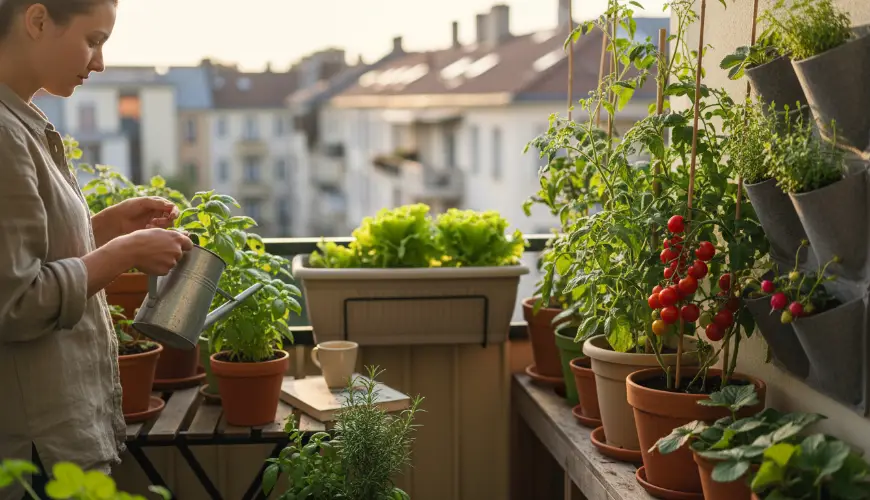
Having your own fresh vegetables right at hand, pulled from a window box or a pot on the balcony, is no fairy tale nor the exclusive privilege of large garden owners. Thousands of people in Czech cities today grow tomatoes, lettuce, herbs or peppers in spaces that many gardeners would not even consider "real" growing areas. Balcony gardening is experiencing a genuine boom – and no wonder. It provides fresh ingredients, saves money, calms the mind and at the same time brings people closer to nature in the middle of concrete.
Many people think that without a garden bed, gardening tools and a large area, you simply cannot grow vegetables. But that is a misconception that costs many households unnecessarily expensive supermarket purchases. The truth is that successfully growing vegetables on a balcony requires just a little sunshine, the right substrate, suitable containers and basic care. Nothing more, nothing less.
Try our natural products

Where to start and what to choose
The first step is an honest assessment of your balcony. The key question is: how many hours of sunlight does it receive each day? A south- or south-west-facing balcony is ideal – it gets six or more hours of direct sunlight, which tomatoes, peppers, cucumbers or beans will appreciate. A north-facing balcony does not mean the end of dreams of a vegetable paradise; you simply need to adapt your plant selection. Lettuce, spinach, rocket or radishes cope excellently with less sun and actually thrive better in a shaded spot than in direct midday heat.
Once it is clear what you have to work with, it is time to choose containers. One golden rule applies here: the larger the container, the more grateful the plant. Tomatoes and peppers do well in containers of at least ten litres, ideally fifteen. Lettuce or herbs will manage in smaller boxes. A drainage hole in the bottom is essential – without one, roots will literally rot. The material of the container matters in summer – dark plastic pots heat up significantly in the sun, so light-coloured or terracotta containers are gentler on plants.
Substrate is another area where beginners often go wrong. Garden soil from outside or cheap universal compost is not sufficient. A quality horticultural substrate enriched with perlite or vermiculite is suitable for balcony growing, as these improve aeration and moisture retention. Good substrate is the foundation of success, because plants in containers are entirely dependent on the nutrients people provide them – unlike in a garden bed, where roots can reach deep into the soil.
When it comes to choosing vegetables, there are several varieties that are practically made for balcony growing. Cherry tomatoes are among the most popular choices – they are resilient, productive and their harvest lasts from summer through to autumn. Peppers and chillies grow excellently in containers and manage well even in smaller spaces. Salad mixes can be harvested continuously using the "cut and come again" method, meaning a single sowing can be harvested for entire weeks. Radishes are ready in just twenty to thirty days from sowing, making them ideal for impatient beginners.
Care that is not complicated – just regular
The biggest difference between successful and unsuccessful balcony growing lies in watering. Plants in containers dry out much faster than those in garden beds, because they have a limited volume of substrate. On hot summer days it may be necessary to water twice a day, morning and evening. Self-watering planters with a water reservoir are a great help, as they maintain even moisture levels and significantly reduce the risk of drying out. For busy growers or those who go away on holiday, they are a genuine lifesaver.
Fertilising is essential in container growing. Nutrients are quickly depleted from the limited volume of substrate, and if they are not replenished, plants stop growing, turn yellow and cease to produce. A tried-and-tested choice is liquid fertiliser applied once every one to two weeks – either conventional garden fertilisers or natural alternatives such as nettle extract, which is effective, inexpensive and ecological. Compost tea or granulated organic fertilisers are further options for those who prefer a natural approach.
Let us consider a specific example: Jana lives in a third-floor flat in Brno, her balcony faces south and measures approximately six square metres. Three years ago she started with one planter full of lettuce and two pots of basil. Today her balcony has four large containers of tomatoes, two planters with lettuce and herbs, one pot of peppers and a small vertical stand with strawberries. Total costs in the first year were under one thousand crowns, while the savings on vegetables over the season outweighed the costs several times over. She says the biggest change came when she switched to self-watering planters – she stopped worrying about weekend trips away and the plants stopped suffering from fluctuations in moisture.
Protecting plants from pests is significantly easier on a balcony than in a garden, because larger pests such as slugs or voles generally cannot get there. The biggest threats are aphids, spider mites and whitefly. Regular inspection of plants – ideally during each watering – allows problems to be caught early. An effective and ecological solution is a spray of soapy water or neem oil-based products, which are environmentally friendly and at the same time effective.
As the gardening writer Monty Don wrote: "Gardening teaches us patience and presence – two things that the modern world systematically destroys." And this applies doubly to balcony growing. One learns to observe, respond and adapt – skills that extend far beyond the balcony.
Vertical growing and smart use of space
A small balcony need not be an obstacle if the space is used cleverly. Vertical growing is one of the most effective ways to maximise the available area. Special pocket hanging systems, pallet stands or simple shelves made from wooden crates allow vegetables and herbs to be grown at height, freeing up floor space for larger containers. Herbs, lettuce, strawberries or even small varieties of radishes are well suited to vertical systems.
Another smart solution is stakes and trellises for climbing plants. Staked tomatoes, beans or cucumbers grow upwards rather than outwards, while forming a natural green wall that protects the balcony from wind and the gaze of neighbours. This combination of aesthetics and practicality is one of the reasons why balcony gardening is attracting more and more people who previously never thought about gardening at all.
An interesting option is also growing in combinations, known as companion planting. Tomatoes and basil are a classic pairing – basil repels certain pests and both species support one another. Carrots and onions are another well-established pair. Such combinations save space while naturally reducing the need for chemical protection.
For those who want to start completely from scratch and find their bearings in the basics, detailed information is available from sources such as web Zahrádkář or český portál iZahrada, where they will find guides to choosing varieties, tips on fertilising and instructions for making simple irrigation systems. Scientifically grounded information on the nutritional value of home-grown vegetables and the mental health benefits of growing can be found in research published on the PubMed platform, where an increasing number of academic studies are dedicated to the topic of urban gardening.
Growing vegetables on a balcony is not just about food. It is a way of reconnecting with the natural rhythms of nature, slowing down and consciously caring for living things. Research repeatedly confirms that contact with plants lowers cortisol levels, improves mood and increases a sense of meaningfulness. At a time when mental health is becoming as much of a priority as physical health, a balcony garden is an affordable and accessible form of therapy for everyone.
And what is perhaps the most wonderful thing about the whole endeavour? The first tomato picked from your own plant tastes different from any other. Not because it is objectively better – although freshly harvested vegetables do indeed contain more vitamins than those that have spent days travelling through a refrigerated supply chain – but because it carries within it a story of care, patience and a small everyday miracle. And that story can truly be written by anyone, regardless of whether they have a garden or just a few square metres above the city's rooftops.