

Planting trees is not enough, ecology needs much more
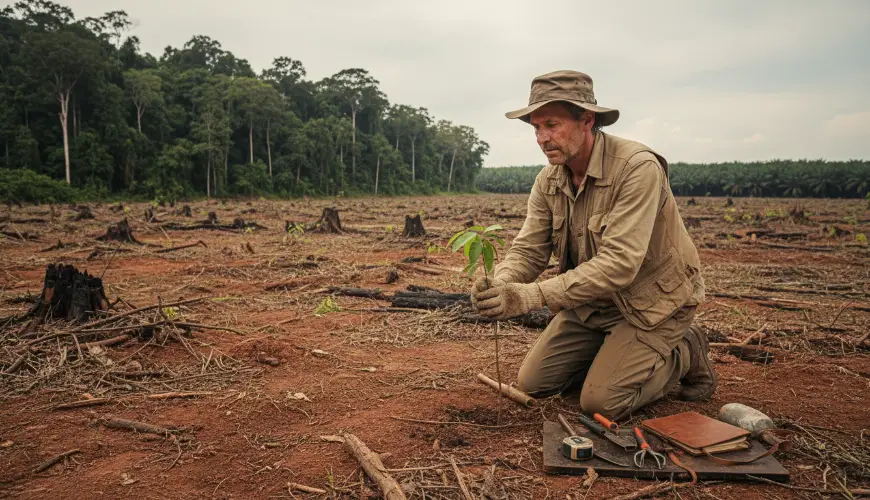
Planting Trees Has Become One of the Most Popular Ways
...for companies, governments, and individuals to declare their commitment to nature. Campaigns promising billions of new trees receive enthusiastic applause, celebrities photograph themselves planting seedlings, and corporations claim "carbon neutrality" through plantations in the tropics. It's an appealing image - green, hopeful, easily communicated. But behind this facade lies a far more complex reality that ecologists and scientists are increasingly voicing: planting trees alone is not enough. And in some cases, it can actually make things worse.
This isn't about trees being bad. They are absolutely essential for the functioning of ecosystems, climate regulation, and air quality. The problem lies in how they are approached - as a simple solution to an enormously complex problem. The planet is not merely facing a shortage of trees. It faces biodiversity loss, soil degradation, water pollution, excessive consumption of natural resources, and a climate crisis rooted deep in how modern civilisation operates every day.
Try our natural products






The Illusion of Green Salvation
When researchers from ETH Zürich published a study in 2019 claiming that planting a trillion trees could absorb enormous amounts of carbon from the atmosphere, the media immediately embraced it as salvation. A wave of criticism from other scientists soon followed. A study published in the journal Science pointed out that the original research overestimated the potential of afforestation and underestimated the complexity of ecosystems - for example, that dark coniferous forests in northern regions may actually contribute to warming by absorbing solar radiation, unlike light grasslands that reflect it.
This scientific debate is not merely academic. It has direct consequences for what governments and companies consider sufficient climate action. If it is possible to "buy one's way out" through tree plantations, why would industry reduce emissions? Why would consumers change their habits? Tree planting thus becomes a convenient substitute for genuine systemic change - and it is precisely this dynamic that is dangerous.
A practical example can be found in situations documented by investigative journalists: major airlines sell customers the option to "offset" flight emissions by paying for tree planting in Africa or Latin America. Yet many of these projects fail - trees die due to poor species selection, lack of care, or because they are planted in areas that naturally supported savannas or meadows. The customer's conscience is clear, but the planet gains no real benefit.
What Ecology Actually Needs
If planting trees is not enough, what is? The answer is neither singular nor simple, but scientists, ecologists, and practitioners agree on several key approaches that go far deeper than symbolic planting.
The first and perhaps most important step is protecting existing ecosystems. Old-growth forests, wetlands, mangroves, and natural meadows are incomparably more valuable in terms of carbon storage and biodiversity support than newly planted monocultures. Yet millions of hectares of primary forest disappear every year - due to agriculture, logging, and infrastructure development. According to data from Global Forest Watch, the world lost more than four million hectares of primary tropical forest in 2022. No planting programme can replace this loss in real time - a natural ecosystem builds its complexity over centuries.
Closely related to ecosystem protection is the concept of rewilding, or landscape renaturalisation. This approach, rather than active planting, relies on natural regeneration - allowing the landscape to recover on its own, or reintroducing key species that historically inhabited it. The results are often surprisingly swift and lasting. The famous example from Yellowstone National Park in the USA showed how the return of wolves transformed the entire ecosystem: regulation of the deer population enabled vegetation recovery along rivers, which stabilised riverbanks, altered water flow, and attracted dozens of other species back. This phenomenon, known as a trophic cascade, illustrates how interconnected and complex natural systems are - and how simplified interventions can miss the point entirely.
Another key dimension is changing the way people manage land. Regenerative agriculture - an approach that emphasises soil health, crop rotation, reduced tillage, and the preservation of organic matter - can restore soil's capacity to retain both water and carbon. Healthy soil is one of the planet's largest carbon reservoirs. As American writer and agricultural activist Wendell Berry says: "The health of soil, plant, animal, and man is one indivisible whole." This idea, expressed decades ago, is now finding ever-stronger scientific support.
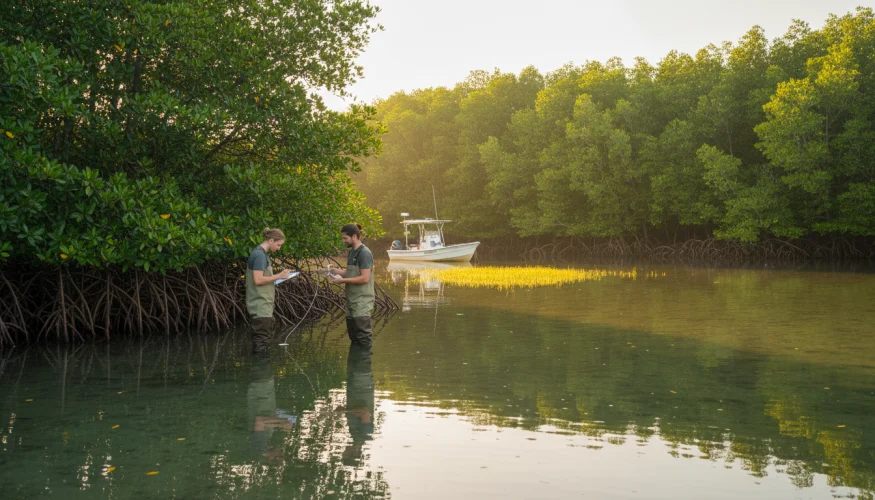
We must not forget the oceans. Marine ecosystems - particularly seaweeds, seagrasses, and mangroves - absorb enormous amounts of carbon, many times more efficiently than terrestrial forests. Yet these so-called blue carbon sinks remain on the margins of climate policy. Their protection and restoration represents one of the most significant, yet insufficiently utilised tools in the fight against climate change.
Systemic Change Begins with Each of Us
It is easy to view the ecological crisis as a problem that must be solved by governments, corporations, and international organisations. And yes - without systemic changes at these levels, no real breakthrough will occur. But waiting for top-down solutions while continuing old patterns of consumption is precisely the passivity that deepens the crisis.
Everyday decisions have a greater impact than most people realise. What we eat, how we dress, what we buy, and how we handle things we no longer need - all of this shapes demand, to which the market responds. The fashion industry, for example, is the second largest water polluter in the world and accounts for approximately 10% of global carbon emissions. Shifting to sustainable fashion - choosing quality, durable pieces, supporting brands with a transparent ethical approach, or buying second-hand - is a concrete way to reduce one's ecological footprint without waiting for legislative changes.
The same applies to the household. Choosing eco-friendly cleaning products, reducing plastic waste, composting, consuming seasonal and local food - each of these steps sounds like a drop in the ocean on its own. But the aggregate effect of millions of people choosing differently is far from negligible. And more importantly, such decisions send a signal to the market and to politicians that there is genuine demand for sustainable solutions.
This is precisely where the role of shops and brands comes into play - those that do not treat sustainability as a marketing trick, but as a genuine commitment. Offering products that are made with nature in mind, that have a longer lifespan, and whose production does not burden ecosystems - this is a concrete contribution to what ecology needs more than symbolic gestures.
An important part of systemic change is also education and awareness. People who understand how ecosystems function, how they are interconnected, and how fragile they can be, make different decisions than those who have only a superficial knowledge of nature. Ecological literacy - the ability to read a landscape, understand food chains, perceive the impacts of one's decisions - should be part of basic education. Unfortunately, it largely is not yet.
Political engagement also plays a major role. Voting for parties and candidates who take the ecological crisis seriously, supporting legislation that protects nature, getting involved in local landscape conservation initiatives - these are all forms of engagement that go beyond individual consumer decisions and touch the very foundations of how society functions.
Let us return to trees. The point is not to condemn them - planting trees makes sense when done correctly. When native species are planted in places where forest historically stood, when planting is part of a comprehensive landscape restoration strategy, and when it is monitored and cared for over the long term. Organisations such as Trillion Trees strive to establish precisely such criteria - combining active planting with the protection of existing forests and support for natural regeneration. Such an approach is meaningful.
The problem arises when trees become an alibi. When they allow industry to continue polluting, consumers to continue over-consuming, and politicians to continue postponing unpopular but necessary decisions. Ecology does not need a pleasing gesture - it needs deep, patient, and systemic work on restoring the relationship between human civilisation and the natural systems upon which it depends.
Perhaps the most apt expression of this comes from a metaphor used by some ecologists: planting trees during an ecological crisis is like applying a plaster to a broken bone. The relief is immediate, visible, and pleasant. But until we address what broke the bone - the way we live, produce, and consume - no amount of plasters will suffice.