
Why Physiotherapists Don’t Recommend Baby Walkers and Jumpers
Today’s young parents face an overwhelming array of products promising to make caring for a baby easier and support their development. Among the most popular are baby walkers and jumpers – colorful, cheerful and seemingly indispensable additions to any baby’s gear. But behind the appealing design and apparent practicality lies a troubling reality that physiotherapists are speaking out about ever more forcefully. Why do movement and development experts repeatedly warn against these popular products? And what should parents know before reaching for their wallets?
The answer to these questions is not simple, but it is important. Understanding how a young child develops naturally and what can disrupt that development can have a lasting impact on the child’s health and physical abilities throughout life.
Try our natural products


What happens to a child in a walker or jumper?
To understand why physiotherapists do not recommend walkers and jumpers, it is first necessary to understand a child’s natural motor development. The human brain and movement system are programmed to develop in a particular sequence – from lying on the tummy through rolling over, sitting and crawling to standing and walking. Each of these stages is not just a milestone but, above all, essential practice that prepares the muscles, joints and nervous system for the next step. Skipping or shortening any of these stages can have lasting consequences.
A walker places a child in an upright position before their body is ready for it. The spine, hip joints and trunk muscles do not yet have the necessary strength or proper muscle tone. A child in a walker does not move as they would naturally – instead of bearing weight on the whole foot, they push off on their toes, shortening the Achilles tendon and putting strain on muscle groups that are not yet ready to bear such a load. As the American Academy of Pediatrics (AAP) notes, walkers not only fail to support the development of walking but may actually delay it.
Jumpers, which are suspended from a door frame or stand on their own base, pose similar risks. A child in a jumper again pushes off the floor predominantly on their toes, while their body bears weight in a position that does not occur at any stage of natural motor development. In the short term, a jumper may look like a great way to entertain a child while also giving their “little legs a workout.” In reality, however, certain muscle groups are being overworked in a one-sided way, while those essential for natural walking are not being adequately developed.
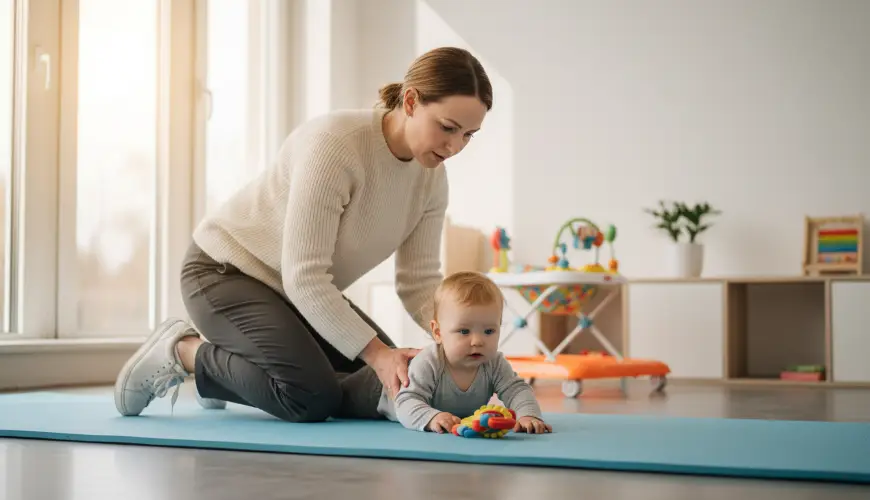
Physiotherapists and developmental specialists repeatedly emphasize that children need unrestricted movement on a mat – time on the floor when they can explore their own movement potential. This “floor time,” or time spent on the floor, is a cornerstone of healthy motor development. Every minute in a walker or jumper is a minute that could be devoted to natural movement.
Consider little Jakub, whose parents bought him a walker at four months because he seemed to want to stand and move around. Jakub was happy in the walker, and his parents were happy too – they could attend to household chores while their son cheerfully wheeled around the kitchen. But at fourteen months, when most children would already be walking, Jakub still preferred walking on his toes and had significantly weaker trunk muscles than his peers. The physiotherapist his parents eventually took him to immediately identified the cause and recommended intensive movement therapy. Jakub eventually caught up developmentally, but his story is a warning to many other families.
Risks parents often overlook
The safety of walkers is another issue that is being discussed more and more. Walkers are one of the most common causes of childhood injuries in the home. According to data from various countries, thousands of children end up in emergency departments each year because of falls from walkers – most often down stairs. The speed a child can reach in a walker is surprisingly high and far exceeds their ability to react to danger. Canada even banned walkers completely in 2004, becoming the first country in the world to do so, with manufacturers and retailers who distribute them despite the ban facing hefty fines.
Physiotherapists also point to less visible risks. One of these is impaired proprioception – the body’s ability to sense its position in space. During natural crawling and walking, a child receives continuous feedback from their feet, knees, palms and entire body. This feedback is essential for developing balance and coordination. In a walker, the child is separated from the floor and this feedback is greatly reduced. The same is true in a jumper, where movement takes place in a single plane and the body does not gain experience with the three-dimensional movement that natural walking requires.
Another overlooked issue is the effect on hip joint development. A baby’s hip is exceptionally malleable during the first year of life and easily influenced by external forces. Improper loading of the hip at an unsuitable stage of development can contribute to problems that only become apparent later in life – whether hip dysplasia or improper alignment of the lower limb. Renowned Czech physiotherapist and developmental kinesiology expert Pavel Kolář has repeatedly emphasized in his lectures that movement patterns acquired in early childhood affect a person’s entire movement system for the rest of their life.
It is worth noting that in many cultures where walkers and jumpers are not traditionally used – for example, in some African or Asian communities – children reach motor milestones at a comparable or even faster rate than children in Western countries, where these devices are common. This fact speaks for itself.
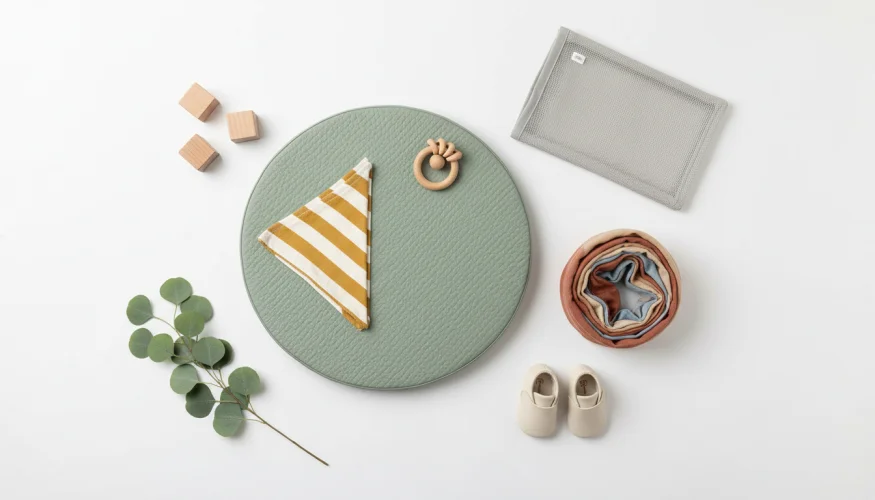
So what does a healthy alternative look like? The answer is surprisingly simple and requires no special equipment. Above all, a child needs time on the floor, preferably on a firm surface with some resistance – not on an overly soft mattress, but not on cold, bare tiles either. A thicker rug or firm mat is ideal, giving the child good traction while still providing enough comfort. Parents should offer their child different positions – lying on the tummy, on the back and on the side – and let them discover for themselves how they can move.
If a child shows interest in getting upright, holding on to furniture or a parent’s hand is a natural and safe approach – but only when the child takes the initiative. The key is for progress in movement to come from within the child rather than being imposed from outside. Physiotherapists speak of what is known as facilitation – gentle support that allows a child to develop movement naturally and at their own pace.
Parents naturally ask: “But what do I do when I need to keep my child safe and have my hands free at the same time?” This is a perfectly legitimate question – caring for a baby is demanding, and every parent needs moments when they can put their child somewhere safe and attend to another activity. In such cases, physiotherapists recommend playpens or baby loungers where the child can lie on their back or tummy, with room to move while remaining safe. Babywearing in a wrap is another great alternative that holds the baby in a natural position while freeing the parent’s hands.
What science says and how to navigate the flood of products
A growing number of scientific studies address this topic. Research published in the journal Archives of Disease in Childhood found that children who used walkers began sitting, standing and walking independently statistically later than children who did not use walkers. The same children also scored lower on tests of mental and motor development. These findings are not isolated – other studies from around the world have reached similar conclusions.
The market for baby products is enormous, and manufacturers’ marketing strategies are sophisticated. Walker and jumper packaging is full of phrases such as “motor development,” “stimulation,” “walking support” and “educational toy.” Parents who want the best for their child are naturally drawn to products that promise developmental benefits. It is therefore important to be able to read between the lines and seek information from independent expert sources rather than manufacturers’ advertising materials.
As leading British pediatrician and author of books on child development Dr. Harvey Karp said: “The best toy for a child is freedom of movement and a curious parent who gives them space to explore the world.” These words capture the essence of what modern developmental science confirms – a child does not need special equipment to develop healthily. They need time, space and a safe environment where they can explore their own movement possibilities.
Informed parents are a child’s best protection. If a parent has doubts about whether a particular device is suitable for their child, the best step is to consult a pediatric physiotherapist or pediatrician. Experts can assess a child’s current developmental stage and recommend a tailored approach. Every child is different, and development naturally varies – but the basic principles of healthy motor development apply universally.
Walkers and jumpers have been part of the baby products market for decades, and their popularity persists despite a growing number of warnings from experts. Changing this trend depends on how well informed parents are – and on their willingness to listen to experts who are invested in children’s healthy development, not in selling another product. Natural movement, floor time and patience are an investment that pays off for a lifetime.