
What children perceive without us even realizing it
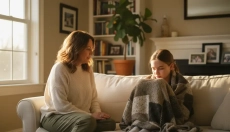
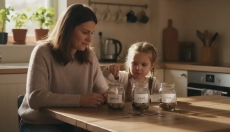
Every parent knows it. That moment when they think the child is asleep, or too absorbed in play to notice the tense exchange of words at dinner. That moment when the little person beside us seems to live in their own world, completely unconcerned with our adult world. Yet children are far sharper observers than most parents care to admit. And what's more – they perceive things in ways that cannot be simply explained or predicted.
It's not just about words. A preschool-age child can detect tension in a room before an adult has managed to say a single sentence. Research in developmental psychology repeatedly shows that children are equipped from an early age with an extraordinary sensitivity to the emotional signals of those around them. According to studies published, for example, on the American Psychological Association website, children as young as two years old respond to parental stress with changes in behaviour, sleep, and physiological markers such as elevated cortisol levels. In other words – a child who "doesn't know anything" actually knows far more than it appears.
Try our natural products



The Child's Brain as a Sensitive Seismograph
Nature arranged this cleverly. Children are biologically programmed to monitor their caregivers, because their survival depends on them. This evolutionary mechanism means that the child's brain functions like a sensitive seismograph, picking up even the subtlest tremors in the family's emotional environment. Facial expressions, tone of voice, bodily tension, the length of pauses between words – all of this is absorbed and evaluated by the child, even when they lack the vocabulary to describe it.
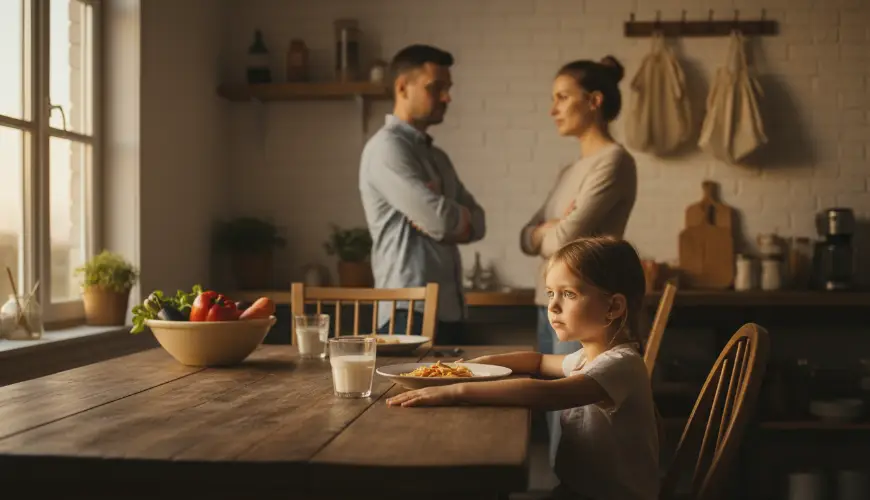
Consider an example from everyday life: a married couple, Pavel and Lucie, are going through a difficult period. They disagree about finances, communication between them is cold, but they have decided to appear normal in front of their children – seven-year-old Anežka and four-year-old Tomáš. Dinners seem to pass calmly, the parents avoid arguments and try to behave naturally. Yet Anežka begins having problems at school, Tomáš starts wetting the bed and is troubled by nightmares. The paediatrician finds no physical cause. A psychologist, after speaking with the family, identifies the source of the problem immediately.
This scenario is not exceptional. On the contrary, it is very typical and professionals encounter it regularly. Children do not react to what we tell them – they react to what they feel. And what they feel is a far more accurate picture of reality than the words adults serve them in a polished form.
Psychologist and parenting author Virginia Satir put it precisely: "Children are living messages we send to a time we will not see." And these messages carry within them everything they have witnessed – consciously and unconsciously alike.
But how exactly does this work? What specific things do children pick up on without us suspecting they are registering them at all?
First, there is non-verbal communication. Research shows that up to 93% of communication between people occurs non-verbally – through tone of voice, gestures, facial expressions and body posture. Adults have learned to filter and rationalise these signals to a certain degree. Children have not yet fully developed this ability, and so they receive them in raw, unfiltered form. They see when mummy says "I'm fine" while her jaw is clenched and her shoulders are tense. They hear when daddy speaks calmly, but his voice trembles slightly.
Second, there is the atmosphere of the home. A child cannot name the word "tension", but they can physically feel it. Just as we can sense, without a single word being spoken, when we walk into a room where people have just had an argument, a child perceives this atmosphere with even greater intensity, because they lack the rational filters that would soften it.
Hidden Patterns That Children Absorb
Even more complex is the question of behavioural patterns that children absorb without anyone realising it. Parents who strive to raise children with healthy habits, mutual respect and a sustainable way of life often unwittingly send entirely different messages through their everyday actions. Children do not learn from what we tell them. Children learn from what they see.
If a parent preaches the importance of calm and relaxation, but is themselves constantly rushing about, checking their phone and never allowing themselves a moment alone, the child takes away a pattern of overload as the norm. If a parent talks about healthy eating, but eats hurriedly and joylessly themselves, the child will not develop a positive relationship with food based on words alone. And if a parent speaks of respect for nature and an ecological approach to life, but in daily practice leaves mess around the house and wastes resources, the child takes away precisely this image – not the words.
Here we arrive at something worth deeper reflection. We live in a time when interest in a healthy lifestyle, ecologically conscious households and sustainable habits is on the rise. Many families consciously choose products that are kind to the environment, reduce plastic waste or try to live in harmony with nature. And that is wonderful. But the true impact of these values on children does not lie in what we buy or what we tell them – it lies in how we live these values every day, in small gestures and choices that we may not even be aware of.
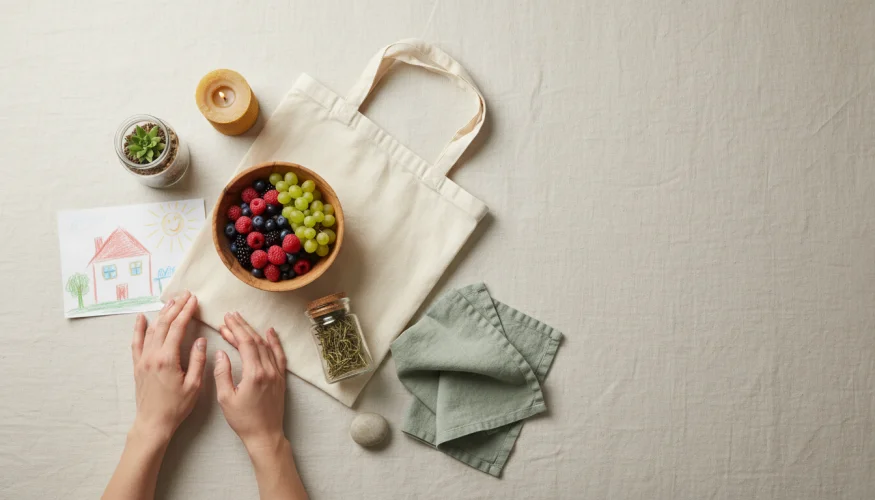
A child who sees their parents carefully sorting waste, carrying their own bag to the shops, or consciously choosing products free of unnecessary chemicals will naturally internalise this behaviour. It does not happen through a lecture. It happens through repeated observation and imitation. This is precisely why everyday small choices – from what we eat, to how we shop, to how we treat the people around us – are so enormously important.
Developmental psychology experts speak in this context of a concept known as "social learning", described by psychologist Albert Bandura. According to his theory, children learn by observing and imitating the behaviour of adults who serve as role models for them. This process occurs automatically and unconsciously – a child does not need instructions. They need examples. More about this concept can be found, for instance, on the Simply Psychology website, where Bandura's theory is explained clearly.
Yet social learning has its darker side as well. A child does not only absorb the good. They also absorb ways of managing stress, responding to conflict, talking about money, relating to their own body and health. If the adults in their environment deal with problems through silence or outbursts, the child takes this strategy away as their default setting. If the adults in the family neglect their own health, ignore fatigue or dismiss emotions with phrases like "it's nothing, stop crying", the child translates this message in their own way: emotions are weakness, the body doesn't matter, other people's needs are a nuisance.
And then parents wonder why their adolescent child cannot talk about their feelings, why they ignore their own health problems or why they struggle with empathy. The answer, however, is hidden deep within those seemingly insignificant moments when adults thought the child wasn't listening.
There is one thing that can make a great difference, and yet requires no grand gesture or dramatic transformation. It is conscious presence. Being truly present with a child – not physically in the room, but genuinely present – means the child receives the message: you matter, your world has value, I am here. Research shows that it is precisely this experience of secure attachment that forms the foundation of healthy emotional development and resilience in adulthood. The organisation Zero to Three, which is dedicated to early childhood research, repeatedly emphasises that the quality of the relationship between caregiver and child is the single most important factor in the first years of life.
This does not mean parents must be perfect. Perfection is not what children need, and indeed it is not possible. What they need is to see how adults make mistakes and how they deal with those mistakes. To see how daddy says "I'm sorry, I behaved badly" or how mummy admits she is tired and needs a moment to herself. These moments are just as valuable for a child – perhaps more valuable – than all the taught lessons combined.
Parents who carefully choose what they bring into their home – whether it is food, everyday consumer products or how they spend their leisure time – are doing more for their children than they may realise. Because a home is not merely a place where one lives. It is the first world a child knows, and from this world they carry away a map of reality by which they will navigate for the rest of their lives.
Children do not remember what we told them. They remember how we felt when we said it. And they remember the silences, the gestures, the atmosphere, the everyday rituals and the small decisions that adults make without thinking. Awareness of this fact is not a reason for anxiety or guilt. It is rather an invitation – towards greater authenticity, towards caring for ourselves, towards consciously building the environment in which children grow. Because the best thing we can do for a child is to live in a way that we ourselves consider worthwhile. Not for them. But with them.