

Trend bed rotting or lying around in bed and its impact on health
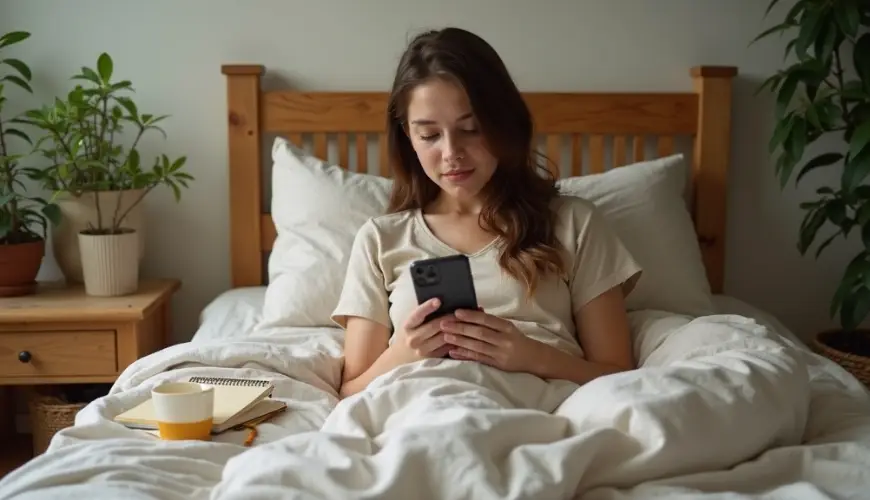
Social media have a remarkable ability to transform even the most mundane human habits into worldwide trends. Few people would have thought a few years ago that lying in bed in the middle of the day – entirely intentional, conscious, and guilt-free – would become a phenomenon discussed by psychologists, doctors, and lifestyle influencers around the world. And yet that is exactly what happened. The trend known as bed rotting flooded the TikTok platform with millions of videos and sparked a surprisingly deep debate about what modern people actually need to feel well.
The name may sound off-putting, but the concept is simple. Bed rotting refers to the practice of spending hours – sometimes an entire day – in bed without sleeping. You lie there, watch series, scroll through social media, read a book, eat a snack, or simply stare at the ceiling. No plans, no obligations, no productivity. At first glance it looks like ordinary laziness, but proponents of this trend argue that it is a conscious decision to allow oneself rest and recovery in an overloaded world. The question is: is there a real difference, or is the modern generation simply looking for an excuse to do nothing?
Try our natural products




Why does bed rotting resonate so strongly right now?
To understand why this trend has attracted such a response, it is necessary to look at the context in which it emerged. We live in an era that glorifies productivity almost as a religion. Hustle culture – a culture of constant performance, overtime, and maximum output – has dominated social discourse for at least the past decade. Success was measured by busyness, rest was a luxury for the weak, and sleep became the target of ridicule from those who "grinded while others slept."
But this culture comes at a price. The World Health Organization has classified burnout syndrome as an official health phenomenon included in the International Classification of Diseases, and study after study shows that chronic stress and lack of rest have devastating effects on both physical and mental health. Against this backdrop, it is hardly surprising that younger generations in particular – millennials and Generation Z, who grew up under the pressure of social media, precarious labour markets, and global crises – began looking for an alternative. Bed rotting became a kind of quiet protest. A way of saying: not today, today I will rest, and I will not apologise for it.
Similar tendencies are, in fact, not entirely new. The Danish concept of hygge, the Japanese philosophy of ma (conscious emptiness and pause), or the Italian dolce far niente (the sweetness of doing nothing) are culturally rooted approaches to rest that the West has overlooked for centuries. Bed rotting may simply be their digital, democratised version – accessible to anyone with a bed and a smartphone.
It is also worth noting how significantly the Covid-19 pandemic changed people's relationship with home and rest. Years spent at home, the blurring of work and private space, and the collective trauma of uncertainty all contributed to the bed ceasing to be merely a place for sleep. It became a refuge, a desk, and a place of escape. Bed rotting builds on this shift and gives it a name.
It is notable that the trend spreads primarily through TikTok, where videos with hashtags such as #bedrotting or #bedrot have accumulated hundreds of millions of views. Young people show their mornings spent under the duvet with a cup of tea and a favourite series – and the reactions of other users are surprisingly warm. "Someone has finally named what I do every weekend," they write in the comments. The sense of shared experience is evidently one of the reasons the trend resonated so quickly.
When does bed rotting heal – and when does it harm?
This is where we get to the heart of the matter, because the answer is not black and white. Psychologists and sleep experts are divided in their assessment of this trend, and for good reason – it depends on how, why, and how often bed rotting is practised.
On one side stand the arguments in favour. Conscious rest is essential for health. Research has long confirmed that passive relaxation – a state in which the brain is not actively engaged in problem-solving – allows the so-called default mode network to activate. It is precisely in these moments that the brain processes information, consolidates memories, evaluates emotions, and regenerates the capacities needed for creativity and decision-making. In other words, moments of apparent doing-nothing are not wasted time, but an important part of mental hygiene.
Consider Markéta, a thirty-year-old project manager from Brno. Throughout the working week she juggles deadlines, meetings, and emails, while devoting her evenings to the household and family. Every Saturday morning, however, she deliberately sets aside two hours in bed – without her phone, without planning, just with a book or a podcast. She says that without this ritual she would not feel capable of functioning by Monday. And psychology backs her up: regular moments of conscious rest are a proven tool for burnout prevention.
On the other hand, there are also legitimate concerns. The problem arises when bed rotting becomes an escape mechanism rather than conscious recovery. If a person spends entire days in bed because they do not want to face life, because they feel paralysed by anxiety or sadness, or because bed is the only place where they feel safe – then this is a warning sign. Excessive time spent in bed outside of sleep is one of the symptoms of depression and other mental health disorders, and mistaking it for trendy self-care can be dangerous.
Sleep expert and cognitive psychologist Dr Shelby Harris has pointed out in interviews with American media that spending too much time in bed outside of sleep can disrupt the quality of night-time sleep. The brain begins to associate the bed with wakefulness and activity rather than rest, which can lead to insomnia. This principle is, in fact, the basis of cognitive behavioural therapy for insomnia (CBT-I), which conversely recommends limiting time in bed to actual sleep periods.
Another risk is the passive consumption of social media content, which is closely linked to bed rotting. While reading a book or listening to music in bed genuinely calms the brain, endless scrolling can paradoxically increase anxiety, social comparison, and the feeling that time is slipping away without purpose. Research published in JAMA Pediatrics has repeatedly demonstrated a negative correlation between excessive social media use and mental health, particularly among young people.
So how can one tell whether a weekend morning spent under the duvet is healthy recovery or a symptom of something deeper? Psychologists offer several guidelines. The key is how a person feels after such rest. If they get up refreshed, with a sense of having genuinely recharged, it is likely a functional form of relaxation. If, on the other hand, they feel guilty, empty, or even more tired than before, this may suggest that bed rotting is serving a different purpose – namely, avoidance of uncomfortable feelings or situations that need to be addressed in other ways.
Context and frequency also matter. An occasional "do-nothing day" once in a while is perfectly fine for most people and can be genuinely beneficial. The problem arises when the exception becomes the rule and when bed rotting replaces social contact, physical activity, work, or other activities that are essential for mental health. Movement and exposure to daylight are key factors in regulating mood and sleep rhythms, as confirmed by recommendations from experts in psychiatry and sports medicine.
As with most things, context and intention determine everything. "Rest is not a reward for productivity – it is a basic human need," wrote American psychologist and author Saundra Dalton-Smith, whose work on different types of rest has gained international recognition. This idea is perhaps the most valuable thing the bed rotting trend has brought to public debate: it served as a reminder that rest is a legitimate and necessary part of life, not a weakness.
If bed rotting serves as a conscious pause – a moment in which a person deliberately allows themselves to slow down, make no plans, and simply be – then it is in line with what experts know about recovery. If, however, it becomes a cover for avoiding life or a symptom of deeper psychological distress, seeking support is appropriate – whether in the form of a conversation with a loved one or with a professional.
Bed rotting as a trend thus functions as a mirror of the times. It reflects collective exhaustion, a longing for permission to rest, and at the same time uncertainty about where the boundary lies between healthy self-care and escape from reality. The answer to the question of whether this phenomenon heals or harms is ultimately something each person must find for themselves – depending on what is truly hiding beneath their duvet.