

Functional laundry system without unnecessary stress
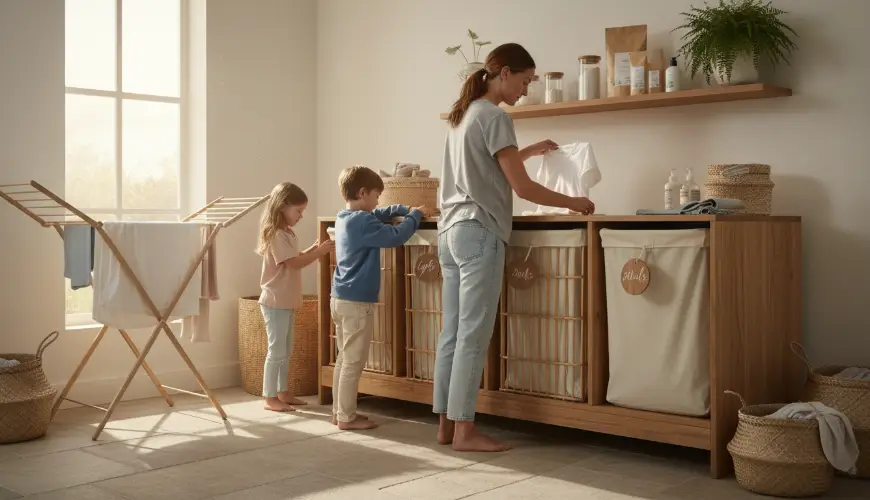
Everyone who has ever lived in a larger household knows how quickly laundry can pile up into an unmanageable mountain. Many parents are familiar with Monday mornings spent standing before an overflowing basket, not knowing where to begin. Yet in most cases, the problem isn't a lack of time or a faulty washing machine – it's the absence of a functional system for sorting and organising laundry that would simplify and streamline the entire process. And that's exactly what this article is about: how to set up a system in your household that truly lasts, doesn't collapse under the pressure of everyday life, and can handle even the most demanding laundry loads of a large family.
Let's admit it – laundry organisation tends to be one of the most underestimated areas of household management. Few people think of it as a system – rather as an endless chore that repeats itself indefinitely. Yet this very attitude is the root of the problem. According to home organisation experts such as Marie Kondo or Cas Organize It, poorly thought-out laundry logistics represents one of the biggest time losses in the average household. And we're not just talking about the washing itself, but the entire chain: sorting, washing, drying, folding and storing. Every link in this chain must work, otherwise the entire process grinds to a halt.
Try our natural products



The Foundation of Success: Sorting as a Ritual, Not Chaos
Take as an example a family with four children, where each household member produces an average of two to three outfit changes per day. That adds up to easily ten to fifteen items of clothing per day, plus bed linen, towels and kitchen cloths. Without a clear system, this volume becomes a nightmare. Yet the solution can be surprisingly simple: start sorting right from the beginning, that is, from the moment we take clothes off.
The key is having multiple laundry baskets or containers in the household, ideally divided by category. The most common approach that works well is sorting into light, dark and delicate laundry, with the possible addition of a special basket for bed linen or work clothes. Every family member should know where each item belongs – including the youngest ones. If children get used to sorting laundry from an early age, it becomes an automatic habit that saves you a great deal of energy. It's not about strict discipline, but about creating a natural routine that becomes part of the household's daily rhythm.
There is a wide range of practical solutions on the market: from simple fabric baskets to modular systems with multiple compartments to elegant wooden stands with canvas bags. When choosing, it's important to think not only about capacity, but also about where the system will be placed. Bathroom, hallway, utility room or bedroom – each space has its own specifics, and what works in one household may not suit another. A well-chosen laundry system should be intuitive, easily accessible and aesthetically pleasing, so that the family actually uses it rather than works around it.
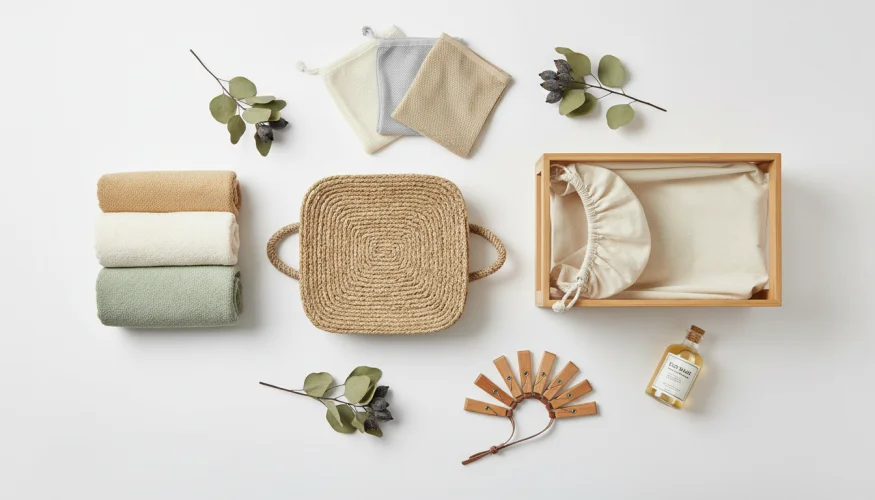
It is equally important to think about sustainability. Many modern laundry baskets are made from natural materials such as bamboo, jute or organic cotton. These options are not only more eco-friendly, but also more durable and better suited to everyday use. On the Ferwer.cz website, you can find baskets and storage systems made from natural materials, designed with both functionality and the environment in mind – an ideal choice for households that want to live more sustainably without compromising on practicality.
How to Establish a Routine That Lasts
Having the right baskets is only the first step. The real magic happens when you add a well-thought-out routine. As American organisation consultant Dana K. White once said: "Organisation isn't about perfection, it's about systems that work even on bad days." And this applies to laundry doubly so. In a large family, the basket will never be empty for more than an hour – so the system must work even when you don't have the time or energy to give it your full attention.
One of the most effective approaches is the so-called rolling laundry routine, meaning doing laundry continuously rather than in large batches at the weekend. Instead of spending an entire Saturday by the washing machine, you run one load every morning or evening. This means you'll never find yourself with a mountain of dirty laundry and nothing clean to wear. For a large family, this means approximately one to two loads per day, which may sound like a lot, but is in reality far less stressful than a weekend laundry marathon.
Another element of an effective system is clearly assigned responsibilities. Every family member who is capable should have their part in the process. Older children can carry laundry to the utility room, fold clothes or sort socks. Younger children can manage to take their own clothes to the designated spot for finished laundry. Parents can then focus on the stages that genuinely require adult judgement – such as washing delicates or ironing. In this way, laundry becomes a shared responsibility rather than one person's burden.
Drying laundry is another link in the chain that deserves attention. Tumble dryers are convenient, but energy-intensive and not always gentle on fabrics. An alternative is quality laundry drying racks, which allow clothes to dry naturally – whether outdoors or indoors. Modern foldable or wall-mounted drying racks take up minimal space while offering sufficient capacity even for larger families. If you have a garden or balcony, outdoor drying is not only more economical but also naturally disinfecting thanks to UV radiation – and the laundry smells completely different from a tumble dryer.
Folding and storing laundry is the biggest stumbling block for many families. Piles of folded laundry sit on the bed or sofa for days before anyone puts them away. A solution may be a system where laundry isn't folded into piles but sorted directly into baskets or compartments for each individual family member. Everyone then takes their basket to their room and puts things away themselves. This approach significantly reduces the time spent folding and at the same time teaches children responsibility for their own belongings.
Interesting inspiration is also offered by The Spruce's household organisation methodology, which recommends dedicating each day of the week to a specific type of laundry – Monday for bed linen, Wednesday for dark clothes, Friday for towels and so on. This approach helps keep the system clear and predictable, which is particularly appreciated in larger households where certain items might otherwise get lost in the rotation.
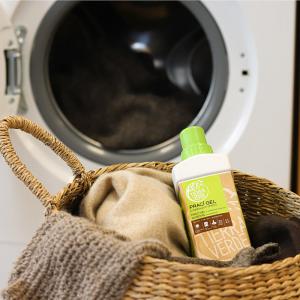
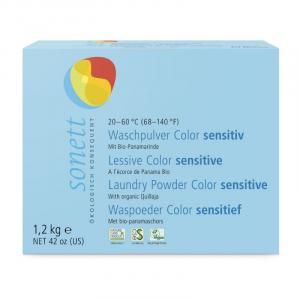
Don't forget about the washing products themselves. For a large family, it is both economical and eco-friendly to choose laundry detergents in larger packaging or in concentrated form. Ecological alternatives are also available on the market – laundry nuts, solid laundry soap or concentrated eco-friendly gels, which are gentle on both skin and the environment. These products are particularly suitable for families with young children or allergy sufferers, as they do not contain aggressive chemical substances. Choosing the right laundry detergent is part of the overall system – it affects not only the cleanliness of the laundry, but also the longevity of textiles and your household's ecological footprint.
Practical laundry organisation also requires small accessories that make the daily routine easier. Mesh laundry bags for delicates, clips for pairing socks directly in the washing machine, or labelled bags for each family member – these are all small investments with a big impact. If you have athletes in the household, they will appreciate special washing bags for sportswear, which prevent damage to functional materials while also protecting the washing machine drum from microplastic fibres.
The entire system should also be sufficiently flexible to handle exceptional situations – illness, holidays, moving house or a growing family. It is therefore advisable to choose modular solutions that can easily be expanded or reorganised. Stackable baskets, drying racks with adjustable height, or storage systems with interchangeable compartments – all of these contribute to the long-term functionality of the entire system.
You may be wondering whether it is even worth investing the time and energy into setting up such a system. The answer is unequivocal: yes. Home organisation studies repeatedly show that a well-thought-out laundry system saves the average family hours each week, reduces stress and contributes to the overall wellbeing of the household. It's not about perfectionism or having everything at home looking like a catalogue. It's about setting rules that genuinely work for your specific family – with its habits, space and rhythm.
Laundry will always be part of life in every household. But with the right system, what was once an endless chore can become a routine that simply works – quietly, reliably and without unnecessary stress. And that is worth every minute you invest in setting it up.