

Exercising together builds fitness and stronger relationships
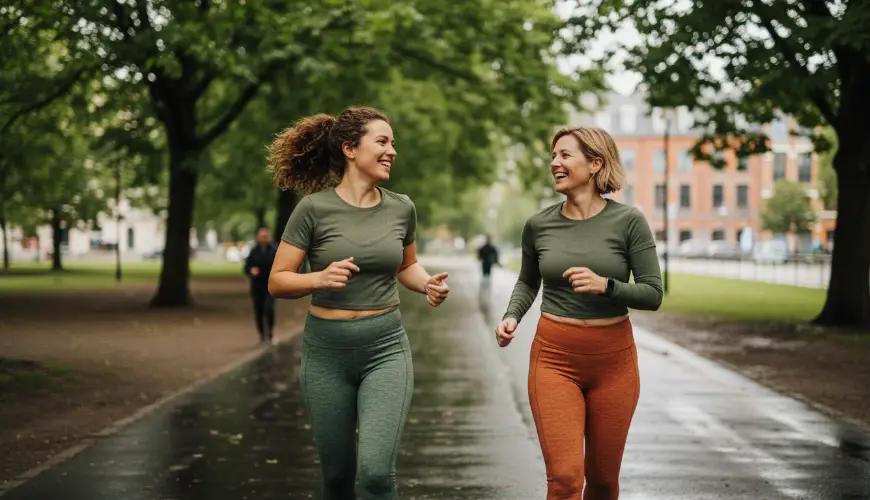
There is one moment that almost everyone who has ever tried to exercise regularly knows. It's seven in the morning, the alarm is ringing, it's raining outside, and the only thought running through your head is how quickly you can silence it and roll over. Plans for a morning run dissolve like mist. But then a message arrives: "So, are we going?" And suddenly you're getting up. That's exactly how exercising with a partner works – quietly, but enormously effectively.
The phenomenon of exercising together is nothing new, but it's only in recent years that science has begun to fully understand it. It turns out that having a partner, friend, or companion by your side isn't just a pleasant addition to a fitness programme – it's one of the most powerful tools for building a truly lasting exercise habit. And all without expensive apps, personal trainers, or complex diet plans.
Try our natural products





The Science Behind Shared Sweat
Researchers at the University of Aberdeen found that people who began exercising with a new fitness partner increased their physical activity significantly more than those who trained alone. The key was not so much the physical presence of the other person, but rather their emotional support – the feeling that someone is rooting for you, believes in you, and is waiting for you. This research published in the British Journal of Health Psychology raised an interesting question: what exactly happens in our minds when we exercise together?
The answer lies in several psychological mechanisms that reinforce one another. The first is the so-called Köhler effect – the tendency of people to perform better in a group, especially when they feel they are the "weaker link." In other words, when you see your partner completing one more lap or holding a plank twenty seconds longer, you automatically try harder. It's not about envy or competitiveness in a negative sense – it's a natural human impulse not to let down someone who cares about you.
The second mechanism is the simple yet powerful force of commitment. When you arrange a jog with a friend for Wednesday at six in the evening, it's much harder to cancel than when you've only made a promise to yourself. Psychologists call this "accountability" – responsibility towards another person, which acts as an external anchor for our inner, often wavering resolve. And it's precisely this anchor that proves irreplaceable in moments of weakness.
The third, and perhaps most underestimated factor, is the enjoyment of movement itself. Exercising together is simply more fun. Time passes more quickly, difficult stretches become more bearable, and after the workout comes not only physical but also social satisfaction – that pleasant warmth from time well spent with someone close.
Take Petra, a thirty-six-year-old accountant from Brno, who spent years trying to run regularly. She bought quality running shoes, downloaded several training apps, and even got a smartwatch. Yet she always managed only a few weeks. The turning point came when she started running with her colleague Martina. "Suddenly I was looking forward to the run," says Petra. "It wasn't just about the kilometres – it was about chatting along the way, laughing, and then having a coffee." Today they have been running together for over two years, and Petra has completed her first half-marathon.
How to Find the Right Exercise Partner
Of course, not every sporting duo works automatically. Choosing the right exercise partner is more important than it might first appear. The key is compatibility – not necessarily in physical fitness, but in approach, motivation, and expectations.
An ideal exercise partner should share similar goals. If one wants to lose weight and the other is training for a race, their workouts may have very different structures and intensities, which sooner or later leads to frustration on both sides. On the other hand, if you're both looking for a way to move regularly, reduce stress, or maintain fitness, you have an excellent foundation.
Similar availability and schedule flexibility also matter. A chronic early riser and a night owl will struggle to find shared training times that suit both of them. It's also worth considering geographical proximity – the fewer logistical obstacles there are, the higher the likelihood that you'll actually exercise together.
An exercise partner doesn't have to be a romantic partner or a best friend. Work colleagues, neighbours, distant friends connected online, or members of local sports groups can all work wonderfully. Nowadays there are apps and Facebook groups specifically aimed at finding sports partners nearby, so the obstacle of "I have no one to go with" is more easily overcome than ever before.
Wim Hof, the famous athlete and advocate of a healthy lifestyle, once said: "Motivation is what gets you started. Habit is what keeps you going." And it's precisely the transition from motivation to habit that is the most critical moment – and exercising together significantly eases that transition.
It's also worth noting that an exercise partner doesn't need to be physically present. Research shows that even virtual accountability – such as sharing workout results through an app or sending a quick message saying "I did it today" – has a measurable positive effect on consistency. That's good news for those whose friends live in other cities or whose schedules simply don't overlap.

Practical Tips That Actually Work
Moving from theory to practice doesn't have to be complicated. There are several tried-and-tested ways to get the most out of exercising together.
First, establish clear shared rules right from the start. How often will you exercise? What happens if one of you gets ill or has a packed week? How will you respond if one progresses faster than the other? These conversations may sound overly formal, but they prevent many misunderstandings and disappointments.
Second, choose activities that both of you enjoy. You don't both have to love the same sport – but both parties should be willing to engage in the chosen activity with enthusiasm. Pilates, yoga, swimming, hiking, group dance classes, strength training at the gym, or even padel – the options today are endless. Variety of activities, in particular, helps sustain interest and prevents burnout.
Third, celebrate shared successes. Did you run five kilometres without stopping for the first time? Did you complete an entire month without missing a session? These moments deserve recognition – whether in the form of a shared dinner, a new piece of sports gear, or simply a loud cheer in the changing room. Positive reinforcement works, and shared achievements strengthen both the bond and the motivation for the weeks ahead.
Fourth, be honest with each other. If the pace doesn't suit you, if you feel overloaded or, conversely, understimulated, say so. Exercising together works best when communication is open and safe – free from judgement and pressure.
An interesting aspect of exercising together is also its effect on the relationship itself between partners or friends. Physical activity releases endorphins, which naturally improve mood and feelings of connection. Studies published in the Journal of Social and Personal Relationships show that couples who exercise together regularly report higher levels of relationship satisfaction and a better ability to handle conflict. Shared sweat, then, builds not only muscles but also trust.
For those looking for inspiration for activities suitable for couples or groups of friends, choosing the right equipment and clothing can also be a good starting point – functional and sustainable sportswear not only supports performance but also increases motivation to exercise in the first place. When you feel good in what you're wearing, the workout itself becomes more enjoyable.
Regular physical activity has implications that extend far beyond physical fitness. According to the World Health Organization, regular physical activity reduces the risk of cardiovascular disease, type 2 diabetes, depression, and anxiety. When we add the social dimension of exercising together to these benefits, we get a combination that acts on health in a comprehensive way – body and mind simultaneously.
It's also interesting to observe how the dynamic of exercising as a pair changes over time. In the first few weeks, mutual motivation and enthusiasm for the new ritual dominate. After several months, routine sets in – and this is the critical moment. It's precisely when a solo exerciser would most likely ease off that the shared commitment holds the duo together. And after a year or two, what began as external motivation becomes a deep, internalised habit that no longer requires as much conscious effort.
Exercising together thus mirrors, in a certain sense, the best of human nature – our ability to grow through relationships, to learn from others, and to find meaning in what we do together. It is no coincidence that the oldest forms of physical activity – hunting, dancing, working in the fields – were always collective endeavours. Perhaps we are simply returning to something we should never have left behind.
So if you're hesitating about whether to suggest morning runs to a friend or propose yoga classes to a colleague – go ahead and do it. The worst that can happen is a refusal. And the best? Perhaps it will be the beginning of two years of regular exercise, new personal records, and a friendship forged in sweat and laughter.