
The phenomenon of cleaning up before the cleaner or tradesperson arrives
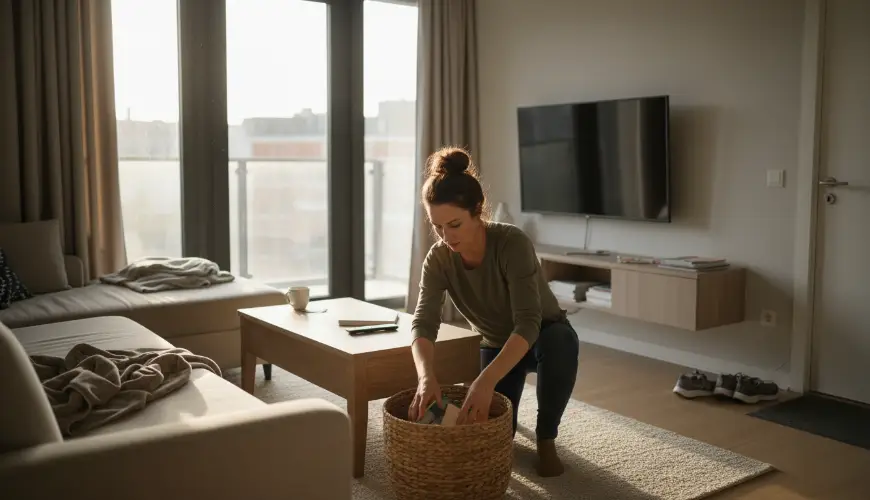
Almost everyone knows the feeling. A message arrives from the cleaner saying she'll be there Friday morning, and suddenly a frantic tidying session breaks out in the flat. Things disappear from tables into drawers, dishes get hastily washed, socks are picked up off the floor. Yet the whole point of the visit is for someone else to clean for you. A similar situation arises when you're expecting a tradesman – before he arrives to replace a tap or fix a socket, you find yourself walking through the flat and putting things "in order". Why do we actually do this? And is it even irrational, or is there something deeper behind it?
Psychologists and sociologists take this seemingly trivial phenomenon surprisingly seriously. It turns out that the urge to tidy up before a stranger arrives – whether it's a professional cleaner, a plumber or an electrician – is not the result of mere absent-mindedness or habit. It is complex behaviour driven by social norms, fear of others' judgement, and deeply rooted ideas about what it means to have a "decent home".
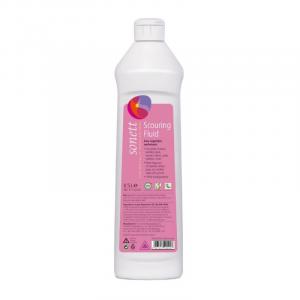
Try our natural products

Fear of judgement and social norms
In our culture, home is strongly linked to identity. The way your flat or house looks says – at least in the eyes of others – something about who you are. Mess is not perceived merely as mess, but as a signal. A signal of laziness, carelessness, or even personal failure. This assumption is, of course, simplistic and unfair, yet it is deeply rooted in many societies.
Social psychology speaks of a phenomenon called "impression management" – that is, managing the impression we make on others. American sociologist Erving Goffman described in his work how people constantly "play a role" depending on the audience in front of them. A home that was until recently an exclusively private space becomes a stage the moment someone visits. And on a stage, the scenery gets tidied.
A cleaner or tradesman is not a guest in the traditional sense. They don't come for dinner or coffee. Yet – or perhaps precisely because of this – their visit triggers in people a strong need to present their home as a tidy and functional space. It is paradoxical: we invite someone into our home whose job is to clean, and yet we are ashamed of the mess they are supposed to clean.
Research in behavioural psychology suggests that fear of judgement plays a key role. It is not a rational consideration – most people are aware that their cleaner has seen worse things in her life than their messy living room. Yet the emotional response persists. The brain evaluates the situation as socially risky and triggers defensive behaviour: tidy up, hide, conceal.
Interestingly, this reaction is significantly stronger in women than in men, although the differences have been gradually narrowing in recent decades. Historically, maintaining the household was considered a woman's responsibility, and so the social pressure associated with a "messy home" is still felt more intensely by women. A messy flat was, and to some extent still is, perceived as the failure of the housewife, rather than the failure of the household as a whole. This cultural baggage is passed down from generation to generation and manifests itself precisely in situations when a stranger arrives.
The practical side of things – and why it also makes sense
Alongside the psychological reasons, there are also entirely rational arguments for tidying up before a professional arrives. And these need to be taken into account to complete the picture.
A cleaner who arrives to a home full of things strewn across the floor, items in the wrong places and cluttered piles works less efficiently. The time she spends moving things around and figuring out what goes where is time she cannot devote to actual cleaning. In other words: if you want professional cleaning to truly deliver results, it makes sense to prepare conditions in which the cleaner can do her job well. This doesn't mean cleaning for her – it means removing the chaos that would make her work harder.
Similar logic applies to tradesmen. A plumber who comes to fix a drain under the sink needs access to the repair site. If the kitchen counter is piled with dishes, boxes and various clutter, the repair takes longer and the risk increases that something will accidentally be damaged or overlooked. Clearing the area around where the tradesman will be working is therefore a purely practical step – and at the same time an expression of respect for his work.
Take Martina, a thirty-five-year-old graphic designer from Brno, who has her flat cleaned every two weeks. She admits that she always spends about an hour "pre-tidying" before the cleaner arrives. "I know it's a bit absurd," she says, "but I can't help it. I put away things I don't want her to see – personal letters, medicines, things that are simply mine." Her story reveals yet another dimension of the whole phenomenon: privacy. Home is a place where we keep things we don't want to share with the outside world. The arrival of a stranger – even a professional – disrupts this privacy, and putting things away before they come is a way of preserving at least some of it.
When a habit becomes a problem
Most of the time this is a harmless habit with both psychological and practical justification. But there are situations where this behaviour can become a symptom of something deeper. If preparing for the cleaner's arrival takes an entire day, triggers strong anxiety, or leads you to repeatedly postpone or cancel the visit, it may be a sign of perfectionism or social anxiety.
Perfectionism in the home environment is a topic that psychologists are increasingly monitoring. The pressure to have a perfectly tidy and aesthetically flawless home – fuelled in part by social media full of carefully photographed interiors – can lead to chronic stress and the feeling that your home is never "good enough". Yet a home should above all be a place of rest and safety, not a showroom.
As Danish writer and philosopher Søren Kierkegaard noted: "The most courageous act is to think for yourself – aloud." The same could be said of the courage to accept one's own home as it is – with its mess, its imperfections, with the life that unfolds within it. The question is: can we free ourselves from the impression that our flat must always be ready to be photographed?
Mental health professionals, such as those affiliated with the American Psychological Association, repeatedly point out that a moderate degree of messiness is a natural part of a functional home and should not be a source of shame. More important than visual perfection is the sense of wellbeing and safety we feel in a given space.
On the other hand, if preparing for the arrival of professionals motivates you to tidy and maintain order more regularly than you otherwise would, this is an entirely healthy mechanism. Social pressure – even that directed at oneself – can be a productive force, as long as we don't take it too far.
Interesting light on the whole issue is also shed by studies examining the relationship between the physical environment and mental state. Research published in the journal Personality and Social Psychology Bulletin, for example, showed that people who described their home as "cluttered" or "unfinished" had higher levels of cortisol – the stress hormone – than those who perceived their home as tidy and organised. This suggests that the desire for order before a stranger's arrival may partly also be a desire for one's own psychological comfort – and not merely an attempt to impress others.
The whole phenomenon of "tidying up before the cleaner" thus reveals a fascinating intersection of psychology, sociology and everyday practice. It is behaviour that is simultaneously irrational and entirely logical, unnecessary and meaningful. It shows how deeply social norms associated with home are rooted within us, and how strongly we perceive our living space as part of our own identity. Home is not just a place where we live – it is a place that says something about us. And that is precisely why we want to keep it under control, even when someone is coming whose job it is to temporarily take that control into their own hands.
Next time you catch yourself hastily washing dishes before the cleaner arrives, there's no need to be ashamed. It is a deeply human reaction – and now you know why. And if you care not only about the cleanliness of your home but also about what you clean with, it's worth reaching for eco-friendly cleaning products that are gentle on your home environment and on the planet – because a tidy home and a responsible approach to the environment go hand in hand.