

Sustainability as an excuse for hoarding things
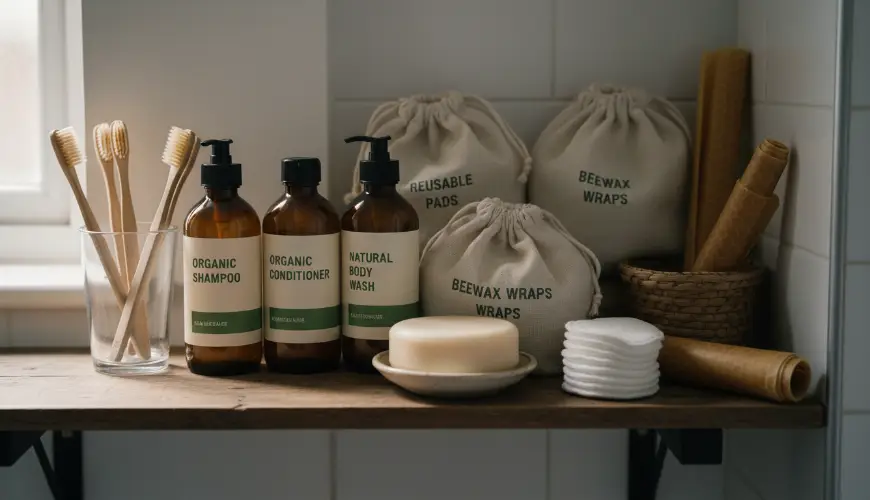
There is a paradox that has quietly settled into the homes of people who consider themselves conscious consumers in recent years. They tell themselves they buy less, buy better, and buy more responsibly. And yet their wardrobes are bursting at the seams, shelves are bending under the weight of "eco-friendly" products, and their bathrooms are crammed with dozens of bamboo toothbrushes, natural soaps, and glass bottles of organic shampoo. Where did things go wrong? How is it possible that the effort to live more sustainably sometimes leads to exactly the opposite result?
This question is uncomfortable because it points to something that is rarely discussed in communities dedicated to sustainable living. For some consumers, sustainability has become a new excuse for accumulating things – a sophisticated, morally justifiable form of consumerism that presents itself as its opposite.
Green Consumerism and the Illusion of Virtuous Consumption
Marketers discovered this quickly. Once sustainability became a value that consumers desired, it also became a selling point. Today you can buy sustainable sneakers, sustainable bedding, a sustainable handbag, sustainable furniture, sustainable children's toys, and sustainable dog food. Every purchase is wrapped in a story about saving the planet, about fair trade workers, about recycled materials and carbon neutrality.
Psychologists describe this phenomenon as "moral licensing." It is a well-documented cognitive mechanism in which a good deed in one area subconsciously entitles a person to less virtuous behaviour in another. Research published in the Journal of Consumer Psychology, for example, shows that people who consider themselves ecologically responsible paradoxically buy more, not less – because each "green" purchase compensates, in their minds, for the overall impact of their consumption.
Imagine Klára, a thirty-three-year-old graphic designer from Prague, who decided a few years ago to live more sustainably. She started shopping at second-hand stores, stopped buying fast fashion, and began taking an interest in eco-friendly household products. But she gradually discovered that her flat was more cluttered than before. She has three different sets of reusable shopping bags, because each is "made from a different sustainable material." She has six kinds of natural soap, because each was made by a different small Czech producer she wanted to support. And hanging in her wardrobe are over forty items of second-hand clothing, even though she originally wanted a capsule wardrobe of twenty pieces. "I kept telling myself it wasn't the same as shopping at H&M," she confided to a friend. "But in the end I had just as many things – just with a clearer conscience."
Klára's story is not exceptional. It is the story of thousands of people who conscientiously fill their shopping carts on wellness and lifestyle e-shops while genuinely believing they are doing the right thing.
When Does an Interest in Ecology Become a Pretext?
The line between truly sustainable behaviour and its exploitation as an excuse for accumulation is not always clear-cut. But certain patterns signal that something has gone wrong.
The first is the so-called rebound effect – a situation in which savings achieved through one eco-friendly decision are immediately "spent" on another purchase. I buy an energy-efficient washing machine and save on electricity – but then I spend the money saved on a new sustainable rug that I didn't actually need. The resulting ecological balance may be worse than before I started "saving the planet."
The second pattern is the fetishisation of products as such. At a certain point, a sustainable lifestyle stops being about behaviour and starts being about things. It's not about whether you own a car or ride a bike. It's about whether you have the right bike from the right brand, the right helmet made from recycled materials, the right cycling bottle made of stainless steel, and the right bag made of organic cotton. Sustainability becomes an aesthetic and status signal rather than a genuine practice.
The third, and perhaps most insidious, pattern is stockpiling "backup" sustainable alternatives. People buy bamboo toothbrushes in bulk to last two years ahead, because "they're better than plastic ones." They buy large quantities of natural cosmetics, because "that's zero waste." They collect glass jars, because "they'll definitely come in handy someday." The result is an overcrowded home and, paradoxically, greater consumption of resources than if they had bought less and gradually.
As research by the organisation WRAP repeatedly shows, the biggest ecological problem is not what things are made of, but how many things we produce and consume in the first place. The most sustainable thing is the one that already exists and is being used – regardless of whether it is made of bamboo or plastic.
What Does Real Sustainability Look Like?
It is important to say that this is not an attack on people who are trying to live better. The intention is sound. The problem lies in the system of values that surrounds us and in the marketing environment that very skilfully exploits that intention.
As writer and activist George Monbiot said: "We cannot shop our way out of the ecological crisis." This sentence is simple but radical – because it runs directly counter to the logic of the market, which offers us sustainability as a product to purchase.
Real sustainability begins with a different kind of question. Not "what should I buy instead?" but "do I even need this?" This shift in perspective is far more difficult than it seems, because our entire culture – including the ecological one – teaches us that the answer to any problem is always a purchase. Bad cosmetics? Buy natural ones. Synthetic clothing? Buy organic cotton. Plastic tableware? Buy bamboo.
Yet a truly sustainable approach looks different. It includes:
- Repairing instead of replacing – a shoe with a detached sole doesn't need a replacement, it needs a cobbler
- Borrowing and sharing – a drill that sits in the garage 364 days a year doesn't need to be your own
- Using what you have – as long as something works, there is no reason to replace it with a more eco-friendly version
- Less overall – fewer things means less production, less transportation, less waste
This approach is less Instagrammable and less "shoppable." That is precisely why it receives less attention than the latest bamboo product.
Interestingly, minimalist philosophy – though it appears to differ from ecological activism – aims at the same goal by a different route. The Japanese concept of wabi-sabi, which celebrates the imperfection and transience of things, or Marie Kondō's method of organising homes, which asks whether an item brings joy, are at their core more ecological than most "green" shopping lists. Because their answer to clutter is not to buy a better organiser, but to let go of what we don't need.
The concept of "sufficiency" works in a similar way – a concept that is beginning to gain traction in academic literature on sustainability as an alternative to efficiency. While efficiency says "do the same thing with less impact," sufficiency says "do less of what you don't need." According to a report by the Intergovernmental Panel on Climate Change (IPCC) from 2022, changes in consumer behaviour focused precisely on sufficiency have the potential to reduce greenhouse gas emissions by tens of percent – without the need to buy anything new.
Returning to Klára's story: her path back to simplicity did not begin with another purchase. It began with a three-month break from any shopping – including eco-friendly shopping. She went through her flat and discovered things whose existence she had forgotten. She began using what she had. And she gradually came to understand that the most sustainable decision she had ever made was the decision not to buy.
This shift in thinking is not easy and does not happen overnight. We live in a world where shopping is entertainment, therapy, a social activity, and a way of expressing identity. Ecological consumerism does not eliminate these functions of shopping – it merely repaints them in green. And that is precisely the problem.
Sustainability as a value makes sense. Sustainability as a shopping category is, in many cases, a mere illusion. The difference between the two is not always visible at first glance – but it is fundamental. And recognising it may be the first truly ecological step that each of us can take today, without a credit card and without a shopping cart.