

# Sleep as an Eco-Habit Will Transform Your Night and the Planet
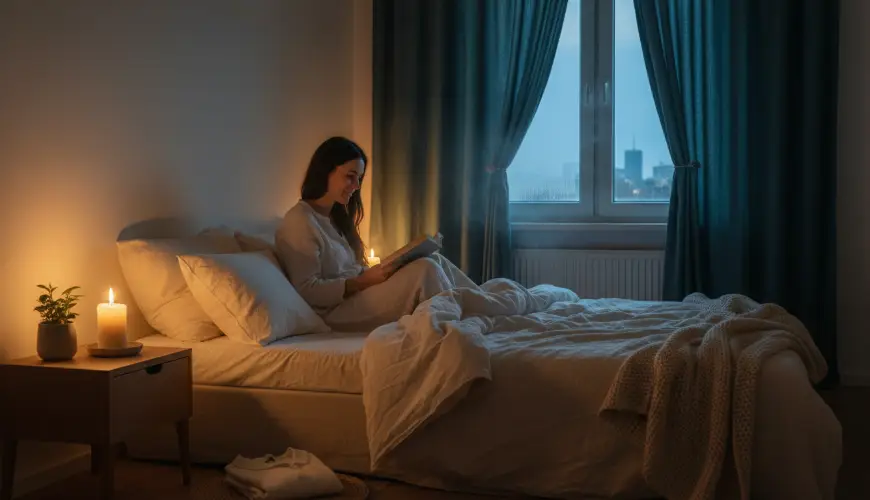
Every evening, when we turn off the light and lie down in bed, we perform one of the oldest and most natural rituals humanity knows. Yet sleep seems to be one of the things that modern civilization systematically neglects. A lack of quality rest troubles millions of people around the world, with the World Health Organization declaring sleep deprivation a global epidemic. What is less common, however, is viewing sleep as part of an ecological lifestyle. Yet the connection between restful sleep and a sustainable approach to life is surprisingly straightforward and deeper than it might initially appear.
Imagine Martina, a thirty-year-old graphic designer from Brno, who had long struggled with restless sleep. She woke up tired, spent the entire morning fighting to concentrate, and reached for her phone in the evening instead of a book. The change came unexpectedly – she moved to a smaller apartment and, for both economic and ecological reasons, began reassessing her everyday life. She bought linen bedding, invested in blackout curtains made from recycled materials, and started using only warm lighting in the evenings. Within a few weeks, she was sleeping more deeply, waking up refreshed, and her apartment's energy consumption had dropped. Her story is not exceptional – it is an illustration of what research is confirming with increasing emphasis.
Try our natural products

Light and temperature: two invisible architects of the night
Human sleep is governed by the so-called circadian rhythm, biological clocks encoded deep in the brain that respond primarily to light and temperature. As the sun sets and ambient lighting shifts to warm tones, the brain begins producing melatonin – the sleep hormone. The problem arises when the evening environment disrupts this natural signalling. Blue light emitted by screens, LED bulbs with high colour temperatures, or fluorescent lights suppresses melatonin production and essentially tells the brain it is still afternoon. Research from Harvard shows that exposure to blue light in the evening can delay the onset of sleep by several hours.
The ecological solution and the sleep solution overlap perfectly here. Switching to bulbs with a warm colour temperature (ideally up to 2700 K), using smart dimmers, or simply turning off unnecessary lights in the evening hours – all of this reduces electricity consumption while simultaneously preparing the nervous system for sleep. Even more radical, but all the more effective, is using candles in the last few hours before bedtime. Candles made from soy or beeswax are a more ecological alternative to paraffin ones, burn longer, and their light is spectrally closer to natural fire, to which human eyes are evolutionarily attuned.
Temperature in the bedroom plays an equally crucial role. According to experts, the optimal temperature for sleep is between 16 and 19 degrees Celsius. As we fall asleep, the body naturally lowers its core temperature, and a cooler environment supports this process. An overheated bedroom, on the other hand, fragments sleep and causes night-time waking. From an ecological perspective, this means one piece of welcome news: you don't need to heat as much. A light blanket and a cooler room are not only healthier but also more energy-efficient. Instead of all-night air conditioning or an overheated room, a well-ventilated bedroom and quality, breathable textiles are sufficient.
Ventilation itself is no small matter. Stale air full of carbon dioxide, along with vapours from furniture and floor coverings, can significantly reduce sleep quality. Opening a window before bed for ten to fifteen minutes is a simple, free, and ecologically neutral way to transform a bedroom into a more pleasant environment for rest.
Textiles that breathe and think of the planet
Perhaps no other aspect of the sleep environment has such a direct impact on both comfort and ecological footprint as textiles. Duvets, pillows, bed linen, and even pyjamas – all of these come into contact with the skin throughout the night and determine whether the body overheats, sweats, or instead thermoregulates well.
Conventional cotton is a natural material, but its cultivation is among the most water-intensive and pesticide-laden agricultural sectors in the world. Producing one kilogram of conventional cotton consumes up to 10,000 litres of water, as WWF notes. Organic cotton with GOTS (Global Organic Textile Standard) certification significantly mitigates this problem while offering the same comfort for sleep – softness, breathability, and a natural feel against the skin.
Linen is an even more interesting choice in this regard. Linen fibres come from the flax plant, which grows in Europe, requires no intensive irrigation, and uses significantly fewer pesticides during cultivation than cotton. Linen bedding also has unique thermoregulatory properties – it cools in summer and warms in winter. On first contact it may feel slightly rougher than silky-soft cotton, but after a few wash cycles it softens and acquires a characteristic, natural feel that many users describe as one of the most pleasant sensations imaginable.
Bamboo is another material that has earned well-deserved recognition in recent years. Bamboo fabrics are naturally antibacterial, highly breathable, and particularly suitable for people who sweat at night or suffer from allergies. As a plant, bamboo grows quickly, requires no pesticides, and sequesters large amounts of CO₂. It is important, however, to pay attention to the processing method – mechanically processed bamboo is more ecological than chemically produced viscose bamboo, even though both appear on the market under similar labelling.
And what about wool? Quality sheep's wool or merino are materials with a millennia-long tradition and excellent sleep properties. They naturally regulate moisture, are resistant to dust mites, and when responsibly farmed, represent a renewable and biodegradable material. For vegans or people sensitive to animal products, alternatives made from hemp or recycled PET bottles exist, and these continue to improve in terms of both comfort and sustainability.
Scent as part of the sleep ritual
Of all the senses, smell is the most direct pathway to the limbic system – the part of the brain that processes emotions and memory. It is therefore no coincidence that certain scents can immediately evoke a feeling of calm, safety, and sleepiness. Aromatherapy may have a reputation as an alternative method, but its basic principles are scientifically supported. A study published in the Journal of Alternative and Complementary Medicine demonstrated that inhaling lavender essential oil before sleep measurably improves sleep quality and reduces night-time waking.
Here again, space opens up for ecologically conscious decisions. Synthetic air fresheners and perfumes contain a range of chemical substances whose effects on health and the environment are questionable. Natural essential oils – lavender, chamomile, ylang-ylang, or cedarwood – are safe when used correctly, biodegradable, and their production can be part of sustainable agriculture.
How can scent be introduced into the bedroom? There are several options. A diffuser with essential oil and water is unobtrusive and effective. A dry scented sachet with lavender or cedar shavings placed among the bedding is even simpler and requires no energy. A popular technique is also dropping a few drops of essential oil onto a pillow or onto a small wooden disc placed on the bedside table. "Nature gave us the best sleep aids long before we invented sleeping pills," says aromatherapist and herbalist Lucie Vondráčková, who focuses on the connection between natural scents and sleep hygiene.
It is important not to overdo the intensity of the scent – strong aromatic stimulation can have the opposite effect and disrupt sleep. A gentle, barely perceptible aromatic undertone is ideal. It is also worth choosing products with certification of purity and natural origin, as the essential oil market unfortunately contains many counterfeits and synthetic substitutes.
What truly makes a difference
It is easy to think of sleep and ecology as two separate topics. One concerns health, the other the planet. But on closer inspection, it becomes clear that they are two sides of the same coin. Choosing natural textiles reduces the chemical burden in the bedroom and in the environment. Limiting artificial light saves energy and restores the body's natural rhythm. A lower bedroom temperature means less heating and deeper sleep. Natural scents replace synthetic chemicals and activate the nervous system's calming mechanisms.
The transition to a more ecological sleep environment need not be radical or costly. Changes can be introduced gradually – perhaps starting with replacing the lighting, then buying one cover made from organic cotton, trying a sachet of lavender. Each incremental step has a measurable impact on both the quality of rest and the household's ecological footprint.
Perhaps the most important lesson is this: sleep is not the passive absence of wakefulness. It is an active biological process that requires the right conditions – and these conditions can be consciously created. People who approach this with ecological thinking discover that both paths lead to the same place: an environment that is more natural, more peaceful, and in harmony with how the human body and the nature around us function.