

PMS vs. PMDD or when it's about more than just moods
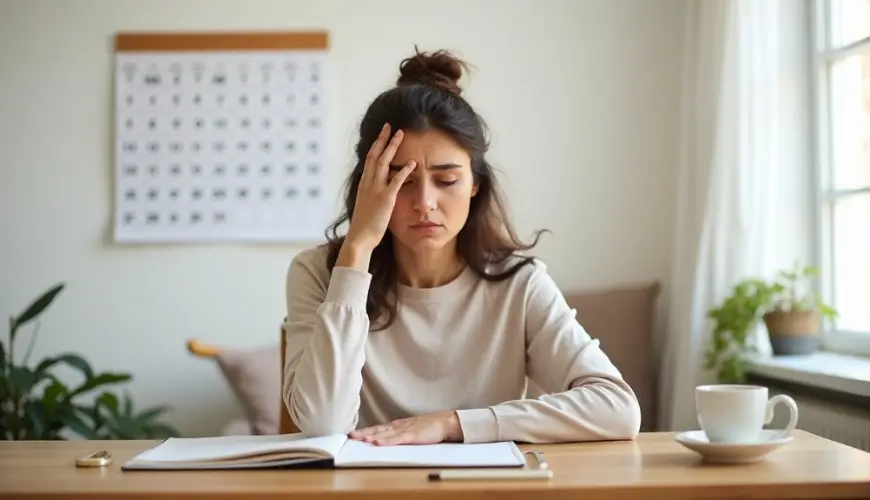
Every woman knows it – a few days before menstruation, the mood shifts, the stomach starts to protest, and fatigue seems to come from nowhere. Most of us label it as "just PMS" and wait for it to pass. But what if it isn't just PMS? What if something more serious lies behind the everyday suffering – something with a name, a diagnosis, and most importantly – a treatment?
Premenstrual syndrome, or PMS for short, is one of the most widespread women's health topics of all. According to data from the World Health Organization, up to 75% of women of reproductive age experience premenstrual symptoms of varying intensity. Yet the difference between common PMS and its more severe form – PMDD, or premenstrual dysphoric disorder – is talked about surprisingly little. And that is precisely where the problem lies: many women suffer for years believing their difficulties are a normal part of womanhood, when in fact they need professional help.
Try our natural products


What actually happens in the body before menstruation
To distinguish between PMS and PMDD, it helps to first understand what is actually happening in a woman's body during the premenstrual phase. The entire cycle is governed by hormones – primarily estrogen and progesterone – whose levels change significantly throughout the month. In the second half of the cycle, the so-called luteal phase, estrogen drops and progesterone rises. This hormonal shift also affects serotonin levels – the neurotransmitter associated with mood, sleep, and overall wellbeing.
It is precisely this hormonal interplay that underlies the symptoms women know well: irritability, fatigue, breast tenderness, bloating, or cravings for sweets. For most women, these symptoms are mild and do not significantly disrupt daily life. That is classic PMS – unpleasant, but manageable. The situation changes dramatically, however, for women whose brains react far more sensitively to hormonal fluctuations.
This hypersensitivity to hormonal changes – rather than abnormally high hormone levels themselves – is the key to understanding PMDD. Research published in the medical journal NEJM has confirmed that women with PMDD do not necessarily have different hormone levels than other women, but their brains respond to them differently. It is like having a more sensitive alarm – even a small trigger sets off a large reaction.
When PMS stops being "just PMS"
This is the crucial question that many women ask themselves – and yet too easily brush aside. How can you tell that what you are experiencing goes beyond ordinary premenstrual syndrome?
Classic PMS includes both physical and psychological symptoms, but these are usually mild and subside with the onset of menstruation. A woman may be more irritable, more tired, or less focused, but she can still go to work, take care of her family, and maintain basic social contacts. The symptoms are unpleasant, but they do not block normal functioning.
PMDD is a different category entirely. It is a clinically recognised psychiatric disorder that has been classified among depressive disorders in the DSM-5 diagnostic manual since 2013. PMDD symptoms typically appear one to two weeks before menstruation and can be so intense that a woman is unable to work, maintain relationships, or take care of herself. Irritability escalates into outbursts of rage, sadness transforms into deep hopelessness, and anxiety reaches such intensity that it resembles a panic attack.
Consider, for example, a thirty-year-old teacher who, approximately ten days before her period, becomes "a different person" – as she herself puts it. She cannot go to work because she cannot manage her classroom. She argues with her partner over trivial things and then cries for hours without apparent cause. Her thoughts turn dark, and the sense of hopelessness feels absolute. Then her period arrives – and she is herself again. This recurring pattern, tied to a specific phase of the cycle, is precisely what distinguishes PMDD from other mental health conditions.
The American Psychiatric Association states that PMDD affects approximately 3 to 8% of women of reproductive age – meaning millions of women worldwide who may not even know that their suffering has a name and a solution. As journalist and women's health author Lara Briden aptly wrote: "Premenstrual symptoms are like a warning light on the dashboard. They tell you that something needs attention."
The difference between PMS and PMDD therefore lies not only in the intensity of symptoms, but above all in their impact on daily life. The key diagnostic criterion for PMDD is precisely that the symptoms significantly impair a woman's occupational, social, or personal functioning. If a woman tells herself every month that she will "somehow get through this," while neglecting work, withdrawing from people, or having thoughts of self-harm, that is a clear signal that the situation goes beyond what she should be managing on her own.
There are also symptoms that should never be considered a "normal part of PMS" – these include, in particular, thoughts of suicide or self-harm, which can unfortunately occur with PMDD. If a woman experiences such thoughts, even temporarily and tied to a specific phase of her cycle, seeking professional help immediately is a necessity, not a choice.
How to distinguish symptoms and what to do next
One of the most practical tools recommended by doctors and psychologists alike is tracking the cycle and symptoms for at least two months. A general sense that "things are worse before my period" is not enough. It is important to record specific symptoms every day – mood, energy, sleep, physical complaints – and observe whether a recurring pattern is tied to the luteal phase of the cycle. If symptoms regularly appear in the second half of the cycle and disappear shortly after menstruation begins, this is a strong indicator that the problem has a hormonal basis.
For clarity – typical symptoms that may indicate PMDD and that go beyond ordinary PMS include:
- marked mood swings, tearfulness, or feelings of hopelessness
- intense irritability or outbursts of anger that disrupt relationships
- pronounced anxiety or tension, a feeling of being "on the edge"
- loss of interest in everyday activities and social withdrawal
- difficulty concentrating that affects work or study
- significant fatigue or insomnia
- physical symptoms such as headaches, muscle cramps, or bloating in combination with the above
Of course, the presence of several of these symptoms does not automatically mean a diagnosis of PMDD. That is why visiting a doctor is an essential step – ideally a gynaecologist or psychiatrist with experience in this area. A PMDD diagnosis is established through a clinical interview, the exclusion of other causes (such as depression, anxiety disorders, or thyroid conditions), and the cycle symptom tracking mentioned above.
When it comes to treatment, the options available today are far broader than most women realise. Hormonal contraception – specifically pills containing drospirenone and ethinylestradiol – is approved in a number of countries specifically for the treatment of PMDD and significantly reduces symptoms in many women. Another option is antidepressants from the SSRI group, which can be taken either continuously or only during the luteal phase – a strategy that has also shown very good results in clinical trials. Alongside pharmacological treatment, cognitive behavioural therapy plays an important role, helping women manage emotional reactions and change patterns of thinking associated with their symptoms.
Lifestyle also plays a part – and this is where every woman can begin to take action herself, even before seeing a doctor. Research consistently confirms that regular exercise, adequate sleep, and reducing caffeine, alcohol, and sugar during the premenstrual phase can significantly alleviate both physical and psychological symptoms. Supplements also have a role to play – magnesium, vitamin B6, and omega-3 fatty acids in particular have scientifically supported evidence for reducing premenstrual complaints, as noted in an analysis published in the Journal of Women's Health, for example. Herbal preparations such as vitex (chaste tree berry) are popular in the field of natural women's health care, and some studies suggest a positive effect on hormonal balance, although the scientific evidence is currently less conclusive than for pharmacological approaches.
Caring for psychological wellbeing throughout the entire month – not just during the critical days – is also key. Stress management techniques such as mindfulness or yoga can reduce the overall reactivity of the nervous system and thereby lessen the intensity of premenstrual symptoms. And not least: having people around who understand and take the issue seriously is enormously important for women with PMS and PMDD alike.
Unfortunately, a tendency persists – not only among the general public but also in parts of the medical community – to trivialise premenstrual complaints as "women's imagination" or "excessive sensitivity." This stigmatisation causes women to hesitate in seeking help and to suffer in silence instead. Yet PMDD is a real, biologically grounded disorder with clear diagnostic criteria and effective treatment. Years of unnecessary suffering are not inevitable.
If a woman – or those close to her – notices a recurring pattern in which a marked change in mood, ability, or behaviour appears at the same time every month, it is worth taking that signal seriously. Track the cycle, write down the symptoms, and speak with a doctor. Not because she is "weak" or "overly sensitive," but because she deserves to know what is happening in her body – and to have access to the help that exists.