

Chia pudding as a healthy breakfast without effort
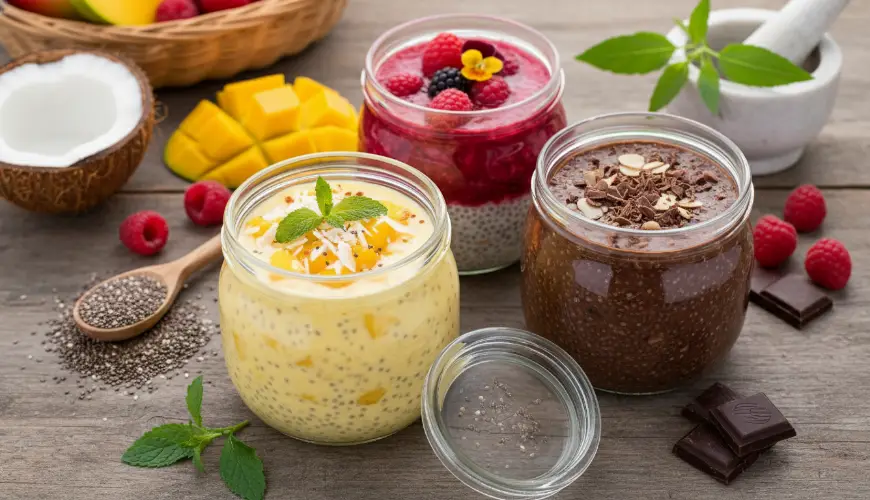
Chia seeds have become one of the most discussed food trends in recent years – and for good reason. These tiny, unassuming seeds suddenly appeared on the shelves of health food stores, in celebrity recipe books, and on the plates of people who would otherwise never have given them a second thought. But their popularity isn't driven by a passing trend alone. Chia seeds have genuine nutritional value, backed by scientific research, and they are versatile enough to be handled even by a complete kitchen beginner.
Try our natural products

What are chia seeds and why are they so healthy?
Chia seeds come from the plant Salvia hispanica, which is related to sage and native to Mexico and Guatemala. For the Maya and Aztec civilisations, they represented one of the primary sources of energy – the word "chia" in the Mayan language even means "strength". Today they are cultivated all over the world, from Australia to South America, and their production continues to grow. They are therefore not a modern invention, but a food with a thousand-year history that only found its way into European kitchens relatively recently.
From a nutritional standpoint, chia seeds are truly remarkable. They contain large amounts of omega-3 fatty acids, specifically alpha-linolenic acid, which is an essential fat necessary for the proper functioning of the brain and heart. They are also a rich source of fibre – one tablespoon contains approximately 5 grams of fibre, which is roughly one fifth of the recommended daily intake for an adult. Add to that a solid amount of protein, calcium, magnesium, phosphorus and antioxidants, and we have a food that truly deserves the label "superfood". According to the USDA nutritional database, chia seeds are among the plant-based sources with one of the highest omega-3 fatty acid contents of all.
One of the most interesting properties of chia seeds is their ability to absorb liquid – they can absorb up to twelve times their volume in water. This is precisely the principle behind the preparation of chia pudding. When the seeds are mixed with plant-based or cow's milk and left to stand for several hours, they form a gel-like coating around themselves, giving the entire mixture a thick, creamy consistency reminiscent of pudding or tapioca. This ability to expand in volume also has a direct effect on the feeling of fullness – chia seeds swell in the stomach and slow down digestion, which means hunger sets in more slowly.
Regular consumption of chia seeds can, according to a number of studies, help stabilise blood sugar levels, support the health of the gut microbiome thanks to their soluble fibre content, and assist with maintaining a healthy weight. As nutritional expert Dr. Andrew Weil noted: "Chia seeds are one of the few plant foods that provide complete protein while also being an excellent source of healthy fats."
How to prepare chia pudding: a basic recipe and inspiring variations
The basic preparation of chia pudding is surprisingly simple and requires no culinary skills whatsoever. The basic ratio is approximately three tablespoons of chia seeds to 250 millilitres of liquid. Almost anything can serve as a base – cow's milk, almond milk, oat milk, coconut milk or even fruit juice. Simply stir the seeds into the liquid, add a little honey, maple syrup or another natural sweetener if desired, and leave the mixture in the fridge for at least four hours, ideally overnight. By morning, the pudding is ready – thick and prepared for toppings.
This is where the fun part comes in – chia pudding is an incredibly rewarding base that lends itself to almost any combination of flavours and toppings. The most popular variations include:
- Chocolate chia pudding – a tablespoon of cocoa or melted dark chocolate is added to the base, resulting in a healthy dessert you can enjoy without guilt
- Mango chia pudding – blended ripe mango mixed with coconut milk and chia seeds creates a tropical dessert full of vitamin C
- Raspberry chia pudding – fresh or frozen raspberries are blended directly into the base, giving it a beautiful deep pink colour and a slightly tart flavour
- Matcha chia pudding – a teaspoon of quality matcha green tea gives the pudding an earthy flavour and a beautiful green colour, while also adding a dose of antioxidants
- Vanilla chia pudding with fruit – a classic variation with vanilla extract and fresh seasonal fruit that never gets old
Take Lucie, for example, a thirty-five-year-old mother of two who has long been trying to eat more healthily but has neither the time nor the inclination for complicated recipes. One evening she mixed oat milk, chia seeds, a little honey and a teaspoon of vanilla into a jar, put it in the fridge, and added sliced strawberries in the morning. The result was so good that she now makes chia pudding every other day, varying only the topping depending on what she has at home. Her children eat it without a single complaint, completely unaware of how nutritious a meal they are actually getting.
A glass jar with a lid or a container with a tight seal is ideal for preparing chia pudding. The pudding keeps in the fridge without any problem for three to four days, meaning several portions can be prepared at once for a quick breakfast or snack throughout the entire week. This approach, known as "meal prep", saves both time and energy while eliminating the temptation to reach for a less nutritious alternative in the morning.
Preparation tips and things to watch out for
Although preparing chia pudding seems foolproof, there are a few things worth keeping in mind. The first and most common issue is an unsuitable consistency – the pudding is either too runny or too thick. The solution is simple: if the pudding seems too thick after a night in the fridge, simply add a little liquid and stir. If it is too runny, the seeds were likely not mixed evenly enough immediately after being combined with the liquid. The key is to stir the pudding twice – once immediately after mixing and again approximately ten minutes later, when the seeds begin to expand. This prevents clumping and ensures the pudding has a smooth, even texture.
Another important consideration is quantity. Chia seeds are nutritionally very concentrated, and although they are healthy, the rule applies that too much of a good thing can be harmful. The recommended daily amount is around two to three tablespoons, or roughly 25 to 30 grams. Higher amounts could cause digestive discomfort, particularly in people who are not accustomed to a higher intake of fibre. It is therefore sensible to start with smaller portions and gradually increase the amount, giving the digestive system time to adjust.
People who take blood-thinning medication or have problems with blood pressure should consult a doctor before consuming chia seeds regularly. The omega-3 fatty acid content can mildly affect blood clotting, which is entirely safe for a healthy person, but in combination with certain medications, dosage adjustments may be necessary.
The quality of ingredients plays a greater role in preparing chia pudding than one might expect. Chia seeds should be stored in a dark, dry place, ideally in a sealed container, as they are sensitive to moisture and direct light. The milk base significantly influences the final flavour – coconut milk lends a creamy, rich character, while almond milk contributes a more delicate, lighter taste. Experimenting with different bases is part of the fun, and everyone can find their favourite combination.
The ecological aspect is also worth mentioning. Chia seeds are a plant-based food with a relatively low ecological footprint compared to animal products. If a customer also buys them in organic quality and from fair trade certified producers, they are contributing not only to their own health but also to more sustainable agriculture. Information on the ecological aspects of chia seed cultivation can be found, for example, on the website of the Soil Association, a leading British organisation for organic farming.
Chia pudding can be enriched with a whole range of nutritious ingredients that enhance both its health value and flavour profile. Popular additions include granola for crunch, fresh or dried fruit, nut butters, hemp seeds, spirulina or edible flowers for visual effect. If the pudding is served as a dessert for a special occasion, it can be layered in glass dishes alternating with a fruit layer and nut butter – the result looks impressive, yet preparation takes no more than ten minutes.
Chia pudding is also naturally gluten-free, making it a suitable choice for people with coeliac disease or gluten sensitivity. For a vegan diet, simply use plant-based milk and a natural sweetener such as maple syrup or agave nectar, and the pudding automatically becomes a fully vegan dish without any compromise in flavour or nutritional value.
It is fascinating how a tiny seed can deliver so many nutritional benefits, culinary flexibility and the pleasure of healthy eating all at once. Chia pudding is not merely a passing trend – it is a practical, tasty and nutritious choice that deserves a permanent place in the modern kitchen.