
You can manage atopic eczema in children even without changing treatment
Atopic eczema is one of the most common skin conditions in childhood. According to data from the World Health Organization, up to 20% of children in developed countries suffer from some form of atopic dermatitis, with most symptoms first appearing before the age of five. For parents, this means not only frequent doctor visits and searching for the right treatment, but above all daily care at home – and it is precisely this care that determines how much the child will suffer. A properly established home routine can significantly reduce the frequency and intensity of flare-ups, even without dramatic changes to family life.
Atopic eczema is not just "dry skin". It is a chronic inflammatory condition in which the skin barrier is impaired and the immune system overreacts to stimuli that would pose no threat to healthy skin. The result is itching, redness, flaking, and in more severe cases, weeping, bleeding patches. The child scratches, cannot sleep, becomes irritable – and parents look for the cause everywhere that seems remotely plausible. But eczema does not have a single cause. It is a mosaic of genetic predispositions, immune system settings, and environmental triggers. And it is the last of these that can truly be influenced at home.
Try our natural products
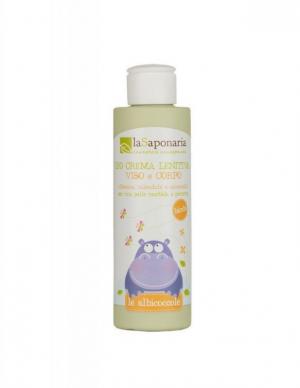
What irritates the skin more than you might expect
One of the biggest surprises for parents of children with atopic eczema is the discovery that triggers can be completely everyday things – clothing, laundry detergent, the temperature of bath water, or the material of bed linen. Skin with an impaired barrier is significantly more sensitive to both chemical and physical stimuli, and what causes no problem for a healthy child can trigger an intense reaction in a child with atopy.
The most common irritants in the home environment include synthetic fibres in clothing, particularly polyester and nylon, which prevent natural air circulation and cause sweating. Sweat itself is one of the classic eczema triggers – it raises the skin's pH and irritates already inflamed tissue. Wool can be similarly problematic: although it is a natural material, its coarse fibres mechanically irritate sensitive skin. Dermatologists therefore repeatedly recommend dressing children in soft natural materials such as cotton or bamboo, ideally seamless and without elastic elements directly against the body.
However, even 100% cotton is not automatically a guarantee of calm. It also depends on how the clothing was washed and with what. Standard laundry detergents contain enzymes, optical brighteners, fragrances, and preservatives – substances that, even after washing, partially remain trapped in the fabric fibres and come into direct contact with the skin. For a child with atopic eczema, this can mean a constant low-level burden that keeps the skin in an irritated state even during periods when it might otherwise settle down. Switching to hypoallergenic laundry detergents free from fragrances and dyes is therefore one of the first steps that paediatric dermatologists recommend to parents.
Washing itself has several other aspects worth considering. Very high washing temperatures can effectively destroy house dust mites – another classic atopy trigger – but can also alter the structure of the fibres, causing the fabric to become more irritating. The optimal washing temperature for the laundry of a child with atopy is around 60°C, which represents a compromise between hygiene and care for the material. Thorough rinsing is also important – residues of laundry detergent in the fibres are just as problematic as the composition of the product itself. Fabric softeners are generally unsuitable for children with eczema, as they leave a film of chemical substances on the fabric that lies directly against the skin.
The same logic must be applied to bed linen. A child spends eight to ten hours a day in bed, making contact with sheets and bedding the longest of all textiles. Cotton bedding with a tight weave also reduces the penetration of dust mites, which feed on dead skin cells and whose excretions are one of the most potent allergens for atopic children. Bedding should be washed at least once a week and, where possible, dried in sunlight, which has natural disinfecting properties.
The home environment as part of treatment
Caring for an atopic child's skin does not end with the wardrobe and washing machine. The environment in which the child lives plays an equally important role. Dry air in the home – typical during winter months when heating dries out the interior – significantly worsens the condition of the skin by accelerating the evaporation of moisture from it. Maintaining relative air humidity between 40 and 60% is therefore a recommendation that appears in most professional guidelines for the care of atopic children, including those issued by the Czech Dermatological Society.
A humidifier can be a very practical aid in this regard, but here too, regular maintenance is essential – a dirty humidifier can spread mould and bacteria, which would only worsen the situation. It is also advisable to reduce carpets, soft toys, and heavy curtains in the child's room, as these provide ideal habitats for dust mites. Hard floors, washable toys, and lightweight curtains made from natural materials may be less cosy, but are considerably more suitable for an atopic child.
Room temperature should be kept on the cooler side – an overheated room causes sweating, and as already mentioned, sweat is a reliable trigger for itching. Many parents instinctively associate a warm environment with comfort and protection for an unwell child, but with atopy the opposite is true. A cooler, well-ventilated room with adequate humidity is a far more comfortable environment for these children than an overheated one.
Bathing is a chapter in itself. Water alone – if it is hot and the bath lasts too long – dries out and irritates the skin. Dermatologists recommend lukewarm water and a bath lasting no more than ten minutes, followed immediately after drying (by gently patting with a towel, not rubbing) by an emollient – a moisturising preparation that seals moisture into the skin. This approach, known as "soak and seal", is one of the best-documented non-pharmacological methods in the care of atopic eczema. Bathroom products – shampoos, shower gels, bath foams – should be free from fragrances, dyes, and sulphates, ideally with a neutral or mildly acidic pH corresponding to the natural pH of healthy skin.
As leading British paediatric dermatologist Prof. Carsten Flohr once said: "Atopic eczema is not just a disease of the skin. It is a disease of the whole family." And this statement captures the reality that thousands of Czech families face every day. Caring for a child with eczema requires patience, consistency, and a willingness to adapt daily routines to the needs of sensitive skin.
Imagine a family where a three-year-old girl suffers from moderate atopic eczema. For a long time, her parents could not understand why her skin improved during summer stays at their cottage and worsened in their city flat. They gradually discovered that at the cottage they washed with simple soap without additives, the girl slept under a light linen duvet, and there were no carpets in the house. In the flat, by contrast, they used a scented laundry gel, the child's room had a thick carpet, and in winter the heating dried the air to less than 30% humidity. Changing these seemingly minor details – switching to a hypoallergenic laundry detergent, removing the carpet, getting a humidifier, and replacing synthetic bedding with cotton – led to a significant improvement in her condition without any change in medication. A textbook case, yet at the same time the everyday reality of many families.
The choice of clothing and materials need not be a compromise between health and aesthetics. Today there is a wide range of brands and products specially designed for sensitive and atopic skin – from certified cotton babywear to bamboo underwear and organic linen bed linen without chemical treatments. Certifications such as OEKO-TEX Standard 100 guarantee that the textile has been tested for harmful substances and is safe even for the most sensitive skin. For parents of atopic children, such a certification can serve as a reliable guide when shopping, without having to read the composition of every product.
It is also important to consider what the child wears in "layers". Many parents carefully select the first layer of clothing, but forget that outer layers too – jackets with linings, jumpers, or hats – can irritate the skin on the neck, wrists, or around the face. The principle of layering with a cotton base layer and additional materials that do not come into direct contact with the skin is a practical solution that works throughout the year.
Caring for a child with atopic eczema is demanding, but it is not without hope. Modern dermatology offers ever-improving treatment options, from topical corticosteroids and calcineurin inhibitors to biological therapy for severe forms of the condition. But even the best treatment yields better results when supported by a well-considered home routine. Materials, laundry habits, temperature, humidity, and the composition of skincare products – these are variables that families have in their own hands. And it is in them that much of the answer lies to the question of why some atopic children fare better than others.