

How to Handle First Solid Foods Without Stress
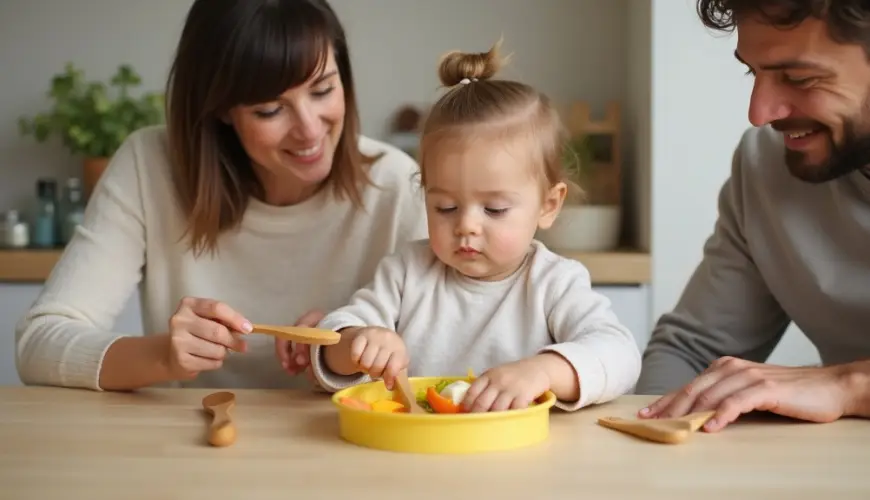
The transition from breastfeeding or formula feeding to solid food is one of those milestones that can unsettle parents just as intensely as first steps or first words. Social media is full of perfect photos where an adorable baby smilingly tastes sweet potato purée while soothing music plays in the background. Reality tends to be quite different – mashed carrot on the ceiling, a little head turning away in refusal, and parents questioning whether they're doing anything right at all. The good news is that first complementary foods don't have to be a source of stress – as long as you know what to expect from this period and how to approach it with a calm mind.
Pediatricians and nutrition consultants agree that timing, approach, and food selection all play a role, but far less dramatically than many parents think. The World Health Organization recommends starting complementary foods at approximately six months of age, with breastfeeding continuing alongside without any problems. This recommendation is based on decades of research and reflects the maturity of the infant's digestive system and motor development. Yet so many contradictory pieces of advice, myths, and unnecessary pressures have accumulated around this topic that many families find themselves in a vicious circle of uncertainty before the child even opens its mouth.
Try our natural products



What Science Says and What the Neighbor Says
One of the most widespread misconceptions is the belief that the earlier complementary foods are started, the better the child will sleep. This myth persists in families generation after generation, and grandmothers spread it with the best of intentions. However, scientific evidence does not support this assumption. A study published in JAMA Pediatrics demonstrated that earlier introduction of solid food has no demonstrable effect on the length or quality of an infant's sleep. A baby that wakes up at night doesn't do so because it's hungry for solid food – its nervous system is simply still maturing.
Another popular scare is allergenic food. For many years, the recommendation was to delay foods such as peanuts, eggs, or fish as long as possible to prevent allergic reactions. Today, the situation is exactly the opposite. Current guidelines from the European Academy of Allergology and Clinical Immunology (EAACI) suggest that early and repeated exposure to potential allergens can actually reduce the risk of developing food allergies. Delaying these foods therefore makes no sense – unless, of course, the child has proven risk factors that should be discussed with a pediatrician.
So how do you start without turning every meal into a logistical operation? The answer is surprisingly simple: slowly, with respect for the child, and without excessive expectations. A six-month-old infant doesn't need a varied and balanced diet in the way an adult understands it. Their main source of nutrients still remains breast milk or formula. Complementary foods during this period are primarily about learning new flavors, textures, and ways of consuming food – not about replacing milk calorically.
In practical terms, it might look something like this: mom Lucie started offering her son Matyáš complementary foods at six and a half months. During the first week, she gave him just one teaspoon of mashed banana once a day. Matyáš ate perhaps a third of it during the sitting, smeared the rest across his face, and part of it landed on his bib. Lucie felt she was doing it wrong. But her pediatrician reassured her that this is exactly how it's supposed to look – the child is just learning what it means to eat. After three weeks, Matyáš began actively opening his mouth when he saw the spoon, and new flavors were gradually added. No dramatic turning point, no precise schedule – just patience and trust in the natural process.
BLW Method vs. Purée: The Eternal Debate That Doesn't Have to Be a Debate
In recent years, the method known as baby-led weaning has gained great popularity. Its principle is simple: instead of blended purées, the child receives pieces of soft food that they can grasp, explore, and chew on their own. Proponents of this method emphasize that the child learns to regulate the amount of food consumed, develops motor skills, and develops a more natural relationship with food. Critics raise concerns about choking and insufficient nutrient intake.
The truth lies, as it often does, somewhere in the middle. The scientific consensus does not consider either method to be clearly superior. It depends on the specific child, their motor development, temperament, and the parents' preferences. Many families choose a combination of both approaches – offering both purées and soft pieces – and this path proves to be very effective. The only important thing is to ensure that the pieces offered are soft enough (easily squishable between fingers) to prevent choking. Raw carrot or apple are definitely not suitable, but steamed zucchini or ripe banana are ideal.
When it comes to the composition of first complementary foods, the basic rule is: start simply. Vegetables, fruit, cereals, gradually legumes and meat. There's no need to add salt, sugar, or spices – an infant's taste buds are sensitive, and the natural flavor of foods is an intense enough experience for them. As a source of guidance, the Zdravé děti (Healthy Children) portal can serve as a useful reference, summarizing current recommendations from Czech pediatricians.
One thing that perhaps surprises parents most often is the so-called neophobic reflex – a natural aversion to new foods. A child may reject a new flavor five times, ten times, even fifteen times, and still eventually accept it. Research shows that accepting a new flavor may require up to fifteen repeated exposures. This means that rejecting broccoli on Monday is not a reason to permanently remove it from the menu. On the contrary, it's a call for patience and repetition without pressure.
Pressure is perhaps the greatest enemy of a pleasant introduction to complementary foods. "Food should be a joy, not a battlefield," says children's nutrition consultant Jana Procházková, who has been working with families for over ten years. And this is precisely the philosophy that should accompany the entire period of transitioning to solid food. If a child refuses food, it's not a failure of the parent or the child – it's a natural part of the process.
Practical helpers during this period can also include eco-friendly and natural accessories that make the whole ritual more enjoyable. Bamboo plates with suction cups, silicone spoons gentle on gums, or cloth bibs made from organic cotton aren't just an aesthetic choice – they're also safer for the child and the planet. Ferwer offers exactly these kinds of products that support a healthy start into the world of solid food without unnecessary chemicals and plastics.
Another topic that worries parents is allergies. What should you do if a rash or other reaction appears after a new food? The first step is to stay calm and observe. A mild rash around the mouth may be a contact reaction to acid from fruit, not an allergy. A true allergic reaction involves hives, swelling, breathing difficulties, or severe vomiting – in such cases, it's necessary to seek medical help immediately. For safely testing new foods, the golden rule applies: always introduce only one new food at a time and wait at least three days before the next novelty. This makes it easy to identify the potential culprit.
Parents should also realize that complementary foods are a marathon, not a sprint. There's no need to have a varied diet covering all food groups sorted out within a month. The child has months and years ahead during which their eating habits are being formed. Research even shows that taste preferences formed in early childhood influence eating habits in adulthood – and that's a reason why it's worth investing time and energy to ensure that first experiences with food are positive.
When parents look back on the first months of complementary foods, most of them admit with a smile that they worried unnecessarily. Children are more resilient and adaptable than they seem. Their digestive system develops, their taste preferences change, and their ability to accept new things grows with each week. The key isn't a perfect plan or strict adherence to a schedule – the key is presence, patience, and joy in sharing meals together. A table where a relaxed atmosphere prevails is the best place for a child to learn to love food. And that's a foundation that will last them a lifetime.