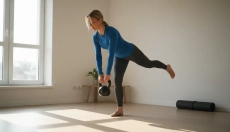

Stretching the calf muscle will help stop nighttime cramps
Nocturnal calf cramps are among those insidious enemies of sleep that arrive completely unexpectedly. A person wakes from sleep feeling as though someone has pulled their muscle into a tight knot, and the only thing they can do in that moment is wait for the pain to subside. Although this is a very widespread problem, many people have no idea that regular calf muscle stretching can significantly prevent these unpleasant episodes – entirely naturally, without medication or expensive procedures.
Nocturnal leg cramps affect a surprisingly large proportion of the population. According to data published in the medical journal American Family Physician, approximately 60% of adults suffer from nocturnal lower limb cramps, with the incidence increasing significantly with age. In people over 50, it is an almost daily problem that disrupts sleep quality and affects overall wellbeing. Yet this topic tends to be somewhat overlooked in doctors' surgeries, as though it were a marginal complaint not worthy of greater attention.
The truth, however, is that nocturnal cramps can conceal a whole range of causes – from dehydration and mineral deficiencies through muscle overload to poor circulation in the lower limbs. And precisely because the causes are so varied, it is advisable to approach prevention comprehensively. Targeted stretching remains one of the most effective and accessible methods available.
Try our natural products



Why do calf muscles cramp specifically at night?
In order to understand why stretching works, it is useful to first understand what actually happens in the body during a nocturnal cramp. The calf muscle – technically known as the musculus gastrocnemius – is one of the most heavily used muscles in the entire body. It bears weight with every step, stabilises the ankle and participates in the push-off during walking and running. During the day it performs thousands of small contractions without a person even being aware of it.
The moment a person lies down in bed, overall movement drops sharply. Blood circulation slows, muscles cool down, and the natural mechanical pump that supports the return of blood from the lower limbs back to the heart during walking ceases to function. Added to this is the position of the feet – many people sleep with their legs extended or even with slightly bent knees and feet in plantar flexion, i.e. pointed downward. This position shortens the calf muscle throughout the entire duration of sleep, and it then takes only the slightest nerve impulse to cause the muscle to contract into a cramp.
This is precisely where stretching comes into play as a preventive tool. Regular calf muscle stretching increases their flexibility, improves circulation and reduces the tendency towards spontaneous muscle contractions. The effect is not immediate, but with consistent daily exercise it will manifest within a few weeks.
Take Markéta, a forty-year-old teacher from Brno, who suffered from nocturnal cramps almost three times a week for years. She tried magnesium supplements, various ointments and special socks – with partial success, but without a lasting solution. It was only when she began devoting ten minutes every evening before bed to calf stretching that she noticed a significant change. After three weeks, the cramps reduced to once a month; after two months, they had almost disappeared entirely. Her story is not an exception – thousands of people around the world share similar experiences.
How to stretch the calf muscles correctly to stop cramps
Calf stretching is not a complicated science, but it is important to do it correctly and regularly. It is not enough to stretch occasionally for a while and wait for a miracle. The key is consistency and correct technique that genuinely targets the entire calf complex – not only the superficial gastrocnemius, but also the deeper soleus, which is often neglected during stretching.
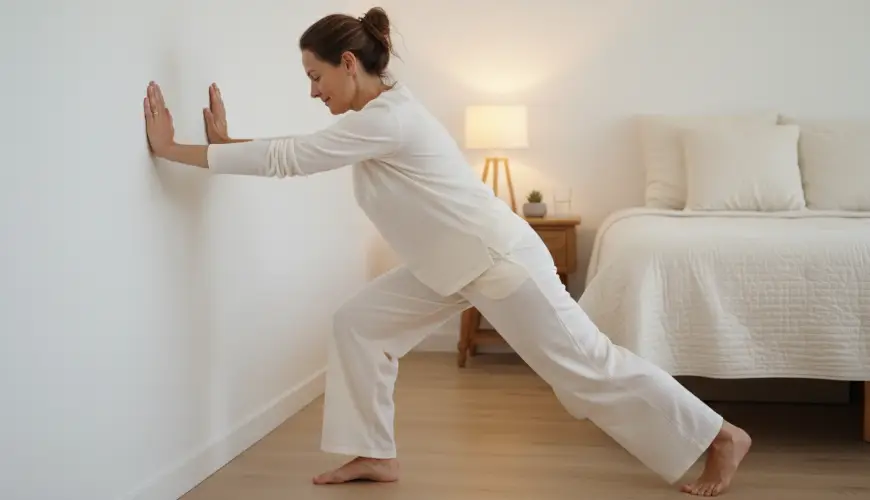
The best-known and most effective exercise is the so-called "wall stretch". A person stands facing a wall, places their palms against it and puts one foot back with the heel firmly on the floor. They slightly bend the front knee and slowly lean forward until they feel a pull in the calf of the back leg. This position is held for 30 to 45 seconds, then the legs are switched. To stretch the deeper soleus muscle, only a small adjustment is needed – the back knee is slightly bent and the position is again held for 30 seconds. This seemingly minor difference has a surprisingly significant effect on which part of the calf is being stretched.
Another very practical exercise is stair stretching. A person stands on the edge of a step so that their heels extend over the edge, and slowly lowers them below the level of the step. The feeling of pulling in the calves tends to be more intense than with the wall stretch, so it is advisable to perform this exercise carefully and not to overdo the range of motion, especially at the beginning. The World Health Organisation and various physiotherapy associations recommend that stretching of the lower limb muscles should be part of a daily movement routine – not only for athletes, but for anyone who wants to keep their muscles in good condition.
Stretching is most effective when performed in the evening before bed, because it is at this time that muscles, after a full day of exertion, are most in need of care. Morning stretching is also beneficial, but from the perspective of preventing nocturnal cramps, it makes more sense to work with the muscles just before going to sleep. A brief stretch in the morning after waking is also useful, when muscles are stiffer after the night's rest and more susceptible to overload during the day.
In addition to stretching itself, hydration also plays a crucial role. Dehydration is one of the most common triggers of muscle cramps, because without sufficient fluids the electrolyte balance in the body is disrupted. Magnesium, potassium and calcium are minerals that are directly involved in muscle contraction and relaxation – their deficiency therefore directly increases the risk of cramps. Experts from Mayo Clinic recommend ensuring adequate intake of these minerals both through diet and, where appropriate, through quality nutritional supplements.
As leading British physiotherapist Tim Allardyce once said: "Muscles are like rubber – the more you stretch them and care for them, the longer they remain supple and functional. Neglecting their care will always manifest itself sooner or later." This simple metaphor captures the essence of the matter better than many specialist texts.
It is also important to mention that stretching should be pleasant, not painful. Many people make the mistake of trying to reach the extreme position too quickly, which can actually damage the muscle or trigger a defensive muscle contraction. Correct stretching is slow, mindful and accompanied by smooth breathing. Exhaling during stretching helps muscles relax and accept a greater range of motion.
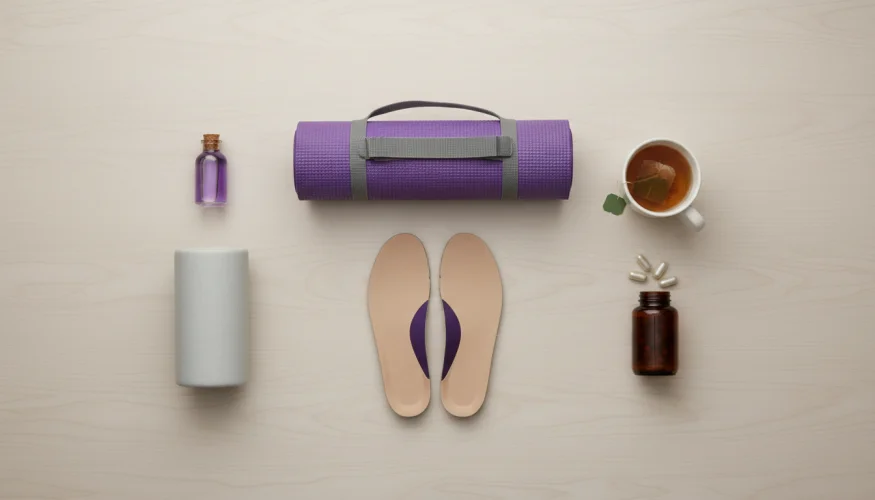
For those who want to take their care of the musculoskeletal system to a higher level, yoga or pilates may also be an interesting option. Both disciplines include a wide range of exercises focused on the lower limbs and calf muscles, while emphasising mindful movement and breathing. Regular yoga practice demonstrably reduces the occurrence of muscle cramps – this is confirmed, for example, by a study published in the Journal of Alternative and Complementary Medicine, which followed elderly people with recurring nocturnal cramps.
Calf muscle massage before bed is also a very effective complementary method. A short, five-minute massage using a natural oil – such as mustard, lavender or coconut oil – promotes circulation, releases muscle tension and simultaneously prepares the body for relaxation and sleep. This ritual also has a positive effect on the mind, as it helps transition from the active daytime mode into the calm nocturnal state.
The choice of appropriate footwear must not be overlooked either. Spending the entire day walking in unsuitable shoes – whether too flat or with excessively high heels – places significant strain on the calf muscles and Achilles tendon. The result is chronic muscle shortening, which then makes the muscles more susceptible to cramps at night. Investing in quality, ergonomic footwear with good arch support is therefore an investment not only in comfort, but directly in musculoskeletal health.
If cramps persist despite regular stretching and lifestyle adjustments, it is advisable to see a doctor. In some cases, nocturnal cramps may be a symptom of a more serious condition, such as thyroid disorders, diabetes, vascular disease, or a side effect of certain medications – such as statins or diuretics. A doctor may recommend more targeted treatment or refer the patient to a neurologist or vascular specialist.
Nevertheless, for most people it holds true that regular calf muscle stretching combined with adequate hydration and a balanced diet can significantly reduce or completely eliminate nocturnal cramps. This is not a complicated or costly matter – all it takes is ten minutes a day and a willingness to pay a little attention to one's own body. The result is more restful sleep, a more refreshed morning, and a body that functions as it should.