

# How to Cook Perfect Rice
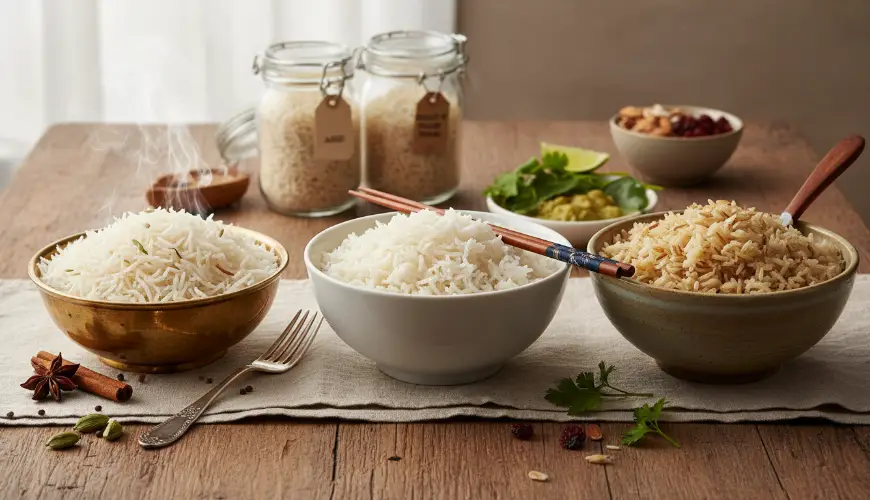
Rice is one of the oldest and most widespread foods in the world. It feeds more than half of the world's population and in many cultures forms the absolute foundation of daily diet – from South Asian cuisines through Middle Eastern recipes to Latin American specialties. Yet there are still plenty of people who struggle with its preparation. Burnt at the bottom of the pot, overcooked into a mushy mass, or conversely hard and undercooked – these are the most common results that home cooks encounter. And yet cooking rice properly is no rocket science, as long as one knows the basic rules and understands that each type of rice requires a slightly different approach.
The key to understanding rice is realising that it is not one universal ingredient, but an entire family of diverse varieties with different properties, flavours and textures. Basmati, jasmine and brown rice are the three most popular types that appear most frequently in Czech households – and each of them deserves its own attention and approach.
Try our natural products





Basmati Rice: The Queen of Aromatic Varieties
Basmati rice originates from the foothills of the Himalayas and is grown primarily in India and Pakistan. Its name in Sanskrit means "fragrant" and this designation is absolutely apt – while cooking, an unmistakable aroma spreads through the kitchen that is an experience in itself. Basmati grains are long, slender and with proper preparation elongate even further without sticking together. The result should be fluffy, airy and fragrant – exactly as we know it from Indian restaurants.
The biggest mistake when cooking basmati rice is skipping the soaking step. This step fundamentally affects the final texture. Ideally, leave the rice soaked in cold water for at least thirty minutes, or even an hour. The starch on the surface of the grains will partially release, which means the rice won't stick together during cooking and will remain nicely fluffy. After soaking, it is important to rinse the rice thoroughly under running water until the water runs clear – this removes excess starch and any impurities.
Regarding the water ratio, the traditional Indian method works with a ratio of approximately 1:1.5 (one part rice to one and a half parts water), but it also depends on the specific variety and age of the rice. Older rice tends to be drier and absorbs more water. Bring the rice to a boil over medium heat, then reduce the heat to minimum, cover the pot with a lid and cook for approximately ten to twelve minutes. After cooking, it is essential to let the rice rest for five minutes with the lid on – the steam remaining inside will finish the cooking and the grains will loosen beautifully. Only then should you gently fluff the rice with a fork, never a spoon, which would crush the grains.
An interesting fact is that quality basmati rice is intentionally stored for several years before sale, because ageing improves its flavour and texture – similar to wine. If you want to achieve a truly authentic result, look for the label "aged" or "matured" on the packaging, which guarantees a longer ageing period.
Jasmine Rice: Delicate Asian Elegance
Jasmine rice, originating from Thailand, is another aromatic gem, but it differs from basmati in several important ways. Its grains are shorter and slightly sticky after cooking – and that is perfectly fine, because this characteristic is typical and desirable for jasmine rice. The slightly sticky texture allows it to be easily picked up with chopsticks, which is why jasmine rice is an indispensable part of Thai, Vietnamese and Cambodian cuisine.
Unlike basmati, jasmine rice does not need to be soaked – it is sufficient to rinse it thoroughly under cold water two to three times to remove excess starch. The water ratio for jasmine rice is slightly lower than for basmati, approximately 1:1.25 to 1:1.4. Too much water would cause the rice to become overly soggy and lose its characteristic gentle cohesion.
Cooking proceeds similarly to basmati – bring to a boil, reduce the heat to minimum and cook covered for approximately ten to twelve minutes. The resting period after cooking is again crucial. Thai cooks have a special term for this step and consider it an essential part of the process, not unnecessary waiting. During these five minutes, the moisture in the pot distributes evenly and the rice reaches the ideal consistency.
As a practical example, consider a situation familiar to many home cooks: we are preparing Thai curry and the rice is ready before the sauce. What to do? Simply remove the pot from the heat, keep the lid on and let the rice wait – it will stay warm and in perfect condition for up to twenty minutes. This is one of the reasons why jasmine rice is so popular in gastronomy – it is relatively forgiving and does not require precise timing to the second.
Brown Rice: A Healthier Choice with a Longer Path to Perfection
Brown rice is essentially the same as white rice, except that it has retained its outer bran layer and germ, which are removed during the production of white rice. These layers are the source of fibre, B vitamins, minerals such as magnesium and phosphorus, and various antioxidants. From a nutritional standpoint, brown rice is significantly more valuable than its white counterpart, as confirmed by research from the Harvard T.H. Chan School of Public Health, which lists it among recommended whole grain foods.
This nutritional advantage comes at a price, however – and that price is time and patience. Brown rice takes considerably longer to cook than white rice, approximately thirty-five to forty-five minutes, and requires more water. The recommended water ratio is 1:2 to 1:2.5. The bran layer acts as a natural barrier that slows the penetration of water into the grain, which is why soaking is even more important for brown rice than for other varieties. Soaking for six to eight hours, ideally overnight, will significantly shorten the cooking time and improve the final texture.
As British chef Yotam Ottolenghi once remarked: "Brown rice demands respect and time – and when you give it both, it rewards you with a nutty flavour that surpasses white rice." And indeed – properly cooked brown rice has a distinctive, slightly nutty flavour and a firmer texture that gives it character. It works excellently in salads, as a side dish to roasted meat, or as the base for nutritious Buddha bowl-style dishes.
When cooking brown rice, it is important to monitor the temperature and resist the temptation to remove the lid. Every time the pot is uncovered, steam escapes and cooking time is extended. Once the rice begins to boil, reduce the heat to absolute minimum, cover firmly and let time do the work. If you are unsure whether the rice is done, test a single grain – it should be soft but still have a slight resistance, so-called al dente. After cooking, again allow it to rest with the lid on, this time for at least ten minutes.
General Tips That Apply to All Types of Rice
Regardless of which type of rice you are preparing, there are several universal principles that will increase the likelihood of success. First and foremost is the quality of the water used – in areas with hard or heavily chlorinated water, it may be worth using filtered water, which will not affect the flavour of the rice. Another factor is choosing the right pot – a heavy-bottomed pot with a well-sealing lid is ideal, as it distributes heat evenly and prevents steam from escaping.
Another important factor is salt. Adding a small amount of salt to the water before cooking is not just about flavour – salt slightly raises the boiling point of water and affects the way the starch in the rice gelatinises, which contributes to better texture. Some cooks also add a teaspoon of oil or butter, which helps keep the grains separate and adds a subtle flavour.
For those who want to have rice preparation under absolute control, there is the oven cooking method. The rice is covered with boiling water in an ovenproof dish, covered with aluminium foil and baked at 180°C for approximately twenty-five minutes. The result is evenly cooked, fluffy rice without the risk of burning – a method popular in professional kitchens around the world.
If you cook rice regularly and care about the result, a rice cooker may also be worth the investment – an electric appliance that is an absolute standard in almost every household in Asia. Modern rice cookers have settings for different types of rice, automatically adjust the temperature and time, and keep the rice warm without drying it out or overcooking it. It is not a necessity, but for rice lovers it is a practical tool that eliminates most mistakes.
Rice is a food that appears simple but conceals many nuances. Each variety has its own character, its own requirements and its own potential – and that is precisely where its magic lies. Basmati brings elegance and fragrance, jasmine brings delicacy and versatility, brown rice brings nutritional value and depth of flavour. When one understands what each variety needs, cooking rice ceases to be a routine matter and becomes a conscious culinary decision – a small but meaningful step towards better and more mindful eating.