

# Cleaning a Stove for Every Type of Cooktop
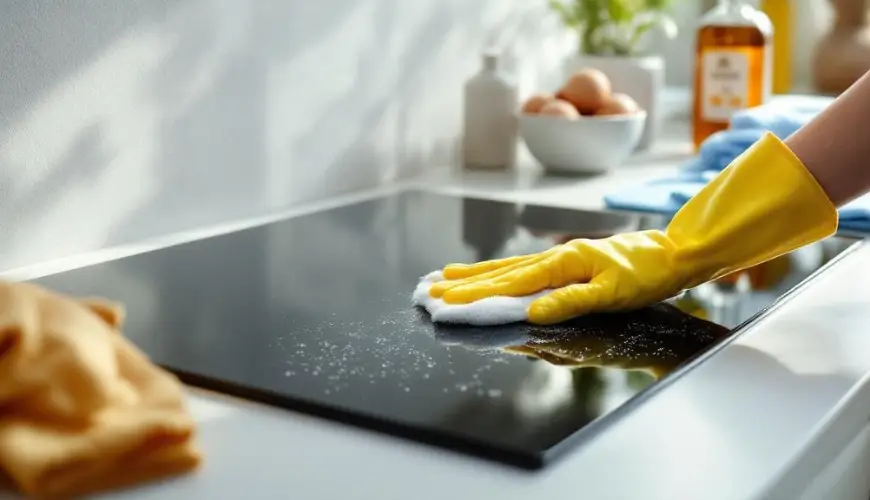
The stove is one of the most frequently used appliances in every household, and that is precisely why it gets dirty the fastest. Burnt food residue, greasy stains, overflowed sauce or dried milk – everyone who cooks regularly is familiar with all of this. Yet many people reach for the first cleaning product that comes to hand without thinking about whether it is suitable for their particular type of stove. And that is exactly where problems begin. Incorrect cleaning can permanently damage the surface of a stove, whether it is a delicate glass-ceramic hob, a sensitive induction surface, or a robust gas burner.
Different types of stoves have different materials, different surfaces, and different maintenance requirements. What perfectly removes grease from a cast-iron grate on a gas stove can cause micro-cracks on a glass-ceramic hob. And conversely – a gentle cleaning cream designed for induction would not cope at all with burnt fat on a gas burner. Knowing what to use on which type of stove is not always straightforward, but it is definitely worth paying attention to.
Try our natural products




Glass-ceramic: beauty that requires care
Glass-ceramic stoves are popular for their elegant appearance and ease of cooking – a smooth surface without corners and gaps looks great in the kitchen. But it is precisely this smoothness that is also their greatest weakness when it comes to cleaning. Glass-ceramic is susceptible to scratches, which is why choosing the right cleaning product is absolutely crucial.
The basic rule is to never use abrasive sponges or steel wool. Even the seemingly innocent green side of a sponge can leave fine scratches on glass-ceramic that accumulate over time and cause the surface to lose its shine. The ideal choice is soft microfibre cloths or special glass-ceramic scrapers with a plastic or ceramic blade, which remove dried-on dirt without damaging the surface.
As far as cleaning products go, special creams or gels designed specifically for glass-ceramic perform best. These products contain fine abrasive particles that are effective enough against grease, yet gentle enough not to damage the surface. On the Czech market, products from brands such as Ceresit or HG are available, but an increasing number of households are switching to eco-friendly alternatives – for example, pastes based on baking soda and citric acid, which can handle even heavier soiling.
Baking soda is a real helper in this regard. Simply sprinkle it on a damp surface, leave it to work for a few minutes, and gently wipe with a soft cloth. White vinegar diluted with water then works wonderfully for degreasing – it naturally removes grease and leaves the surface shiny. However, it is important not to leave vinegar on the surface for too long, as its acidity could damage the surface finish with repeated use.
Another important tip concerns the timing of cleaning. Glass-ceramic is best cleaned when it is lukewarm, neither hot nor completely cold. Dirt releases more easily from a lukewarm surface, whereas on a hot hob there is a risk that the cleaning product will evaporate quickly and leave streaks. And if sugar or a sweet sauce happens to spill onto a hot hob, it is necessary to act quickly – dried caramel or sugar is one of the worst nightmares when cleaning glass-ceramic and can even cause permanent surface damage.
Induction: modern technology with its own rules
Induction stoves have become very popular in recent years, and for several reasons. They are energy-efficient, cook quickly, and their surface itself does not get too hot – the heat is generated directly in the cookware. As a result, burnt food residue occurs less frequently on induction hobs than on other types of stoves. Nevertheless, an induction hob also requires regular care.
In terms of material, an induction hob is practically identical to glass-ceramic – it is a special toughened glass surface that is resistant to temperature fluctuations. The cleaning rules are therefore very similar: no abrasive products, no steel wool, no aggressive chemicals. Special cleaning creams for glass-ceramic are also suitable for induction, as are homemade mixtures of baking soda and water.
One thing to watch out for is metal objects. When cooking with cast-iron or stainless steel pots, metal traces can be left on the hob – grey or black lines that look like scratches but are actually deposited metal. These marks can be removed with special cleaning products for glass-ceramic or a gentle baking soda paste. It is important not to overdo the pressure when scrubbing – gentleness is key when caring for an induction hob.
An interesting insight comes from appliance testing carried out by the organisation DTEST, which has been monitoring over the long term how various cleaning products affect the lifespan of glass-ceramic and induction hobs. The results repeatedly show that regular and gentle maintenance significantly extends the life of a stove and preserves its aesthetic appearance for many years.
For everyday maintenance of an induction hob, it is sufficient to simply wipe it with a damp microfibre cloth after each use. This small routine prevents the build-up of dirt and significantly reduces the need for intensive cleaning. It is a bit like dental care – regular prevention is always more effective than costly treatment.
Gas stove: robust, but complex to clean
Gas stoves have their unmistakable appeal – an open flame, an immediate response to power settings, and a traditional way of cooking. They are popular with passionate cooks and in households where a great deal of intensive cooking takes place. However, their cleaning is incomparably more complex than that of glass-ceramic or induction hobs, due to the number of removable parts.
A gas stove consists of burners, grates, burner caps, and the work surface itself, which can be enamelled or stainless steel. Each of these parts requires a slightly different approach. The grates and burner caps are the dirtiest parts and at the same time the most easily removable – and that is the advantage. They can be taken out and soaked in warm water with washing-up liquid or a special degreaser. For heavily burnt-on residue, soaking overnight with the addition of baking soda or a dishwasher tablet works wonderfully.
Cast-iron grates are durable, but should not be soaked for too long as they could rust. After washing, always dry them thoroughly and, if necessary, lightly coat them with a thin layer of cooking oil to preserve their surface finish. Enamelled grates are less demanding in this regard and can even go in the dishwasher.
The work surface of a gas stove, whether enamelled or stainless steel, is relatively easy to clean – a degreaser or hot water with washing-up liquid and a sponge will suffice. For stainless steel surfaces, it is advisable to use cleaning products designed specifically for stainless steel, which will not only clean the surface but also protect it against limescale marks and grease. For enamelled surfaces, similar rules apply as for glass-ceramic – avoid abrasive products that could damage the surface glaze.
The burners themselves need to be cleaned carefully, as the small holes through which the gas emerges can become blocked with food residue or cleaning products. An old toothbrush or a special needle is useful for cleaning them. Never use metal objects that could enlarge or damage the openings. A blocked burner will manifest as an uneven flame or problems with ignition – regular inspection and cleaning of the burners is therefore also a matter of safety.
Imagine a situation that is common in many households: spilled soup seeps under a burner cap and dries there for several days because there was no time for cleaning. The result is a burner that ignites poorly, produces an uneven flame, and smells when cooking. This scenario can easily be avoided if the stove is cleaned on an ongoing basis – ideally at least superficially after each use, and more thoroughly once a week.
What all types of stoves have in common
Regardless of whether it is glass-ceramic, induction, or gas, there are several universal principles that apply to cleaning all types of stoves. Regularity is the foundation – the longer cleaning is put off, the more difficult and time-consuming it will be. Dirt that could be removed with a damp cloth when fresh turns into a hard crust after a few days, requiring intensive cleaning.
Another common denominator is the preference for natural or eco-friendly cleaning products. Baking soda, citric acid, and white vinegar are affordable, readily available, and yet surprisingly effective. Moreover, they are safe for families with children or allergy sufferers who are sensitive to the strong chemical scents and compositions of conventional cleaning products. As British ecologist and journalist George Monbiot says: "The most sustainable product is the one you don't need to buy because you make it from what you already have at home." And baking soda with vinegar are a perfect example of this.
It is also interesting to note that switching to eco-friendly cleaning products does not mean compromising on effectiveness. According to information available on the website of the National Institute of Public Health, many conventional cleaning products are unnecessarily aggressive and contain substances that are not necessary for household use. Gentle alternatives handle common household dirt just as well, while being safer for users and the environment.
The last, but equally important tip is to read the stove's instruction manual. Manufacturers include specific cleaning recommendations in it and highlight products that could void the warranty or damage the surface. Yet this advice is surprisingly overlooked – most people read the manual once during installation and then put it away forever. And yet it is precisely there that the answers to many questions can be found, which people then search for online.
Cleaning a stove does not have to be a nightmare or a time-consuming chore. With a little regularity, the right products, and basic knowledge of which surface requires what kind of care, it becomes a natural part of the household routine – and the stove will look almost like new even after years of use.