

When Painful Menstruation Signals a Serious Problem
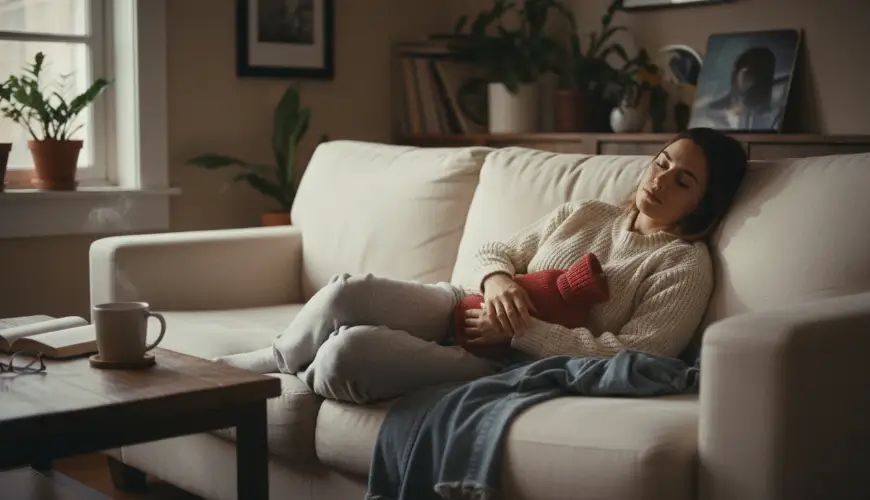
Every woman knows it – those days of the month when the body makes itself heard in a way that cannot be ignored. Cramps in the lower abdomen, fatigue, irritability. For many women, menstruation is a natural, if unpleasant, part of life. But where exactly does the line lie between what is normal and what should be a signal to visit a doctor? This question troubles a surprisingly large number of women, yet remains without a clear answer – partly because pain is subjective, and partly because society has for centuries normalised female suffering as something that simply must be endured.
According to the World Health Organization, up to 80% of women of reproductive age suffer from dysmenorrhoea – the medical term for painful menstruation. Of these, approximately 5 to 10% describe pain so intense that it significantly disrupts their daily functioning. These numbers show that menstrual pain is widespread, but also suggest that not every pain is automatically healthy or inevitable.
Try our natural products


When menstrual pain is still within the normal range
To understand what is problematic, it is first necessary to know what happens in the body during menstruation. The uterus contracts during menstruation to shed its lining. These contractions are caused by substances called prostaglandins – the higher their level, the stronger the cramps. Mild to moderately strong pain in the lower abdomen that comes on the first day or two of the menstrual cycle and gradually subsides is considered physiological from a medical standpoint. It is sometimes accompanied by lower back pain, mild nausea, or tender breasts – all of which can be part of normal hormonal activity.
However, context is important. Pain that responds to over-the-counter medications such as ibuprofen or naproxen, that allows a woman to go to work or school, and that eases over the course of days is generally considered primary dysmenorrhoea. This has no organic cause – it is a natural bodily response, influenced among other things by genetics, lifestyle, and diet. Young girls experience it most frequently, and for some it significantly diminishes with age or after childbirth.
Take twenty-three-year-old Lucia, a student from Brno, as an example. Every month she spends the first day of her period with a hot water bottle on her stomach and a tablet of ibuprofen, but by the second day she is able to go to her lectures as normal. Her pain is real and unpleasant, but does not cross the threshold that would suggest a more serious problem. Such a course of events is far from ideal, but falls within the medically acceptable norm.
Nutrition and lifestyle play a greater role than many women realise. A diet rich in omega-3 fatty acids, magnesium, and vitamin D can help reduce prostaglandin levels and thereby lessen the intensity of cramps. Conversely, excessive consumption of red meat, processed foods, and alcohol can worsen pain. Regular exercise, adequate sleep, and stress management are factors that have a demonstrable effect on menstrual pain – as confirmed by studies published in the specialist journal Journal of Obstetrics and Gynaecology Research.
When painful menstruation ceases to be normal
There are, however, situations in which a woman should not dismiss pain with the thought that "it's just the way things are". Secondary dysmenorrhoea – pain caused by a specific health problem – differs from primary dysmenorrhoea in several key ways. The pain is more intense, lasts longer, sometimes extends throughout the entire menstrual cycle, and does not respond well to common pain medications. In precisely these cases, it is necessary to search for the underlying cause.
One of the most common, yet still too frequently late-diagnosed causes is endometriosis – a condition in which tissue similar to the uterine lining grows outside the uterus. According to the Czech Gynaecological and Obstetrical Society, approximately 10% of women of reproductive age suffer from endometriosis, with the average time from first symptoms to diagnosis being around seven to ten years. This is an alarming figure that reflects both insufficient awareness and the tendency to trivialise women's pain – on the part of those around them, and sometimes, unfortunately, on the part of doctors themselves.
How can endometriosis be recognised? The pain is often very severe, occurring not only during menstruation but also during sexual intercourse, urination, or bowel movements. It may be accompanied by heavy bleeding, extreme fatigue, and a sense of exhaustion that significantly exceeds ordinary premenstrual discomfort. "Endometriosis is not just painful menstruation – it is a chronic condition that affects a woman's entire life," say many gynaecologists who deal with this issue.
Other possible causes of secondary dysmenorrhoea include fibroids – benign tumours in the uterus – adenomyosis, in which the uterine lining grows into the muscular wall of the uterus, or pelvic inflammatory disease. Each of these conditions has its own specific treatment and each requires a professional diagnosis. Self-treatment or waiting for the pain to "go away on its own" can in these cases lead to complications, including fertility problems.
There are specific warning signs to which a woman should respond by visiting a gynaecologist without unnecessary delay:
- pain that lasts longer than the first two days of menstruation
- bleeding significantly heavier than usual, or bleeding between periods
- pain during sexual intercourse
- lower abdominal pain outside of menstruation
- nausea or vomiting accompanying menstruation
- fatigue that prevents normal functioning
- pain that does not respond to over-the-counter medications
The presence of one or more of these symptoms is not a cause for panic, but is a clear signal that it is time to speak with a specialist.
Natural support for the body during difficult days need not be purely pharmacological. Products such as magnesium supplements, herbal teas made from raspberry leaf or St John's wort, or quality heat patches can help alleviate mild to moderate pain and improve overall wellbeing during menstruation. The growing interest in natural and sustainable alternatives to conventional hygiene products – such as menstrual cups or period underwear – also brings women greater comfort and awareness of what is happening in their bodies. These alternatives are gentler on the body and the environment, and for many women represent a fundamental shift in how they experience menstruation.
The psychological aspect also plays a major role. Stress demonstrably worsens the perception of pain and can affect hormonal balance. Techniques such as yoga, meditation, or breathing exercises are not merely a passing trend – their positive effect on menstrual pain has been repeatedly demonstrated by research. For example, a study published in the journal Evidence-Based Complementary and Alternative Medicine showed that regular yoga practice significantly reduces the intensity of menstrual pain in women with primary dysmenorrhoea.
It is also important to note that painful menstruation is not solely a women's issue in the sense that it concerns only the biologically female world. It affects work performance, the quality of relationships, mental health, and overall quality of life. A society that normalises pain as an inevitable part of womanhood does not help women – on the contrary, it prevents them from seeking help to which they have every right.
The good news is that awareness of menstrual health is gradually improving. More and more women are speaking openly about their experiences, more and more doctors are approaching menstrual problems with greater attention, and more and more research is focusing on an area that has been underfunded for decades. Menstrual cycle tracking apps such as Clue or Flo also enable women to better understand their own bodies, monitor patterns of pain, and bring specific data to their gynaecologist rather than a vague description.
If a woman tracks her cycle and notices that her pain is intensifying over the months, changing in character, or occurring at a different phase of the cycle than before, this is information that can be crucial for a doctor. Recording the intensity of pain, the duration of bleeding, and accompanying symptoms is a simple but highly effective tool that can shorten the path to the correct diagnosis.
Menstruation is a natural biological process, but natural does not automatically mean pain-free – and it certainly does not mean that pain must be silently endured. Every woman deserves to understand her body, to know when it is time to act, and to have access to care that takes her difficulties seriously. The line between normal and problematic is not always sharp, but the more women know about their bodies, the more easily they will be able to recognise it.