

# How to Properly Strengthen Your Core and Why It Matters The core – or the center of the body – is
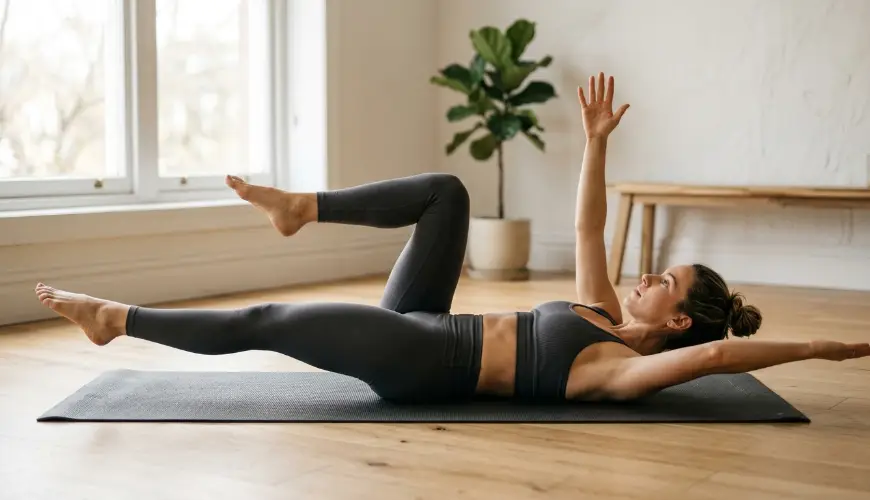
Anyone who has ever spent weeks diligently training their abdominal muscles only to end up with back pain or an unstable posture knows that feeling of disappointment. Plenty of effort, fewer results. But the problem often lies neither in a lack of willpower nor in poor technique with classic exercises – it lies in the fact that the entire approach to strengthening the body's centre is fundamentally misunderstood. The body's centre, known in English as the "core", is far more than just the visible abdominal muscles. And it is precisely this misunderstanding that underlies most of the failures, injuries, and chronic pain that an enormous number of people struggle with today.
Consider Martina, a thirty-four-year-old teacher who noticed after her second childbirth that her back had started hurting when standing for longer periods and that she felt generally "unstable". She began doing classic crunches and planks, but after two months nothing significant had changed. It was only when she started working with a physiotherapist who explained how the core actually functions as a whole that things began to move in the right direction. Martina's story is not exceptional – on the contrary, it is very typical.
Try our natural products





What the core actually is and why it matters
The core is a complex system of muscles that surrounds the trunk like a kind of natural corset. It is not just the rectus abdominis, which is responsible for the coveted "six-pack". Also involved are the transverse abdominal muscle (musculus transversus abdominis), the oblique abdominal muscles, the pelvic floor muscles, the diaphragm, the deep spinal muscles known as the multifidi, and the gluteal muscles. All of these structures work together as a single functional unit, and only together do they provide what we call trunk stability.
Why does this matter in everyday life? Because almost every movement a person makes during the day – whether getting out of bed, lifting a shopping bag, turning towards a sound, or simply sitting at a computer for an extended period – requires active engagement of the core. If this system does not function properly, the body finds alternative solutions: the spine, lower back, knees, or shoulders become overloaded. The result is pain that seemingly has no connection to the abdomen, yet its root lies precisely there.
According to the American Academy of Orthopaedic Surgeons (AAOS), lower back pain is among the most common health problems in the adult population, and a weak or dysfunctional core is one of the key risk factors. This is therefore not a fashionable fitness trend – it is a fundamental prerequisite for healthy movement.
Interestingly, modern movement science began advocating this holistic view relatively recently. As late as the 1990s, the dominant approach focused purely on the superficial abdominal muscles. Physiotherapist and researcher Paul Hodges of the University of Queensland was among the first to demonstrate the crucial role of the transverse abdominal muscle and its activation even before limb movement begins. This finding changed the way physiotherapists and trainers approach rehabilitation and injury prevention.
Why crunches alone are not enough
Classic exercises such as crunches or sit-ups are enormously widespread in gyms and home workouts. Their popularity is understandable – they are simple, require no equipment, and results are visible relatively quickly, at least in terms of muscle volume. The problem, however, lies in what these exercises primarily strengthen: namely the rectus abdominis, which may look impressive but plays a less important role in functional body stability than one might think.
Moreover, poorly performed crunches place excessive strain on the lumbar spine and neck muscles. Many people thus end up causing exactly what they were trying to prevent – back pain and muscular imbalance. As physiotherapist Stuart McGill, one of the world's leading experts on spinal health, once said: "A strong core does not mean large abdominal muscles. It means having a stable, coordinated system that protects the spine during every movement."
The key to functional core strengthening is therefore to shift attention from isolated movements to complex movements that engage the entire stabilisation system at once. And that is precisely where the real work begins.
The plank, or holding a prone support position, is in this respect a significantly better choice than crunches – but here too, quality of execution matters far more than duration. A correctly performed plank lasting thirty seconds is more valuable than two minutes with an arched back and raised hips. Similarly effective are exercises such as the dead bug, bird dog, and various squat and lunge variations, which when performed correctly activate the entire trunk stabilisation system.
An important but frequently overlooked component of the core is the pelvic floor. This group of muscles forms the "floor" of the entire stabilisation system and works in conjunction with the diaphragm and deep spinal muscles. A weakened pelvic floor manifests not only as incontinence issues but also as reduced stability of the entire trunk. This is why working with the pelvic floor is an absolutely essential part of any core strengthening programme – for women after childbirth, but for men as well.
How to start – and what not to forget
The good news is that beginning to work on genuine core strengthening requires neither expensive equipment nor hour-long training sessions. What it does require is patience, a mindful approach, and a willingness to reconsider some ingrained habits.
The foundation is learning to consciously activate the deep stabilising muscles. This activation should precede any more demanding movement – whether you are lifting weights in the gym or a bag of groceries. The idea is to gently "draw in" the lower abdomen towards the spine while simultaneously activating the pelvic floor, without holding your breath. Breathing itself is another key element that is very often overlooked when training the core.
The diaphragm, as the primary breathing muscle, is anatomically connected to the entire stabilisation system. Proper abdominal breathing, in which the belly rises with inhalation rather than just the chest, directly supports the function of the deep stabilisers. Conversely, chronic chest breathing – which is very widespread today as a result of stress and sedentary lifestyles – disrupts this function. Dedicating a few minutes each day to conscious breathing exercises can therefore have a surprisingly significant impact on overall trunk stability.
In terms of specific exercises that experts recommend as a foundation for strengthening the entire core, the following are worth mentioning:
- Dead bug – lying on your back, alternately extending the opposite arm and leg while maintaining constant contact between the lumbar spine and the floor
- Bird dog – on all fours, alternately extending the opposite arm and leg while maintaining a neutral spinal position
- Pallof press – exercise with a resistance band or cable machine that trains the trunk's resistance to rotation
- Squat and lunge – fundamental functional movements that, when performed correctly, activate the entire stabilisation system
Beyond the exercises themselves, everyday movement habits also play a role. Long hours sitting at a computer, always carrying heavy bags on the same shoulder, or inappropriate footwear – all of these affect how the core functions and how the spine is loaded. Workplace ergonomics and a mindful approach to movement throughout the day are just as important as training itself.
The question naturally arises: when is it appropriate to seek professional help? The answer is simple – whenever pain persists, or when a person feels that despite regular exercise they are making no progress. A physiotherapist or certified movement specialist can identify specific weaknesses and set up an individualised programme that will be genuinely effective. Investing in a professional consultation generally pays off far more than months of trial and error on one's own.
Overall lifestyle also plays an interesting role in core health – sleep quality, stress levels, and nutrition. Chronic stress increases tension in the diaphragm and deep spinal muscles, thereby disrupting their natural function. Adequate protein and micronutrients such as magnesium or vitamin D support muscle function and recovery. A holistic approach to core health therefore encompasses not just exercise, but care for the body as a whole.
It is remarkable how many people focus on aesthetic results – a flat stomach and visible muscles – while neglecting what matters most: functionality, stability, and the health of the movement system. Yet it is precisely a functional core that enables an active and pain-free life over the long term. The muscles that are visible are merely the tip of the iceberg. The larger, more important part lies deeper – and that is exactly where it is worth directing one's attention.
Martina, mentioned at the beginning, no longer has back pain after half a year of regular work with a physiotherapist and a mindful approach to movement. She does not exercise for hours each day – she dedicates herself to short but meaningful training sessions three times a week and monitors her breathing and posture throughout the day. She says she feels stronger than she did before her pregnancy, even though she has stopped doing crunches entirely. Her story is perhaps the best argument for reconsidering established notions of what core strengthening truly means.