

# When Is Baked Goods a Problem and When Not ## When Baked Goods Are **Not** a Problem - **In mode
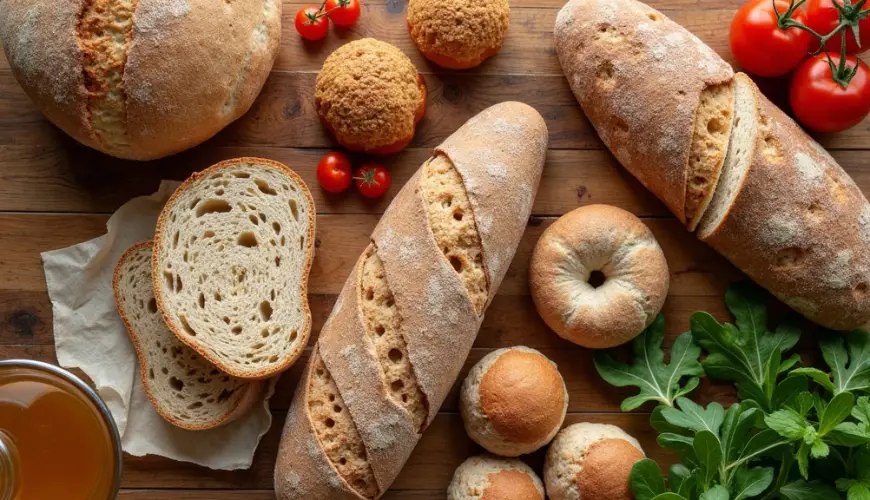
Few foods spark as many passionate debates as bread and baked goods. Some label them the root cause of all evil in the modern diet, while others cannot imagine even breakfast without them. The truth, as is often the case, lies somewhere in the middle – and it depends primarily on what kind of baked goods we are talking about, how much we eat, and in what context of our overall diet we consider them.
Baked goods have accompanied human civilization for thousands of years. Archaeological findings show that predecessors of today's bread were being baked more than fourteen thousand years ago in what is now Jordan. Bread became a symbol of basic sustenance, sharing, and hospitality. However, the baked goods eaten by generations of our ancestors differ fundamentally from those of today – and it is precisely in this difference that the essence of the entire debate lies.
Try our natural products






What are we actually eating when we reach for a bread roll or toast
Modern industrial baked goods have undergone a significant transformation over recent decades. White flour, from which most common baked goods are made, is produced by milling wheat grain in a process that removes the germ and bran – precisely those parts where fiber, B vitamins, minerals such as magnesium and zinc, and health-promoting fats are concentrated. What remains is essentially pure starch with a minimal nutritional profile. The body processes it quickly, blood sugar levels spike sharply and drop just as fast – and the familiar hunger sets in, as anyone knows who has had just two bread rolls with butter for breakfast.
The glycemic index of white wheat baked goods ranges around 70–75, placing them among foods with a high glycemic index. For comparison, whole grain bread ranges around 50–55. This difference is not negligible, especially for people who monitor their blood sugar levels or try to maintain stable energy throughout the day. The World Health Organization and nutrition experts have long recommended preferring whole grain varieties over refined grains – and for precisely this reason.
Added to this is the composition of industrial baked goods, which often contains added sugars, hydrogenated fats, emulsifiers, and preservatives. Simply reading the label of a common supermarket toast bread – the list of ingredients can be surprisingly long and include substances that have little in common with traditional baking. This is why more and more people are turning to home baking or to bakeries that work with natural ingredients and slow fermentation processes.
Nevertheless, it would be inaccurate to say that baked goods as such are always harmful to everyone. Context is key. An active person, an athlete, or a manual laborer has entirely different energy requirements than someone with a sedentary job. Carbohydrates are the primary fuel for both the brain and muscles, and baked goods as a source of carbohydrates can be entirely appropriate in certain situations.
When baked goods are truly harmful and when they can be given the green light
The problem arises when baked goods – especially white and industrially processed ones – become the foundation of the diet without sufficient representation of vegetables, proteins, healthy fats, and fiber. Research published in the journal The Lancet has repeatedly shown that a diet high in refined carbohydrates and low in fiber is associated with an increased risk of cardiovascular disease, type 2 diabetes, and certain types of cancer. It is therefore not baked goods themselves that are the enemy, but the overall dietary pattern of which they are a part.
Consider a concrete example: Jana works in an office, has two bread rolls with jam for breakfast, a sandwich with ham for lunch, and pasta for dinner. She gets minimal exercise. Such a diet is dominated by refined carbohydrates, lacking in fiber, vegetables, and sufficient protein. The result may be chronic fatigue, weight gain, and mood swings. But it is not the fault of the bread roll itself – it is the fault of an unbalanced whole.
By contrast, Pavel, who cycles every morning, has a slice of rye sourdough bread with egg and avocado for breakfast. The bread gives him energy for performance, the fiber from the rye flour supports digestion, and the combination with protein and healthy fats ensures long-lasting satiety. The same food category, a completely different effect.
A special chapter is sourdough. Traditional sourdough baked goods undergo long fermentation, during which lactic acid bacteria break down part of the starch and phytates – substances that otherwise inhibit mineral absorption. The result is baked goods with a lower glycemic index, better digestibility, and a richer flavor profile. Studies published on PubMed suggest that people with mild gluten sensitivity sometimes tolerate sourdough bread better than industrial bread – although this by no means applies to people with celiac disease, for whom a gluten-free diet is an absolute necessity.
Rye flour, spelt flour, or einkorn flour offer a significantly richer nutritional profile compared to classic white wheat flour. They contain more fiber, minerals, and antioxidants. Switching to whole grain or alternative flours does not have to mean giving up flavor – modern bakeries and home bakers have proven that whole grain baked goods can be just as tasty, if not tastier, than their white counterparts.
As Michael Pollan, the American author and popularizer of healthy eating, once noted: "Eat food. Not too much. Mostly plants." This seemingly simple advice contains a profound truth – quality and variety are more important than absolute prohibitions and prescriptions.
A separate question is gluten-free baked goods, which have gained great popularity in recent years far beyond the celiac community. Many people automatically consider them a healthier alternative. The reality, however, is more complex. Gluten-free products are often made from highly refined starches – corn, rice, or tapioca – and contain more added sugars and fats to compensate for the absence of gluten, which gives baked goods their structure and texture. If a person does not suffer from celiac disease or a confirmed gluten sensitivity, there is no scientifically substantiated reason why gluten-free baked goods should be a healthier choice.
How to approach baked goods sensibly
Freeing oneself from black-and-white thinking in the area of nutrition is liberating. Baked goods are neither poison nor a miracle food – they are part of food culture that has its place in the human diet when chosen and consumed thoughtfully.
When selecting baked goods, it is worth paying attention to several things:
- Flour composition – whole grain, rye, or spelt flour is nutritionally more valuable than white wheat flour
- Method of preparation – sourdough baked goods with long fermentation are more digestible and have a lower glycemic index
- Ingredient list – the shorter and more comprehensible, the better; ideally flour, water, salt, and sourdough starter or yeast
- Quantity and combination – baked goods as part of a balanced meal with proteins, healthy fats, and vegetables are perfectly fine
- Individual body responses – each person reacts to carbohydrates somewhat differently, so it makes sense to monitor your own feelings of energy, satiety, and digestion
Dietary trends come and go. The paleo diet rejected all grains, low-carb approaches minimize carbohydrates, while other movements extol whole grains as the foundation of a healthy diet. The scientific consensus, as summarized by the Harvard T.H. Chan School of Public Health, is clear: whole grains are a beneficial part of a balanced diet, while refined grains should be consumed in moderation.
An interesting perspective is offered by the Mediterranean diet, one of the most thoroughly researched and healthiest dietary patterns in the world. Bread and baked goods are a natural part of it – but this means bread made from whole grain or semolina flour, often sourdough-style, consumed with olive oil, vegetables, and fish. No one in Greece or Italy considers bread an enemy of health, and yet the inhabitants of Mediterranean countries are among those with the lowest incidence of lifestyle diseases.
Baked goods are therefore not a problem in themselves. The problem lies in their industrial form, excessive consumption, and the absence of other nutrients in the diet. Someone who has a slice of quality rye bread with cottage cheese and tomato for breakfast need have no qualms. Someone who has three white bread rolls with sweet filling every day and calls that breakfast may gradually begin to feel that their body is missing something.
Quality baked goods – whether from a specialty bakery, a local baker, or baked at home – can be both a joy for the taste buds and a benefit to health at the same time. It simply requires knowing what to look for, and not being swept away either by fashionable prohibitive trends or by enticing advertisements for industrial products. Choosing baked goods is ultimately, like most dietary decisions, a matter of knowledge, habit, and common sense.