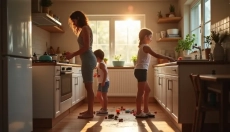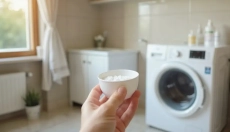

An eco-friendly household without stress works when you let go of perfection and choose simple steps

Sustainability is often marketed as a big project: new equipment, new habits, new "correct" opinions. However, an ordinary day looks different. In the morning, there's a rush, in the afternoon, work and children are dealt with, and in the evening, it's discovered that the laundry gel has run out again. Amid all this, one is expected to ask whether their life is sufficiently "eco." It's no wonder that a good intention can easily turn into pressure. Yet, how to be eco without stress is often mainly about lowering perfectionism and adding practicality. Less guilt, more small steps that make sense in the long run.
When you hear eco-friendly household without stress, it doesn't mean a zero-waste household at any cost. It's a household where resources and nerves are saved. And where changes happen naturally – so they can last even in a week when everything falls apart and the only plan is "just survive." It may be a paradox, but the most sustainable things are often those that are simple, accessible, and repeatable. Things that one can do without needing to write reminders.
Try our natural products

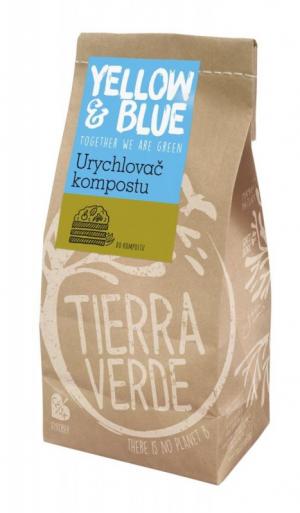
Eco without stress starts in the mind: less perfectionism, more "good enough"
Many people encounter sustainability at a time when their plate is already full of responsibilities. And then comes a flood of advice: three sorting bins, homemade cosmetics, package-free shopping, composting, capsule wardrobe, fermentation, homemade cleaners, homemade everything. It's inspiring, but also exhausting. If the goal is a simple eco-friendly household without stress, it pays to start differently: not with what all must be done, but with what already works today.
Sustainability is not a competition. And it's not an identity that needs to be "proven." It's a set of decisions that collectively reduce unnecessary waste. Sometimes it means buying a higher quality item, other times not buying anything at all. And often it's just about following through: using up, repairing, donating, passing it on.
A simple rule also helps: change only one area at a time. When someone tries to overhaul their entire life over a weekend, they usually end up exhausted and back at the start. But if they just switch dishwashing liquid, it's a small thing – and yet it can be a change that repeats every day. The power lies in repetition.
And one more thing that brings relief: accepting that "eco" in the real world looks different. Some have time to go package-free, others have a small shop nearby and go with that. Some have kids and are in "survival mode." Some live in a rental and can't replace appliances. All these are valid situations. "How to be eco without stress" often means choosing steps that fit a specific life, not an ideal Instagram.
Simple eco-friendly tips and tricks that are truly sustainable
How to know that eco-friendly tips and tricks are sustainable in practice? By the fact that they don't increase life's complexity. They save time, money, energy – or at least two of these three things. And they can be implemented gradually.
One of the most reliable starts is the kitchen. Not because everything can be done perfectly there, but because several routine activities are repeated there every day. And routines are the most grateful for change.
Food waste is a good example: sustainability here doesn't look like "never throwing anything away," but rather like simplifying shopping and cooking. It's enough to have a few staples at home to save the day: pasta, legumes, rice, strained tomatoes, oats. Plus a freezer as a silent helper – leftover bread, herbs, broth, extra servings. It sounds ordinary, but ordinary things make the biggest difference.
Similarly practical is replacing disposable items with reusable ones, but only where it won't be a bother. A cloth towel instead of paper napkins? Usually no problem. A water bottle for work? Also easy. But a complex system of containers that can't be washed in time can end in frustration. Sustainability shouldn't be another household chore.
In the bathroom, you can start "invisibly": use up what's already at home, and only then choose more eco-friendly options. This strategy is surprisingly calming because you don't have to make radical changes right away. And it's logical – the least eco-friendly is often throwing away half-full bottles just to buy a "greener" package.
For cleaning, minimalism helps, which isn't about aesthetics but simplicity. The more different products there are at home, the more you have to think about them, the more they are stored, the more packaging is created. Yet for a typical household, a few basic things and a smart routine are often enough. Authoritative sources have long emphasized that with household chemicals, it makes sense to consider not only effectiveness but also safety and proper handling; a useful overview is offered by the European Chemicals Agency (ECHA), which clearly explains what the information on labels means and why it matters.
And then there's the area most burdened with guilt: clothing. Sustainable fashion can be lived without throwing out half the closet. In reality, the best "eco" step is often the most ordinary: wear things longer, care for them, repair them. Washing at lower temperatures, air drying, and less frequent washing for some materials can do more for clothing longevity than chasing the perfect brand. And when shopping, a question that is almost ridiculously simple helps: will I wear this at least thirty times?
To prevent this from remaining just nice thoughts, a practical example from everyday life helps. Imagine a household where the same scene is dealt with every week: on Sunday evening, the dishwashing liquid runs out and the sponges are "remembering something." On Monday, the first thing at hand is quickly bought, ideally in plastic, because it's the fastest. Then comes guilt and the feeling that it didn't work out again. But stress doesn't arise from buying plastic. Stress arises from chaos and from it repeating.
The solution can be surprisingly simple: set up a "small stock" of two basic things at home that are often replenished (e.g., dishwashing liquid and detergent), and buy them in larger packaging or a refill mode when it makes sense. Not to feel virtuous, but so that nothing needs to be dealt with on Sunday evening. An eco-friendly household without stress is often just a household with two fewer worries.
If it's helpful to have a few truly functional ideas on hand that can be implemented without major changes, just pick a few of them and let the rest be:
- Use up and then replace: cosmetics, cleaners, and "eco" gadgets should be addressed gradually.
- Simplify cleaning: fewer different products, more routine and universal helpers.
- Set a small stock of the most common items to avoid last-minute purchases.
- Use the freezer to prevent food waste (bread, extra servings, herbs).
- Prioritize reusable items where it doesn't complicate life (bottle, mug, towels).
- Buy less but better: for clothing and household equipment, longevity wins over impulse.
Notice that these steps aren't about being the "most eco." They're about making sustainability a side effect of reasonable household functioning.
How to set up "eco" habits that last even in challenging weeks
Habits aren't maintained by willpower. They're maintained by being easy. And also by making sense in the context of a life that changes. Therefore, it's better to think of sustainability as long-term tuning rather than a one-time transformation.
One of the best tricks is to attach a new habit to something that already exists. For example: when writing a shopping list, also check what's at home. When starting a washing machine, choose a gentler program if the laundry allows. When going out, take a bag that's already by the door. It's not about big decisions, but about small "reminders" that gradually become automatic.
Tolerance for exceptions is also important. Sustainability without stress considers that sometimes a packaged item is bought because it's the fastest. Sometimes delivery is ordered because there's no energy to cook. Sometimes a reusable bag is simply forgotten. And the world doesn't end. Once sustainability becomes a moral test, it stops being sustainable mentally – and therefore practically.
It also helps to focus on "big levers" but without drama. For instance, energy and heat in a household are topics with a big impact, yet not everyone can immediately change windows or appliances. But there are small things: not heating unnecessarily in empty rooms, ventilating briefly and intensively, not leaving appliances unnecessarily on standby. Those who want to delve deeper can be inspired by recommendations from the International Energy Agency (IEA) or reviews on consumption and climate impacts from the IPCC, which help understand broader contexts without sensation.
And then there's one question that can filter out many unnecessary "eco" purchases: does the household really need this, or is there just a feeling that it would be the right thing? Sustainability sometimes paradoxically turns into another form of consumption – just in a green coat. Yet the most eco-friendly choice is often the most boring: use what already exists, and buy only when it makes real sense.
For this, one sentence is useful to remember when pressure for performance starts to interfere with sustainability: "It's not about doing everything perfectly, but about doing something long-term." This simple thought brings the whole topic back to earth, where it can really be lived.
In the end, it turns out that simple eco-friendly tips and tricks that are sustainable aren't any secret hacks. They're small adjustments to everyday life that reduce chaos and waste at the same time. And once sustainability stops being a stressful project, it starts to resemble something much more pleasant: a normal household that operates a bit smarter, more calmly, and with greater respect for what we already have.