
# Why Paper Isn't Automatically More Eco-Friendly Than Plastic ## Introduction Many people assume
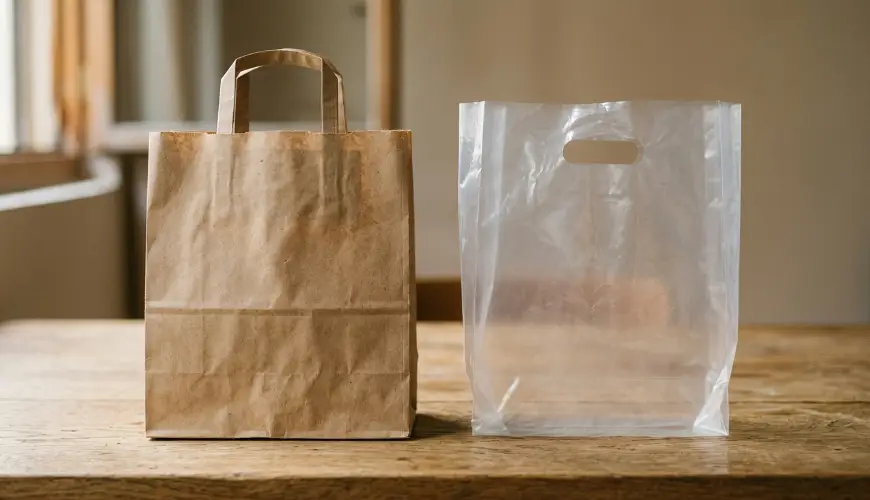
When you choose a paper bag instead of a plastic one at the store, you feel good about yourself. You're doing something for the planet, contributing to less burden on the oceans and waste bins. But reality is more complex than marketing campaigns and intuitive impressions would have us believe. Paper is not automatically more eco-friendly than plastic – and this claim has a solid scientific basis worth exploring.
The debate about what is "greener" is ongoing across industries, scientific laboratories, and political circles. Yet the answer to this seemingly simple question depends on dozens of variables: where the material was produced, how it was transported, how many times you use it, how you dispose of it at the end of its life, and what ecosystem was affected during its production. Oversimplified slogans like "paper is natural, therefore good" or "plastic is evil" don't help us navigate this complex picture – they only obscure the true state of affairs.
Try our natural products
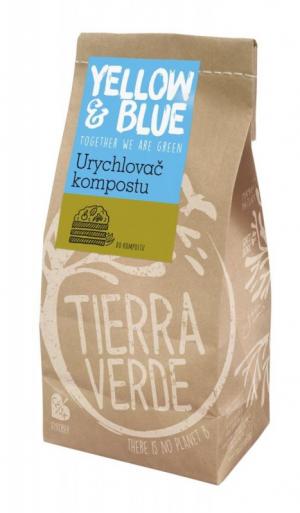
Paper production has an enormous ecological footprint
Paper comes from wood, a renewable raw material. That sounds appealing. But the journey from tree to paper bag or sack is extremely energy- and water-intensive. Producing one kilogram of paper consumes approximately 10 litres of water, while producing a kilogram of plastic requires significantly less water. The entire paper manufacturing industry is globally among the largest consumers of industrial water.
The difference in carbon footprint during production is even more striking. Studies published within the framework of Life Cycle Assessment (LCA) repeatedly show that producing a paper bag generates four to six times more carbon dioxide than producing a comparable plastic bag. The UK Environment Agency, in its analysis comparing the impacts of different types of shopping bags, concluded that a paper bag must be used at least three times to offset the impact of producing a plastic bag – and this assumes the plastic bag ends up in a landfill. If the paper bag is not reused, its ecological balance is actually worse.
Another problem is deforestation. Although certifications such as FSC (Forest Stewardship Council) guarantee sustainable forest management, a large portion of the world's paper production still comes from areas where natural forests are being felled. Tropical rainforests in Indonesia or Brazil are devastated annually, partly due to the demand for timber. Paper made from wood obtained in this way carries an ecological debt that no amount of recycling or composting can repay.
The chemical burden of bleaching and processing wood pulp is also significant. Modern, white-looking paper has typically undergone processes involving chlorine compounds or other chemicals. These enter wastewater and can negatively affect aquatic ecosystems near paper mills. Industrial paper production is therefore far from the idyllic image of a "natural material."
Plastic has problems, but not where we think
Plastic packaging has a reputation as the number one ecological villain. Images of plastic waste in the oceans, photographs of birds with plastic bags in their stomachs – these images have shaped public opinion over the past twenty years. And rightly so: plastic that ends up in nature is a genuine catastrophe. Microplastics are found in drinking water, in marine animals, and in human blood. These are facts that cannot be downplayed.
Yet the comparison between paper and plastic must be fair. Plastic has a significantly lower carbon footprint during production compared to paper, it is lighter – and therefore less energy-intensive to transport – and it lasts longer, reducing the need for repeated production. Plastic film wrapping food protects it from spoilage, thereby indirectly reducing the carbon footprint of food waste, which is globally one of the largest emitters of greenhouse gases. According to FAO data, approximately one third of all food produced for human consumption is wasted annually – and a significant portion of this waste could be reduced through appropriate packaging.
The problem with plastic, therefore, is not in its production or its very existence, but in how we handle it after use. Plastic that is properly recycled or used for energy recovery has a significantly better ecological balance than paper that ends up in a wet landfill and decomposes while producing methane – a greenhouse gas that is approximately eighty times more potent in terms of atmospheric warming than carbon dioxide.
Take Anna as an example, a thirty-year-old mother from a town in Central Bohemia who decided to switch to "more eco-friendly" shopping. She started refusing plastic bags and took paper ones instead. But the paper bags tore, she didn't manage to use them a second time, and most ended up in the paper recycling bin – where, if contaminated with food, they cannot be recycled. After a year, she realised it would have been more eco-friendly to carry one sturdy fabric bag and keep the thin plastic bags for food items, which she actually recycles or reuses. Her experience illustrates how good intentions without information can produce the opposite result.
How to properly compare the impacts of different materials
The key to understanding the whole problem is an approach known as life cycle assessment. This scientific tool tracks a product from raw material extraction through production, distribution, use, and disposal. Only such a comprehensive view reveals where the ecological burden truly lies. And the results are surprising: context matters far more than the material itself.
As British environmental scientist Tim Harford aptly noted: "Intuition regularly lets us down on ecological matters. The right choice depends on data, not feelings."
Paper straws are an excellent example of a well-intentioned but problematic solution. A paper straw quickly becomes soggy in a moist environment, causing customers to use more of them; producing each one is more energy-intensive than producing a plastic straw; and furthermore – paper straws cannot be recycled because they are contaminated with food and moisture. The result is that a mass switch to paper straws may, in total, have a worse ecological balance than smartly reducing plastic straws and properly recycling them.
The same applies to paper coffee cups. These are lined on the inside with a thin layer of polyethylene to prevent liquid from seeping through. This combination of materials is practically non-recyclable by conventional means, and the cup ends up in landfill regardless of whether it is made "from paper." Yet many customers toss it into the paper recycling bin with the satisfying feeling that they are recycling.
There are situations where paper genuinely comes out ahead. Where a material is used for a short time, where there is a risk of it escaping into nature, and where infrastructure for plastic recycling is lacking, paper may be the better choice. In developing countries without a well-developed waste management system, for example, biodegradable paper may genuinely be a more eco-friendly alternative. Context therefore plays a crucial role.
On the other hand, where recycling works and where material is protected from escaping into nature – such as in Central European countries with solid waste management infrastructure – plastic, when handled correctly, may be the more eco-friendly option. Plastic recycling in the Czech Republic has been improving in recent years according to Czech Statistical Office data, although it still falls short of the potential this material offers.
It is also important to mention materials that can outperform both. Glass, metal, or fabric have a significantly better ecological balance when used repeatedly than single-use packaging made from either paper or plastic. A glass bottle refilled a hundred times, or a cotton bag that lasts for years, is ecologically incomparably superior – but only if we actually use it repeatedly. Even a cotton bag must be used hundreds of times to offset its energy-intensive production.
The entire debate ultimately leads us to one fundamental conclusion: the most eco-friendly packaging is the one we don't need. Reducing overall consumption of packaging materials – regardless of whether they are made from paper, plastic, or another material – is the most environmentally effective path. Shopping thoughtfully, favouring products with minimal packaging, choosing goods from manufacturers who consider the full life cycle of their products, and rejecting disposability as the norm – these are steps that have a genuine impact.
Next time you reach for a paper package convinced you're doing the right thing, try asking yourself a simple question: How was it made? How will I use it? And what will I do with it once it has served its purpose? These three questions matter far more than the material itself.