
Homemade chickpea pasta is surprisingly easy
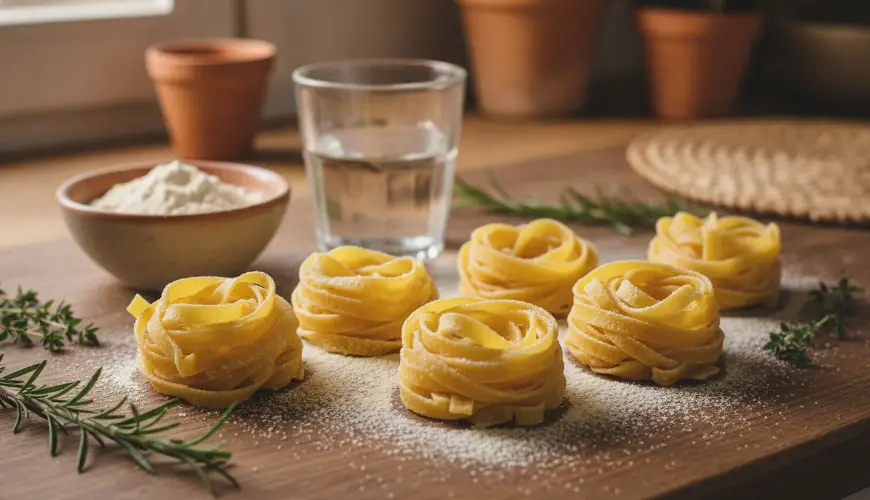
There are recipes that look too simple to be any good. And then there are recipes that completely disprove that skepticism. Homemade chickpea pasta made from two basic ingredients belongs firmly in the second category – it's surprisingly tasty, filling, and you can make it from start to finish in just thirty minutes. It's not a shortcut or a compromise. It's one of those kitchen discoveries that makes you wonder why you didn't try it sooner.
At a time when more and more people are paying attention to what they eat, where their food comes from, and how it affects their health and the planet, chickpeas are earning a well-deserved place on the plate. It's not a passing trend – chickpeas are among the oldest cultivated crops in the world, and in many cultures they have formed the basis of everyday diets for thousands of years. Today we're rediscovering them in new forms, and homemade chickpea pasta is one of the most elegant ways to incorporate them into your diet.
Try our natural products

What does chickpea actually contain?
Before we get to the recipe itself, it's worth understanding why chickpeas make sense as a pasta base – not just in terms of flavour, but nutritionally as well. Chickpeas are an exceptional source of plant-based protein and fibre, with 100 grams of cooked chickpeas containing approximately 9 grams of protein and 8 grams of fibre. According to data from the World Health Organization, adequate fibre intake helps reduce the risk of heart disease, type 2 diabetes, and certain types of cancer.
Chickpea flour, which forms the basis of this recipe, largely retains these properties. Unlike regular white flour, it has a lower glycaemic index, meaning energy is released into the bloodstream gradually and you feel full for longer. This is appreciated not only by those monitoring their blood sugar levels, but by anyone who wants to have energy for the whole afternoon after lunch rather than experiencing an afternoon slump.
What's more, chickpea flour is naturally gluten-free, making this recipe suitable for people with coeliac disease or gluten sensitivity – without any compromise in flavour or texture. That's something that cannot be said of many gluten-free alternatives.
The transition from chickpeas as a legume to chickpea flour and then to pasta is logical and natural. Italian cuisine, after all, has known similar pasta under the name lagane e ceci, or in the Ligurian variant as part of traditional dishes – a combination of chickpea flour and water that has been prepared in various forms for centuries.
Recipe for homemade chickpea pasta: just 2 ingredients, 30 minutes
Here comes the part that will surprise many with its simplicity. The basic recipe for homemade chickpea pasta truly requires only chickpea flour and water. No eggs, no oil, no stabilisers. Just two ingredients and a little patience.
For two servings, you'll need approximately 200 grams of chickpea flour and 100 millilitres of lukewarm water – the ratio may vary slightly depending on the moisture content of the flour, so add the water gradually. Pour the flour into a bowl, make a well in the centre, and begin adding the water while stirring continuously. The mixture may seem too dry at first, but be patient – dough made from chickpea flour behaves differently from wheat dough and needs a little more time to come together. Once a compact ball has formed, transfer it to a floured surface and knead for approximately five minutes until smooth and springy.
Then comes the key step that many people skip: let the dough rest. Simply wrap it in cling film or a clean tea towel and leave it at room temperature for 15 minutes. This seemingly unnecessary step allows the flour to fully absorb the water, and the dough will then roll out much more easily – without cracking or crumbling.
After resting, divide the dough into smaller portions and roll each one out into a thin sheet – ideally about 2 millimetres thick. Then fold the sheet and cut it into strips of the desired width: narrower for spaghetti, wider for pappardelle or tagliatelle. Toss the resulting pasta lightly in flour to prevent it from sticking, then either cook immediately or leave to dry on a clean tea towel.
Cooking takes just 3 to 4 minutes in salted boiling water – significantly less than dried pasta. Fresh chickpea pasta is ready once it floats to the surface and is al dente – firm to the bite, but without a raw centre. The total time from start to finish genuinely fits within those thirty minutes.
Some might argue that buying ready-made chickpea pasta from a shop is more convenient. And that's true. But the homemade version offers something no packet can provide: control over every ingredient, freshness that makes a real difference to the flavour, and that particular sense of satisfaction that comes with preparing food from scratch.
Take Markéta, a thirty-year-old graphic designer from Brno, who switched to a gluten-free diet for health reasons. At first she worried she would lose pasta as an everyday staple. Then she came across a recipe using chickpea flour and – as she puts it – "it was like rediscovering pasta, but a better version." Today she makes it every week, changes the sauces with the seasons, and experimenting with different shapes has become her favourite weekend ritual.
How to serve chickpea pasta and why it matters
Homemade chickpea pasta has a distinctive, slightly nutty flavour that calls for simple accompaniments. It is best complemented by sauces that enhance this flavour rather than overwhelm it. A classic choice is olive oil with garlic and fresh herbs – rosemary, thyme, or sage all work beautifully. Another popular combination is tomato sauce with capers and olives, or a simple fresh basil pesto.
For those who don't think of pasta as a main course but as a side dish, it pairs well with roasted vegetables – squash, peppers, or courgette. Chickpea pasta also pairs very well with legumes – lentils or beans – creating a nutritious yet light dish that is complete in terms of its amino acid profile.
It's worth noting that the way a dish is served affects not only the flavour experience but also its nutritional value. Adding healthy fats – olive oil or avocado – helps the body better absorb certain fat-soluble vitamins that occur naturally in vegetables. This is one of those small details that makes the difference between a good meal and a meal that truly nourishes.
As Michael Pollan wrote in his book In Defense of Food: "Eat food. Not too much. Mostly plants." Chickpea pasta fulfils this principle elegantly – it is plant-based, minimally processed, and naturally nutritious.
If you'd like to try chickpea flour in other recipes, it's worth knowing that it also works wonderfully for pancakes, flatbreads, or as a thickener for soups and sauces. Its versatility makes it one of those ingredients you buy once and then find yourself reaching for again and again.
Chickpea flour is now available in many health food shops, some supermarkets, and of course in online shops focused on healthy living. When choosing, it's worth opting for organically certified flour, which guarantees that the chickpeas were grown without synthetic pesticides. The quality of the ingredient is directly reflected in the final flavour of the pasta – and with a two-ingredient recipe, each one truly matters.
From a sustainability perspective, chickpeas have one more compelling argument: as a legume, they enrich the soil with nitrogen, reducing the need for chemical fertilisers. Research by the Food and Agriculture Organization of the United Nations (FAO) has repeatedly confirmed that legumes are among the most sustainable crops in the world in terms of water consumption, greenhouse gas emissions, and impact on biodiversity. Choosing chickpea flour over regular wheat flour is therefore not just a personal health decision – it is also a small but meaningful step towards a more responsible way of eating.
Thirty minutes, two ingredients, and a result that surpasses most shop-bought convenience products. Homemade chickpea pasta is proof that simple food can be extraordinary at the same time – and that healthy eating need be neither complicated nor boring.