

# What to do with an old mobile phone ecologically Getting rid of an old mobile phone doesn't have
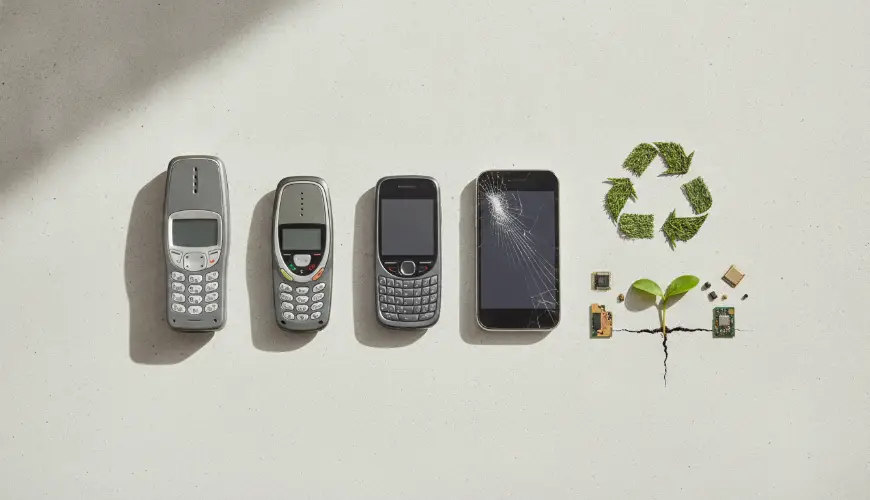
Every year, more than 1.2 billion smartphones are sold around the world. And what happens to the old ones? Most of them end up in a drawer, in the bin, or – and this is the worst-case scenario – in a landfill. Yet an old mobile phone is not just a piece of plastic and glass. It is a complex device full of rare metals, chemicals and components that can seriously damage the environment if disposed of incorrectly. The question, therefore, is not simply "what do I do with it?", but rather "how do I do it properly?"
The answer is not complicated, but it does require a somewhat mindful approach. That is precisely why this guide was created – to show you how to deal with an old phone responsibly, ecologically, and perhaps even profitably.
Try our natural products

Why eco-friendly mobile phone disposal matters so much
Mobile phones are among the most problematic types of electronic waste. They contain lead, mercury, cadmium, beryllium and a whole range of other substances that are highly toxic when released uncontrolled into soil or groundwater. According to data from the United Nations Environment Programme (UNEP), more than 50 million tonnes of electronic waste are generated worldwide every year, of which only around 17 percent is properly recycled. The rest ends up in places where it causes long-term ecological damage.
On the other hand, mobile phones are a rich source of valuable raw materials. One tonne of mined gold ore contains an average of 5 grams of gold, whereas up to 300 grams of this metal can be recovered from a tonne of old phones. Recovering these materials – known as urban mining – is therefore not only ecologically beneficial but also economically sensible. Every phone that enters the take-back system instead of ending up in a landfill contributes to a reduced need for primary raw material extraction in countries where that mining devastates landscapes and human lives.
It is worth bearing in mind that the decision about what you do with your old phone has a real impact. This is not merely abstract environmental rhetoric – it is a choice that affects specific ecosystems, communities and people on the other side of the world.
How to proceed step by step
Before you start deciding what to do with your old device, you first need to prepare it properly. Most people skip this step, yet it is crucial both in terms of the security of your data and in terms of ensuring the phone can be reused or properly processed.
The first step is backing up all your data. Photos, contacts, messages, documents – everything should be saved to your new device, in the cloud or on an external drive. Modern Android and iOS systems both offer automatic backup tools that simplify the entire process to just a few clicks. Only after a successful backup should you proceed to a factory reset, meaning a complete wipe of the phone. This removes all personal data, login credentials and apps. On an iPhone, it is also important to disable the Find My iPhone feature and sign out of your Apple ID; on Android devices, you should remove your Google account – otherwise, a new owner or recycling centre would be unable to work with the device properly.
Once the technical preparation is complete, the key moment arrives: what next for the device? There are surprisingly many options, and each of them has its own specific benefit.
The most eco-friendly option is extending the phone's lifespan – that is, continuing to use it. If the phone still works, there is no need to send it straight to recycling. It can be sold, donated or refurbished. The market for second-hand mobiles has been booming in recent years: platforms such as Bazos, Aukro or specialist electronics second-hand shops offer an easy way to get the phone into the hands of someone who genuinely needs and will use it. Refurbished phones are also an increasingly popular choice for people looking for a capable device at a reasonable price without the unnecessary ecological burden associated with manufacturing a new one.
Donating is another excellent route. There are a number of organisations that collect used phones for socially disadvantaged groups, elderly people or children in developing countries. In the Czech Republic, various charities and non-profit organisations are involved in this activity. An old phone gathering dust in your drawer could be someone else's first access to the internet, communication or education.
If the phone is damaged or too outdated for anyone to use, proper recycling is the next step. And here it is important to know where and how. In the Czech Republic, a take-back system for electrical equipment is in place, which requires electronics retailers to accept old devices regardless of whether you are buying a new one from them. You simply need to go to any electronics shop and hand in your old phone there – free of charge and without conditions. This system ensures that the device goes to a certified recycler who processes it according to strict ecological standards.
Another take-back location is collection yards operated by municipalities. These are equipped with containers for electrical waste and are accessible to all residents of the given municipality or city. Some mobile operators and phone manufacturers also run their own collection programmes – Apple, for example, offers the Apple Trade In programme, Samsung has Samsung Trade-in, and similar initiatives exist with other brands too. These programmes often offer financial compensation or a discount on a new device.
There is also the option of repair. If a phone is damaged but otherwise still functional, repair may be cheaper and more eco-friendly than buying a new device. Mobile phone repair shops are available in most towns and cities, and many faults – a cracked screen, a faulty battery, a damaged connector – are technically and financially manageable. The Right to Repair initiative, which has been gaining momentum in Europe in recent years, seeks to ensure that manufacturers must make spare parts and service documentation available, which makes repairs easier and cheaper still.
A real-life example is Jana, a thirty-year-old teacher from Brno, who had three old phones of various generations at home. She gave one to her mother as a backup device, sold another through an online marketplace, and took the third – with a cracked screen – to a repair shop. For the price of a new screen and an hour of the technician's work, she got a working device, which she then donated to a local charity. Not only did she throw nothing away, but she also saved money and helped three different people.
Batteries, accessories and small parts: what not to forget
Batteries deserve a chapter of their own. Lithium-ion batteries, which power virtually all modern mobile phones, are very dangerous if disposed of incorrectly. They can cause fires at landfill sites, release toxic substances into the soil or contaminate water sources. A battery should never end up in ordinary household waste. Most electronics shops, as well as many supermarkets, have special containers for collecting used batteries – that is the right place to deposit them.
Similarly, it is important to think about accessories – chargers, headphones, cables, cases. These items are also part of electronic waste and should be processed accordingly. Functional accessories can be donated or sold along with the phone; non-functional ones belong at a collection yard or in an electrical waste container.
As German sociologist Harald Welzer said: "Sustainability is not about abstinence, but about a different way of thinking." And this applies equally to how we handle electronics. It is not about giving up new technology or living ascetically – it is about making conscious decisions that take into account the entire lifecycle of an item, not just the moment when we stop needing it.
A mindful approach to disposing of old mobiles is part of a broader lifestyle that emphasises sustainability and responsible consumption. Every such decision – whether it involves donating, selling, repairing or properly recycling – is a small step that makes sense. And when we consider that there are over ten million active mobile phones in the Czech Republic and the average user gets a new device every two to three years, it becomes clear just how significant the collective impact of these seemingly small individual decisions can be.
A drawer full of old phones is not just clutter – it is untapped potential. The potential to help others, to recover valuable raw materials, to prevent ecological harm and to contribute to an economy that is moving away from being linear and becoming circular. Getting started is not difficult – all it takes is pulling that old device out of the drawer and taking the first step.